
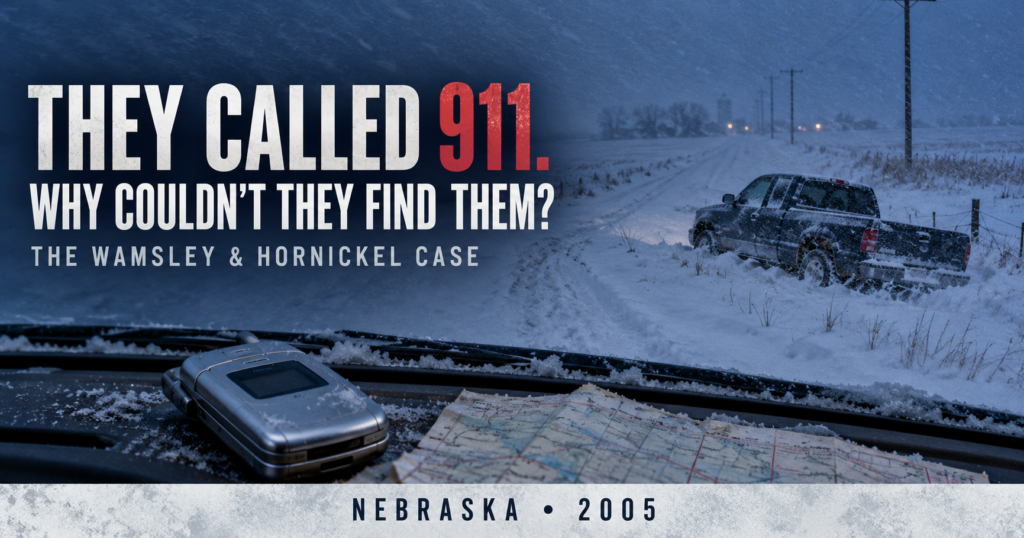
They reached someone.
That is what makes this case so hard to shake. Michael Wamsley and Janelle Hornickel weren’t stranded without a phone or calling a number nobody answered. They spoke with 911 dispatchers repeatedly while lost in a Nebraska snowstorm.
But a voice on the other end of the line didn’t mean rescuers knew where to go.
Both were 20 years old. Both died of hypothermia. Their calls left behind a record of two people asking for help while the information needed to find them remained painfully unclear.
When I read the reporting alongside the call excerpt, the frightening part is the gap between those two things: being heard and being found.
Who Were Michael Wamsley and Janelle Hornickel?
On January 4, 2005, Wamsley and Hornickel were traveling toward their apartment in Omaha when they became caught in a snowstorm.
Hornickel was a junior at Creighton University. She had known Wamsley since seventh grade. Her family remembered a young woman involved in school activities, sports, choir, and drama.
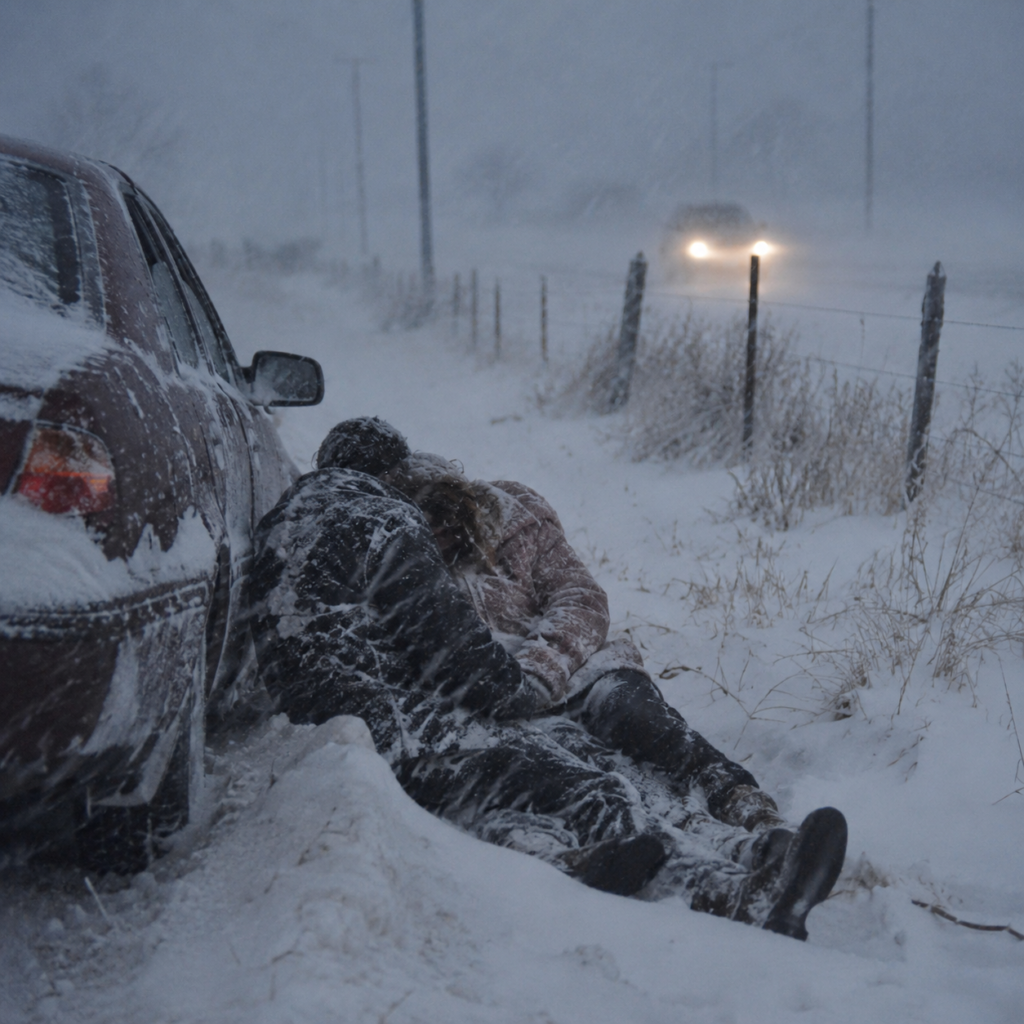
Those details can disappear when a case becomes known mainly for its disturbing recording.
Before there was a 911 clip, there were two young people trying to get home.
The emergency unfolded overnight. Authorities believed they died on January 5.
What the 911 Call Reveals
The short excerpt from their desperate calls captures a conversation that is difficult to follow even with captions.
The caller describes being cold, worries about his girlfriend, and refers to people who supposedly will not speak to them. Questions about their surroundings produce answers that don’t establish a reliable location.
Some automatic captions are plainly garbled. They should not be treated as a precise transcript, especially when identifying streets or reconstructing what happened.
Contemporary CNN coverage included other portions of the calls. Wamsley referred to a sandpit, struggled to explain where he was, and warned that his phone was close to dying. Dispatchers tried to sort out conflicting references to Omaha and neighboring Sarpy County.
The immediate danger was easier to understand than the directions.
They needed help. Finding them required an address, a recognizable landmark, or location information the system could provide.

Why Were They Talking About People Who Weren’t Helping?
Their descriptions became one of the most unsettling parts of the case.
ABC News reported that Wamsley described hundreds of people who did not speak English. Hornickel described people taking cars apart and placing them in trees. Later testing found methamphetamine in both of their systems.
Those statements describe what the callers reported. They do not establish that those events actually occurred.
A toxicologist interviewed by CNN said both were impaired at the time of death. The reporting identified methamphetamine as a possible explanation for their confusion.
That distinction matters when listening to the recording.
A frightened caller can sincerely describe something without giving an accurate account of the surroundings. Someone receiving the call still has to work out what is real, what can be located, and where to send help.
The recording alone cannot tell us exactly what either person perceived during every moment of that night.
The Truck They Left Behind
One detail makes the account especially difficult to read.
According to ABC News, the couple left their pickup even though it still contained about half a tank of gas, warm clothing, and Wamsley’s phone. The reported wind chill was around 10 degrees below zero.
It is tempting, from a warm room years later, to reduce the whole tragedy to that decision.
But knowing what remained in the truck does not tell us exactly why they walked away from it. Their calls and toxicology findings provide evidence of disorientation. They do not give us a complete account of their thinking.
There is no need to invent one.
The belongings left behind already show how sharply their actions departed from what seems sensible in hindsight.
Why Couldn’t Dispatchers Track Their Phone?
The technology available to the call centers was a major part of the story.
CNN’s follow-up reporting explained that the centers involved had what was called Phase I wireless 911 capability. That could identify the cell tower receiving a call, giving dispatchers a general area rather than the caller’s precise coordinates.
Phase II capability could provide location coordinates. Sarpy County officials told CNN that this more advanced system might have helped save the couple.
A tower location and a person’s location are different pieces of information.
That difference became critical when the callers could not reliably explain where they were.
CNN demonstrated the limitation by having a reporter call 911 from just outside the dispatch center. The operator could identify his general area but could not pinpoint his position.
The demonstration makes the problem easier to grasp than the technical terms do.
Even a caller standing near the people answering the phone could remain a location the system couldn’t precisely show.
Did a Dispatcher Refuse to Help Them?
The wording in the short excerpt is upsetting. It is understandable that viewers focus on the dispatcher’s response.
But a short clip cannot establish everything that happened across multiple calls, transfers, and search efforts.
CNN questioned county officials about the handling of the calls, including Wamsley’s statements that he had been hung up on. Communications director Dan Peterson explained that the normal transfer procedure was to remain connected until another 911 center answered, then disconnect from the transferred call.
That explanation does not settle every question about the response. It does show why “one dispatcher refused to help, and that caused both deaths” is too certain a claim.
The evidence supports a more complicated account involving impaired callers, conflicting location information, extreme weather, and limited tracking technology.
For anyone watching the Nebraska 911 call excerpt, the important context is that this was part of a longer emergency, not the complete record of it.
Their Families Wanted More Than an Explanation
Wamsley’s body was found first. Hornickel’s was located six days later.
Afterward, Hornickel’s sister, Jan Howard, advocated for better wireless 911 location technology. CNN reported that she testified before a Nebraska legislative panel about funding improvements.
Her position kept attention on a question that could easily have been lost amid discussion of drug use: could responders have found them in time?
The toxicology findings were part of the explanation. They did not erase the family’s concern about the emergency system.
For the people left behind, understanding why the couple was confused and understanding why rescuers couldn’t locate them were both necessary.
Frequently Asked Questions
What happened to Michael Wamsley and Janelle Hornickel?
They became lost during a Nebraska snowstorm, made repeated 911 calls, and died of hypothermia before rescuers found them. They were both 20. Their case belongs alongside other documented accidental deaths that sound unbelievable in which ordinary circumstances led to fatal outcomes.
Did methamphetamine play a role in their deaths?
Testing found methamphetamine in both of their systems. Contemporary reporting connected impairment with their confused behavior. Hypothermia was the reported cause of death.
Were the people mentioned in the calls actually there?
Their statements do not establish that the people or events they described were real. The reports must be understood alongside the evidence of impairment.
Would better phone tracking definitely have saved them?
That cannot be known for certain. County officials told CNN that more advanced location technology might have saved them. “Might” is an important limit on that claim.
Written under the pen name Evan Mercer for Stories in the Static, examining unsettling events through contemporary reporting and the evidence behind the stories.