The will left everything to the doctor.
Kathleen Grundy’s daughter, Angela Woodruff, was a solicitor. She had handled her mother’s legal affairs and prepared an earlier will. Now, after her mother’s sudden death, another document had appeared, naming Harold Shipman as the beneficiary of the entire estate.
Woodruff investigated. She spoke with the supposed witnesses. Then she went to the police.
That suspicious document helped expose a murder series that medical records, death certificates, and an earlier police investigation had failed to uncover.
Shipman escaped detection because his professional authority made his explanations believable, he falsified records to support those explanations, and the systems checking his patients’ deaths failed to challenge him effectively. The public inquiry identified failures in both the early investigation and death certification arrangements.
The unsettling part is that people had already raised concerns.
There had been an opportunity to stop him before Kathleen Grundy died.
The Doctor Was Also Supplying the Explanation
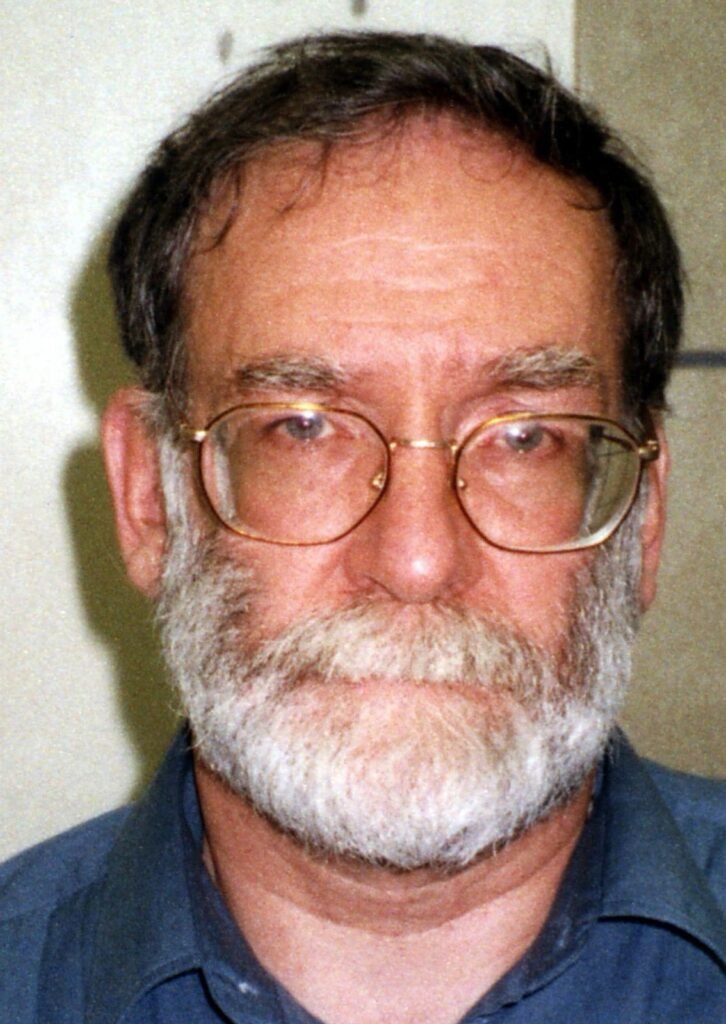
Shipman was a family doctor in England whose patients included many older women. Reporting describes a repeated pattern: a home visit, a fatal injection, and medical notes altered to make the death appear consistent with serious illness.
A doctor’s presence ordinarily helps a family understand an unexpected death.
With Shipman, that relationship became dangerous. The person offering the medical explanation was also the person concealing what had happened.
I think that is the most useful way to understand his protection. His reputation mattered, but so did his ability to produce paperwork that appeared to back him up.
Our overview of serial killers associated with exceptionally high victim counts introduces the scale of his crimes. His individual case requires a closer look at how those deaths passed through ordinary professional procedures.
Someone Noticed the Deaths Were Unusual
In early 1998, Dr. Linda Reynolds, a physician at a nearby practice in Hyde, became concerned about the number of Shipman’s patients who were dying.
She approached the coroner, who asked Greater Manchester Police to investigate.
The warning had therefore moved beyond private suspicion. It had reached people with authority to examine it.
That matters because the familiar explanation that “everyone trusted him” is incomplete.
Some people did question him. The investigation that followed did not establish what was happening.

The First Investigation Examined Records He Had Altered
A medical adviser reviewed 15 sets of patient notes during the initial investigation. He wanted to examine five more sets but could not obtain them.
The reviewed records were later found to have been fraudulently altered by Shipman.
This is one of the case’s clearest failures.
Reviewing medical records sounds like an obvious investigative step. But their apparent consistency could be misleading when the suspected doctor controlled their contents.
The early review found no evidence supporting the concerns, and the investigation closed. Contemporary BMJ reporting also identified failures to interview patients’ relatives and check Shipman’s criminal or professional disciplinary history. Shipman’s case illustrates how early investigative failures leave killers free even after someone has raised an alarm.
The paper trail had been examined without successfully exposing how it had been manipulated.
Shipman went on to kill three more patients.
The Inquiry Found More Than an Unlucky Miss
The official inquiry later scrutinized the March and April 1998 investigation.
Its findings were serious enough to be discussed in Parliament. The government’s statement said the conduct of the officers involved fell below the standard the public was entitled to expect. It also reported criticism of the subsequent internal examination of that failure.
The inquiry’s second report found that no written report of the initial investigation existed when the later murder investigation began.
It also examined subsequent accounts that minimized the seriousness of Reynolds’s concerns. One account said she had not suspected Shipman of killing patients, contradicting evidence later given to the inquiry.
Those findings change the story.
The early investigation did not simply encounter an unusually clever offender. The inquiry identified shortcomings in how concerns were investigated and how that work was subsequently described.

Why Death Certificates Didn’t Automatically Expose Him
An elderly patient’s death does not automatically trigger a criminal investigation. The explanation, medical history, and circumstances influence what happens next.
Shipman’s crimes exploited weaknesses in that process. The inquiry’s third report examined death registration, cremation certification, and coroners’ investigations, recommending changes intended to make concealed homicide harder to miss.
The government’s response acknowledged systemic shortcomings in cremation arrangements and the coroner system.
Cremation also made later investigation more difficult by removing the possibility of examining a body. Reporting on Shipman describes him encouraging cremation after some deaths.
This does not mean every person who handled a certificate knew something was wrong.
It means the checks failed to provide effective protection against a doctor deliberately supplying false information.
Kathleen Grundy’s Will Created a Different Kind of Evidence
Kathleen Grundy, an 81-year-old widow, was found dead at home on June 24, 1998, after a visit from Shipman.
The new will introduced something beyond his explanation of her health: a document giving him a direct financial benefit.
Woodruff reported her suspicions on July 24. Grundy’s body was exhumed on August 1, and police searched Shipman’s home and surgery. Investigators seized medical records and a typewriter.
The investigation now had several kinds of evidence to compare.
A forensic document examiner concluded that the signatures were forged and that the will had probably been typed on the machine seized from Shipman’s surgery. Toxicological testing found morphine levels consistent with a fatal overdose.
The will had pulled attention toward the doctor. The forensic findings made the suspicion much harder to dismiss.
His Computer Preserved Evidence of the Cover-Up
Shipman could change what a patient’s medical notes said.
He could not make the history of those changes disappear as easily.
Computer examination revealed alterations made to support his accounts of patients’ illnesses and deaths. The timing of those changes helped investigators challenge the apparent medical history.
That is an important distinction: the date described in a medical entry is not necessarily the date the entry was created or changed.
A record can appear to describe an earlier illness while its audit trail shows that someone added the information afterward.
The same notes that had helped protect Shipman became evidence against him once investigators examined how they had been produced.
Was Money His Motive?
The forged will provides clear evidence of attempted financial gain in Grundy’s case.
It does not explain the entire murder series.
Shipman’s wider motivation remains unresolved. At trial, the prosecution argued that he enjoyed controlling life and death, but that interpretation should be identified as the prosecution’s argument rather than an established explanation for every killing.
It is also tempting to interpret the conspicuous forgery as proof that he wanted to be caught.
The evidence does not establish that.
A mistake that exposes an offender is not, by itself, evidence of a wish for exposure. We know what the forgery did. We cannot confidently say why he took that particular risk.


Why Do Some Accounts Say 15 Victims and Others Say 250?
Shipman was convicted on January 31, 2000, of 15 murders and forging a will.
The later public inquiry had a different task: examining the wider extent of his unlawful activities.
Its first report concluded that he had killed at least 215 patients. The final inquiry estimate rose to approximately 250 after further investigation.
These numbers describe different findings.
Fifteen is the number of murder convictions. Approximately 250 is the inquiry’s broader estimate. Calling all 250 “murder convictions” would be inaccurate, while describing him as responsible for only 15 deaths would omit the inquiry’s findings.
That distinction is essential when comparing the evidence behind high serial-killer victim totals.
Frequently Asked Questions
Who helped catch Harold Shipman?
Angela Woodruff’s investigation into her mother Kathleen Grundy’s suspicious will helped trigger the successful police investigation. Earlier concerns raised by Dr. Linda Reynolds had already prompted an investigation that failed to expose the murders.
How did Harold Shipman kill his patients?
His established pattern involved administering fatal doses of an opioid and falsifying medical records to disguise the circumstances. Evidence in the Grundy investigation included morphine levels consistent with a fatal overdose.
Why didn’t the first police investigation catch him?
It relied partly on records he had altered and missed important investigative steps. The later inquiry criticized the investigation’s conduct and the subsequent internal examination of its failures.
Did Harold Shipman confess?
He denied the charges and did not provide an explanation that resolved his broader motive. Investigators established the case through evidence rather than a confession.
Were his victims all terminally ill?
No. The prosecution rejected the suggestion that the 15 murders tried in court were compassionate acts involving terminally ill patients.
By Miles Rowan for Stories in the Static, examining criminal cases through the evidence, missed warnings, and investigations behind them.