
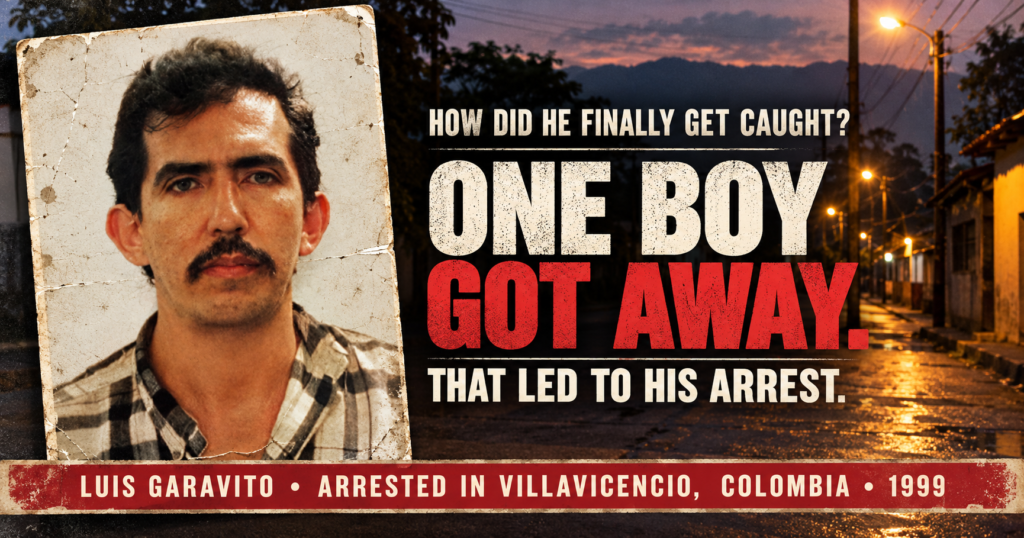
The child screamed. Someone listened.
On April 22, 1999, a boy selling lottery tickets in Villavicencio, Colombia, was attacked by Luis Alfredo Garavito. A passerby heard his cries, found him restrained, and confronted Garavito by throwing stones. Police were alerted, and Garavito was captured.
A brief newspaper report published that November credited the stranger with bringing him down.
There was no way for that person to know the full significance of what he had interrupted.
He had helped a child survive an encounter with a man investigators would connect to killings across Colombia.
Garavito’s capture began with that interrupted attack. Exposing the murder series required months of additional work, using witnesses, physical evidence, and records of his movements. His major confession came in late October 1999, roughly six months after his arrest.
That gap is the key to understanding the case.
Police had stopped him. They still had to establish who he was and what he had done.
The Man in Custody Used Another Name
When detained, Garavito identified himself using the name Bonifacio Morera Lizcano.
Later reporting described him carrying false identification under that name.
An arrest under a false identity can create a dangerous separation: investigators searching for one person may not immediately recognize that another agency is already holding him.
The April attack supplied a concrete reason to investigate the man in custody. It did not automatically connect him to every child who had disappeared elsewhere.
That connection had to be built.

Our overview of serial killers with high victim counts includes Garavito, but a final total can hide how slowly a case becomes recognizable. Investigators begin with individual victims, scattered records, and information that may not yet fit together.
How He Reached Children Without Looking Like a Threat
Garavito often approached children through an ordinary offer.
Money. A gift. A small job.
Reporting describes him watching places where children might be alone, including markets, schools, and bus terminals. He offered something attractive, then persuaded a child to accompany him toward an isolated location.
He also moved between regions and used different names and appearances.
The first part of the encounter did not require a dramatic disguise.
A child selling tickets could reasonably expect an adult to discuss buying one. A child hoping to earn money could listen to an offer of work.
Garavito exploited those everyday exchanges.
This is why descriptions of his victims as “vulnerable” need more explanation. They were children navigating circumstances he knew how to use. The responsibility belonged to the adult who deceived and attacked them.



The Evidence Was More Than a Confession
By the time Garavito admitted the killings, investigators had already assembled a substantial case.
In October 1999, Colombia’s chief prosecutor and the head of the Technical Investigation Corps described evidence gathered over approximately 18 months. According to contemporary reporting, it included witnesses, travel documents, physical traces, and forensic comparisons.
The most useful way to understand that evidence is to ask what each piece could establish.
A witness could identify a man.
A travel record could place him in a region.
An object could connect him to a crime scene.
Those pieces become stronger when they support one another. Investigators were working toward an account that did not depend entirely on Garavito deciding to tell the truth.
Bus Tickets and Hotel Records Traced His Movements
Investigators examined bus tickets, hotel registers, telephone records, and other documents showing where Garavito had been.
Witness accounts helped connect those movements to places where children were killed. Adult eyeglasses found near one victim were also reported as belonging to him.
I find these ordinary records more revealing than the nickname “La Bestia.”
A nickname tells us how people reacted to him. A hotel entry or ticket can help answer a question that an investigation needs resolved: was this man here when this child disappeared?
Travel had helped spread the crimes across different places.
Records of that travel helped investigators bring the places back together.


His Own Papers Became Evidence
Garavito also left behind material concerning his crimes.
Reporting on the investigation describes belongings that included newspaper clippings and a written tally organized by years and locations. During questioning, he explained entries on a sheet found among his possessions.
Such a document is chilling, but it still requires checking.
An entry does not, by itself, identify a victim or prove a murder. Investigators need to compare it with disappearances, recovered remains, dates, and other evidence.
That process gives the paper its investigative value.
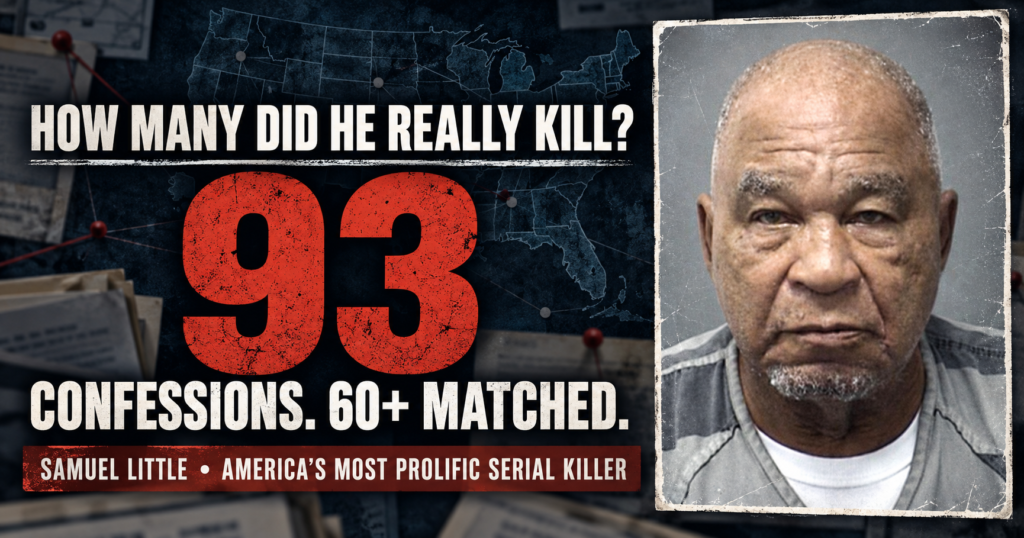
The same distinction runs through our examination of Samuel Little’s confessed murders: information from an offender becomes more useful when investigators can independently connect it to a real person and a real event.
Why Did It Take So Long to Connect the Killings?
Garavito’s movements made the investigation geographically difficult. His changing identities complicated recognition.
There was another obstacle: some early deaths were initially treated as separate cases. Contemporary reporting described 11 children’s bodies found around Pereira between 1992 and 1994 whose cases had been recorded as isolated incidents.
A series cannot be investigated as a series until someone recognizes the connections.
That does not mean every similar crime must have one offender. Investigators still need evidence before combining cases. But treating each death separately can leave a traveling offender’s wider pattern difficult to see.
Garavito’s case eventually required investigators to compare information from different places and examine whether the same suspect could explain it.
The work was less like recognizing a familiar face and more like assembling a map.
What Changed After He Confessed?
In early November 1999, investigators recovered two children’s bodies in Granada, in Colombia’s Meta department, at a location Garavito had disclosed.
A contemporary report described them as the first bodies recovered following his confession the previous week.
His statements were now producing information investigators could test on the ground.
That was a significant development, but it did not finish the case.
The same report said only two files were then complete enough to take him to trial: one involving a child’s killing and another concerning the April attack that led to his capture.
The size of a confession and the number of completed prosecutions can be very different.
Each additional case still needs its own evidence.
Catching Him Did Not Immediately Return the Children Home
Years after the arrest, identification work continued.
In August 2011, Colombian prosecutors reported returning the remains of three Garavito victims to their relatives following genetic and dental analysis.
Further official notices described the return of other victims’ remains in 2012.
That is another timeline worth remembering.
The offender was caught in 1999. Some families were still waiting more than a decade later for identified remains they could bury.
An arrest can stop an offender’s freedom of movement. It cannot instantly resolve every disappearance he left behind.
Was Garavito Ever Released?
Garavito died on October 12, 2023, in a hospital in Valledupar while still imprisoned, according to the Associated Press, citing Colombia’s prison authority.
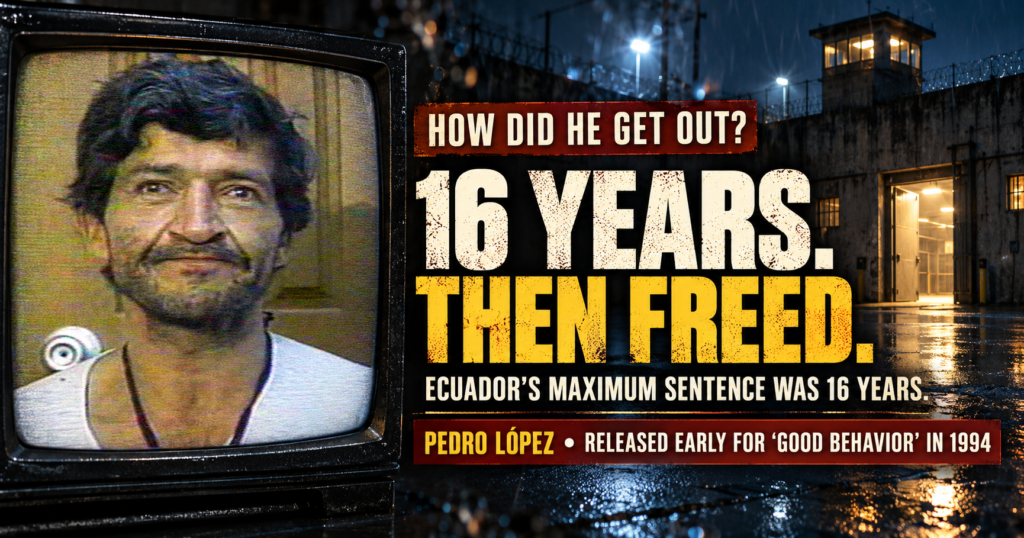
That distinguishes his later history from Pedro López’s releases from prison and psychiatric custody.
Reports about possible release should not be mistaken for a release that actually occurred.
How Many Murders Were Established?
Noticias Caracol reported that Garavito was convicted of 138 murder counts. The Associated Press’s report on his death described confessions involving more than 190 children.
Those figures describe different categories.
The first concerns reported convictions. The second concerns what he confessed.
Neither should silently replace the other in a ranking. Our comparison of high-victim killers and the evidence behind their totals keeps those distinctions visible.
The capture story has a clearer beginning: a child called for help, and a stranger intervened.
The investigation that followed turned that moment into a case reaching far beyond one attack.
Frequently Asked Questions
How was Luis Garavito caught?
He was captured in Villavicencio on April 22, 1999, after a passerby interrupted his attack on a child and police were alerted.
Did Garavito confess immediately after his arrest?
His major confession to the murder series came in late October 1999, approximately six months after his April capture.
Did he use a false name?
Yes. Reporting describes him identifying himself as Bonifacio Morera Lizcano when detained.
Was his confession the only evidence?
No. Investigators had already gathered witness accounts, documents, and physical evidence. His statements later helped them locate additional remains.
Is Luis Garavito still alive?
No. He died in a Valledupar hospital on October 12, 2023, while still imprisoned.
By Miles Rowan for Stories in the Static, examining criminal cases through overlooked evidence, unresolved questions, and the lives behind the headlines.