

Two people are murdered months apart. Elsewhere, four people die in a single attack.
The second crime has more victims. But the first could fit the FBI’s working definition of serial murder.
Under the definition published in the FBI’s 2008 report, serial murder involves two or more victims unlawfully killed by the same offender or offenders in separate events.
The important words are “separate events.”
Counting victims answers how many people died. It does not, by itself, tell us whether the killings formed a series.
You may have heard that someone must kill three people to qualify. That answer has a basis too, including a specific federal law. The confusion comes from treating different definitions as though they were written for the same purpose.
Why Some Sources Say Two and Others Say Three
There is no single definition used identically by every researcher, law, and news organization.
The FBI’s 2008 report followed a multidisciplinary symposium held in 2005. Its participants favored a broad working definition that could help investigators recognize and respond to a possible series.
A lower victim threshold gave law enforcement more flexibility to commit resources before additional people were killed.
Federal law uses a different threshold in 28 U.S.C. § 540B, which concerns FBI assistance with investigations of serial killings.
That provision describes three or more killings, at least one committed in the United States, with common characteristics suggesting the same person or people may be responsible. It also addresses investigations requested by an agency with jurisdiction over the offenses.
So “two” and “three” can both come from legitimate sources.
The useful question is: which definition is being applied, and why?

Our look at serial killers with the highest reported victim totals concerns offenders far beyond either threshold. Even there, definitions matter when comparing cases.
What Counts as a Separate Event?
Think about the circumstances surrounding each killing.
Did several victims die during one ongoing attack? Or did the offender commit distinct murders at different times?
The FBI’s research publication Serial Murder: Pathways for Investigations used a definition involving at least two victims killed in separate events at different times. It also explains that a series can stretch across days, months, or years.
That leaves room for very different patterns.
One offender may commit repeated killings in the same area. Another may travel between jurisdictions. A long series may only become visible after investigators connect deaths previously treated as unrelated.
Separate events do not necessarily mean separate cities. The pattern concerns the killings, rather than how far the offender traveled.


Does There Have to Be a Cooling-Off Period?
Older descriptions often require an emotional “cooling-off period” between murders.
The difficulty is deciding what that means.
How long must the pause last? Does it describe elapsed time, the offender’s behavior, or an emotional state investigators cannot directly observe?
The FBI symposium discussed those problems and adopted a definition centered on separate events instead. Its participants also questioned the investigative value of treating spree murder as a distinct category based on an uncertain cooling-off period.
There is no fixed 30-day waiting requirement in that working definition.
A calendar can establish when someone died. It cannot establish that an offender became emotionally calm between crimes.
Serial Murder, Mass Murder, and Spree Killing
These terms describe patterns of violence, although their boundaries vary across sources.
Serial murder concerns repeated killings in separate events.
Mass murder generally concerns multiple victims killed during one incident. Specific victim thresholds differ depending on the law or research project.
Spree killing commonly describes multiple murders occurring in a connected sequence without the pause associated with older serial-murder definitions. The uncertainty surrounding that pause is one reason the categories can overlap or produce disagreement.
I would look at the timeline before relying on the label.
Moving between locations does not automatically turn one continuing attack into a series. Likewise, returning to the same location does not automatically make distinct killings one event.


The Victims Do Not Have to Be Strangers
Robert Spangler’s case shows why the familiar image of a serial killer can mislead.
In December 1978, he murdered his first wife and their two teenage children in Colorado. He left a false suicide note, and the deaths were initially treated as a double homicide followed by suicide.
In April 1993, he killed his third wife by pushing her from a cliff in the Grand Canyon. Her death was initially ruled accidental.
Investigators later connected the cases, and Spangler confessed to those four murders. The FBI described him as a serial killer targeting members of his own family.
There were multiple victims in the first event, followed by another killing years later.
The victims’ relationship to him did not erase the repeated pattern.
Does a Serial Killer Have to Have a Sexual Motive?
No. The FBI’s Pathways for Investigations study examined different motivations, including sexual motives, anger, and financial gain. It also considered different relationships between offenders and victims.
A label cannot tell you why a particular person killed.
That question needs evidence from the individual case.
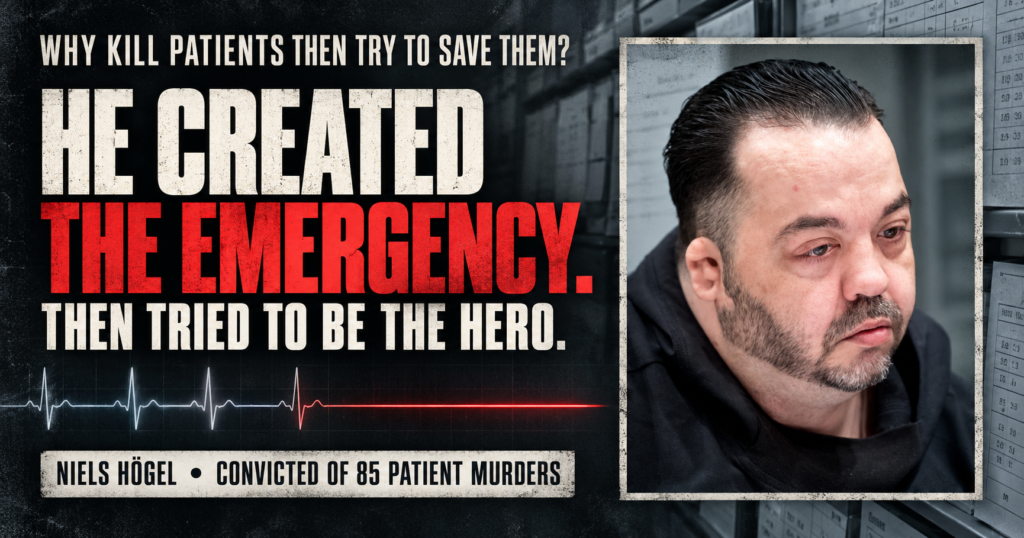
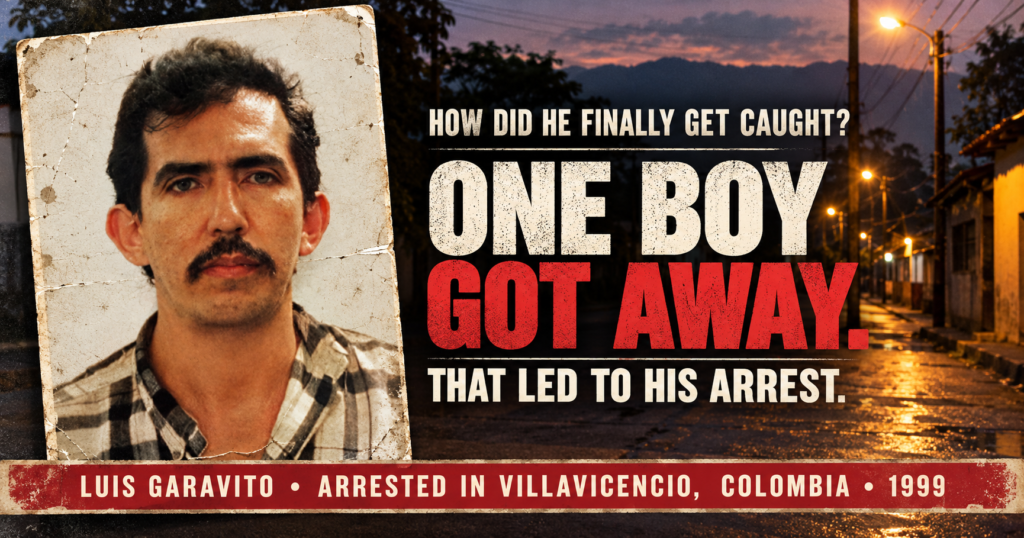
For example, Niels Högel’s attacks on patients he then tried to revive involved a reported desire to display his resuscitation skills and receive recognition. That pattern differs from the sexual violence in the investigation that exposed Luis Garavito.
Both require examining what the offender actually did, rather than assuming a motive from the category.
Two Victims Still Requires Evidence of Two Murders
The definition is a threshold, not proof.
Finding two bodies does not establish that one offender killed both people. Similar circumstances may justify investigating a connection, but that connection still needs evidence.
The FBI’s research study selected cases using convictions, guilty pleas, or substantial evidence linking an offender to the crimes.
That distinction matters when someone confesses to more killings than investigators have verified.
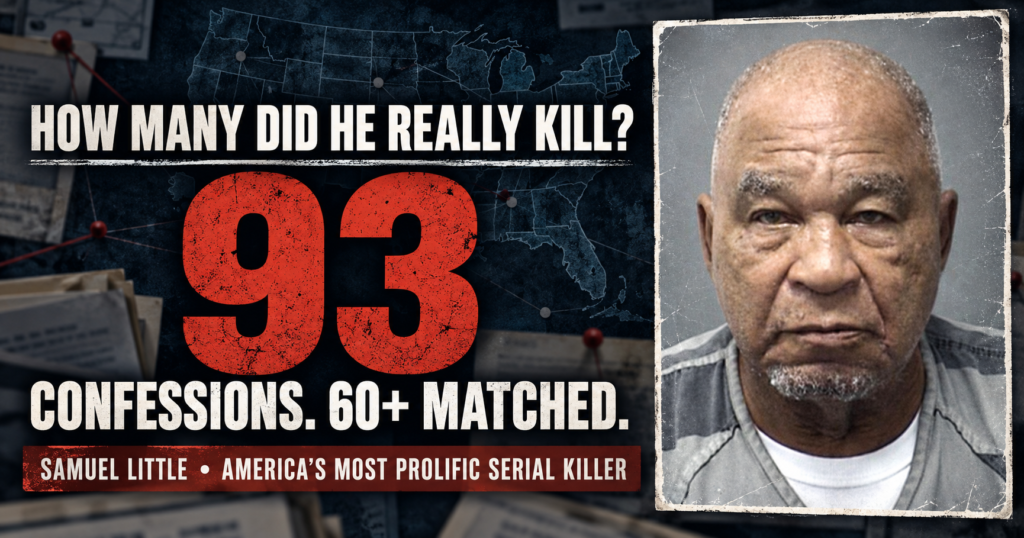
Our examination of Samuel Little’s changing victim count separates his admissions from cases investigators could corroborate.
A claimed total and an established total answer different questions.
Why the Definition Matters Before a Third Victim Exists
A two-victim threshold does not mean investigators should assume every pair of murders is connected.
It means a possible series can deserve attention before a third death provides a more familiar label.
That was part of the reasoning behind the FBI symposium’s broader definition.
For readers, the wording helps explain apparent contradictions. For investigators, recognizing a connection can affect how agencies share evidence and pursue a suspect.
For the families, the urgency is much more direct: whether someone sees that one death may help explain another.


Frequently Asked Questions
Can someone be a serial killer after two murders?
Yes, under the FBI’s published working definition, if the same offender or offenders unlawfully killed at least two victims in separate events.
Why do some sources require three murders?
Different definitions serve different purposes. A federal law concerning FBI assistance with serial-killing investigations uses a three-killing threshold.
Does killing two people in one attack count as serial murder?
That event alone does not satisfy the separate-events requirement. Multiple victims during one attack are not automatically a series.
Do the murders have to happen more than a month apart?
No. The FBI’s working definition does not impose a one-month minimum between killings.
Can serial killers murder people they know?
Yes. Robert Spangler’s repeated murders involved his wives and children, rather than strangers.
By Miles Rowan for Stories in the Static, examining criminal cases through overlooked evidence, unresolved questions, and the lives behind the headlines.