
In March 1998, authorities investigated Harold Shipman.
Another doctor had noticed something troubling: too many of his patients were dying.
A medical adviser examined 15 sets of patient notes. Those records were later found to have been fraudulently altered by Shipman. The inquiry found no evidence of criminal behavior and closed.
Shipman went on to kill three more patients.
That is the part I find hardest to shake. Someone noticed. Someone raised the alarm. Authorities looked.
And people still died.
Serial killers can be difficult to catch because investigators must overcome several separate problems: recognizing a death as murder, connecting it to other deaths, identifying a suspect, and proving that person committed the crimes.
A failure at any one of those stages can leave a killer free. The cases below show how differently that can happen.
Sometimes Nobody Realizes There Is a Murder to Solve
Before investigators can search for a serial killer, they have to recognize a killing.
Samuel Little’s case shows how badly that first step can go wrong.
According to the FBI, many deaths he later confessed to had originally been classified as overdoses, accidents, or deaths with undetermined causes. Some victims’ bodies were never found.
Think about what that means for an investigation.
A detective searching for similar homicides may never examine a death recorded as an overdose. The connection is missing before anyone starts comparing suspects.
This also explains why “Why didn’t police connect the murders?” can be an incomplete question. In some cases, there was no recognized series of murders to connect.
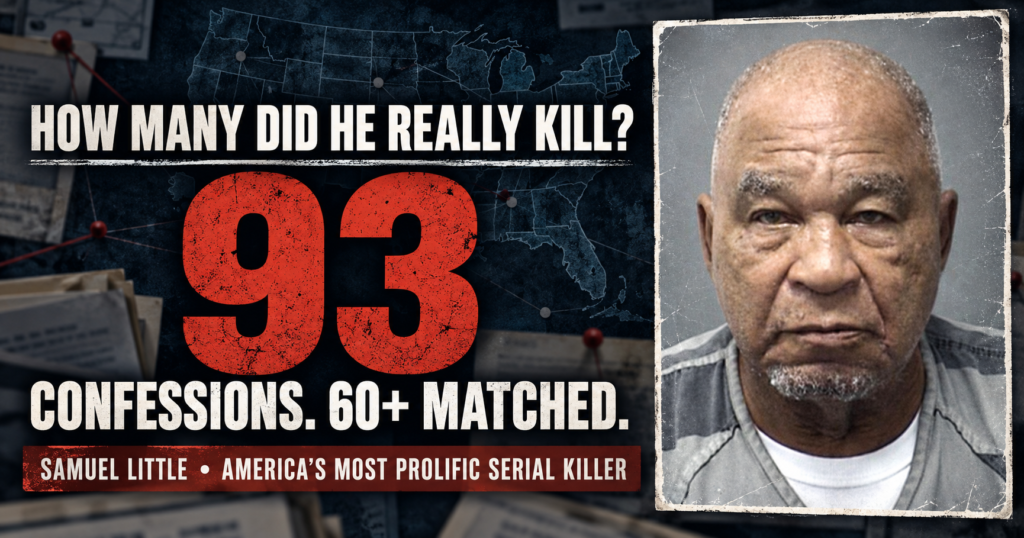
Our examination of how many people Samuel Little really killed follows the difficult work of matching his admissions to individual victims.
The horror is not simply that a person escaped identification. It is that the explanation attached to someone’s death could conceal what actually happened to them.
The Killer and the Victim May Have No Obvious Connection
Investigators need somewhere to begin.
A victim’s relationships, recent conflicts, and last known movements can provide that starting point. But the FBI identifies the absence of an obvious relationship between offender and victim as one of the obstacles in serial murder investigations. It also warns that an offender’s behavior may vary between crimes.
There may be no shared address, workplace, or circle of friends connecting two people.
That leaves a difficult question: how did they encounter each other?
And a second problem follows. If investigators expect every crime in a series to look identical, differences can make a genuine connection easier to dismiss.
A similar method can justify a closer look. It cannot, by itself, tell investigators who committed a crime.
This is why our comparison of prolific serial killers and their motives includes very different offenders. There is no single pattern that explains all of them.
A State Line Can Separate Pieces of the Same Case
Patricia Parker was 30 when she died. Her unidentified remains were found in Dade County, Georgia, in September 1981.
Decades later, Little described killing a young Black woman he had encountered in Chattanooga, Tennessee.
An investigator searched Chattanooga’s unsolved cases. Nothing matched.
He then contacted the Georgia Bureau of Investigation across the state border. There, investigators had a case that fit. Further interviews, a facial reconstruction, and DNA comparisons with relatives eventually helped identify Parker. The identification was announced in 2020.
The detail that stands out is the unsuccessful first search.
The investigator was following a real lead. He was searching the city Little had described. But the matching remains had been found in another state.
That case illustrates how an encounter location and a body recovery location can send investigators toward different sets of records. Finding the connection required someone to extend the search.
Parker had been unidentified for 39 years. Her name was recovered through several kinds of work, including an investigator asking another agency the right question.
A Trusted Job Can Make Suspicious Deaths Look Explainable
Shipman’s patients encountered him as their doctor.
That gave him a role in their care and in the records used to assess what had happened to them.
During the unsuccessful 1998 inquiry, the medical adviser wanted five additional sets of notes but could not obtain them. Police were also criticized for failing to interview patients’ relatives or check Shipman’s criminal and professional disciplinary history.
The problem went beyond his reputation. Investigators reviewed records that the suspect himself had altered.
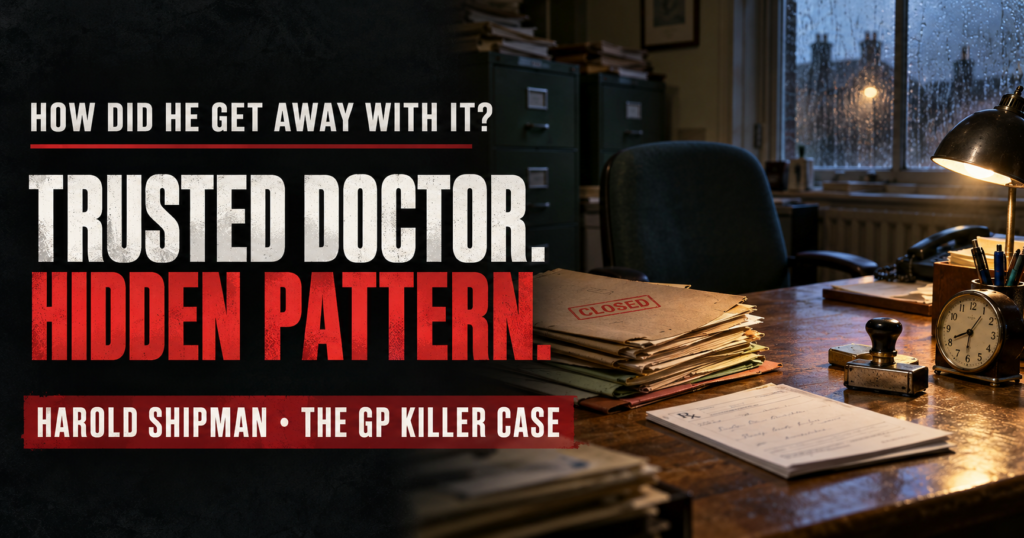
Reading how Harold Shipman escaped detection for so long, I keep returning to the need for independent evidence. An explanation can sound reasonable while resting on information supplied by the person under suspicion.
Niels Högel exploited a different medical role.
He deliberately induced cardiac emergencies in patients, then attempted resuscitation to win admiration. In June 2005, fellow nurses caught him manipulating a patient’s syringe driver.
The apparent rescuer had created the emergency.
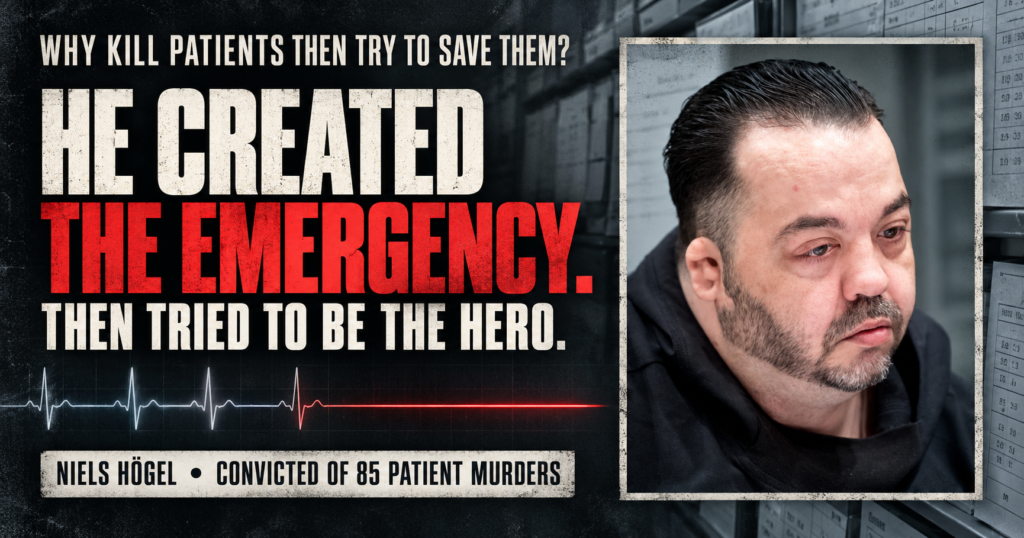
That reversal is central to why Högel harmed patients he then tried to save. Looking only at the rescue attempt could obscure the act that made it necessary.
Recognizing the Pattern Does Not Restore Missing Evidence
Once investigators identify a possible series, another task begins: establishing what happened in each case.
In the Högel investigation, many possible victims had already been cremated. Their bodies could no longer undergo forensic examination. He was convicted of murdering 85 patients in his 2019 trial.
A later discovery cannot undo that loss.
Little’s case also shows why admissions require careful checking. The FBI warned that his recollections of dates and victims’ clothing were not always accurate. Investigators were advised against dismissing a potential connection solely because those details differed.
That creates painstaking work. A confession may supply a useful lead while getting part of the story wrong.
It also helps explain why the numbers in our guide to serial killer victim counts need labels. A confession, a matched case, and a conviction describe different levels of evidence.
What Finally Helps Investigators Catch Them?
Little’s eventual murder convictions began with DNA.
Following his 2012 arrest on a narcotics charge and extradition to California, Los Angeles police obtained DNA connecting him to three unsolved homicides from 1987 and 1989.
The department contacted the FBI’s Violent Criminal Apprehension Program, or ViCAP, which investigated his background and found a broader pattern. Little was convicted of the three murders in 2014.
There was no single breakthrough that resolved everything.
DNA connected him to particular killings. Analysts examined his history. Later interviews generated more leads, and agencies worked together to check them.
The FBI specifically credited cooperation and information sharing in connecting Little to additional crimes.
These cases suggest a more useful question than “How was the killer so clever?”
What prevented the evidence from reaching the people who could recognize it?
Sometimes a death had the wrong classification. Sometimes the matching case was across a border. Sometimes investigators relied on altered records. Sometimes the physical evidence was already gone.
Understanding which failure occurred tells us much more than calling an offender a criminal mastermind.
Frequently Asked Questions
Are serial killers usually criminal geniuses?
No. The FBI explicitly identifies the idea that serial killers are all evil geniuses as a myth. Long periods without detection do not establish exceptional intelligence.
Why don’t police immediately connect similar murders?
Investigators first need evidence that the cases belong together. Different jurisdictions, unclear relationships, and variations in an offender’s behavior can complicate that assessment.
Can police investigate a serial killer without knowing every victim’s identity?
Yes. Little was already convicted and imprisoned while investigators continued identifying victims and checking additional confessions. Catching an offender and establishing the full extent of their crimes are separate tasks.
How many murders make someone a serial killer?
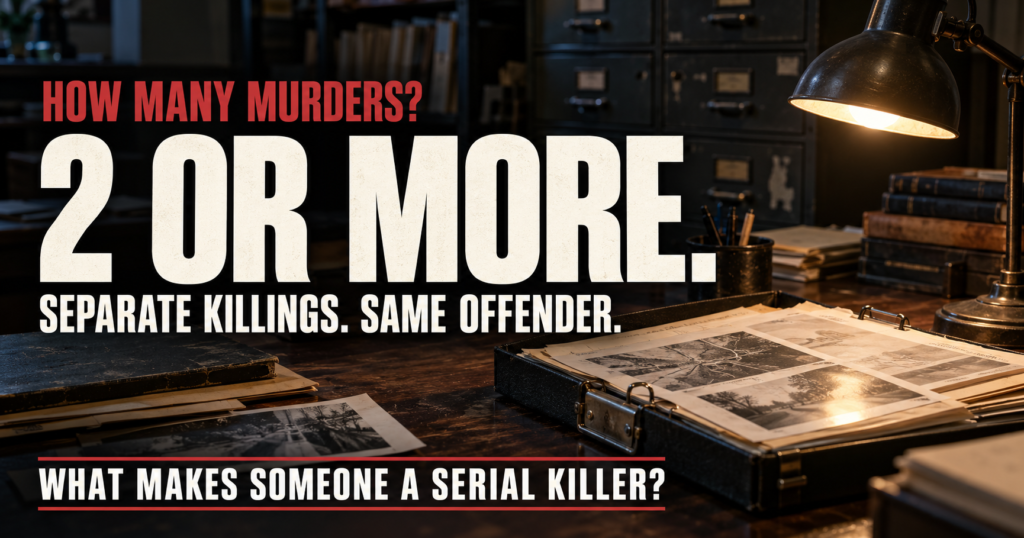
The FBI’s widely used investigative definition is two or more unlawful killings by the same offender or offenders in separate events. Our explanation of how many murders qualify as serial murder covers the definition and why some sources still use three victims.
By Miles Rowan for Stories in the Static, examining criminal cases through overlooked evidence, unresolved questions, and the lives behind the headlines.