
The woman came to Mudanjiang railway station looking for her son. Pengge Li worked there, but he hadn’t come home in a long time. His pay had stopped. She wanted to know whether anyone had heard what happened to him.
A coworker remembered her crying. He asked the station manager what he knew. The manager told him to send her away first.
Only after she left did the manager tell the coworker that Li had been killed in Harbin. The coworker passed along what he had heard and put up a notice asking people at the station to help pay for her trip home. They collected the money. They couldn’t tell her where her son was buried, or even give her a firsthand account of how he died.
Li’s daughter, Fengqin, was born after his arrest. In 2006, she visited a museum on the grounds of a former Japanese military compound and saw his name among the people sent to Unit 731.
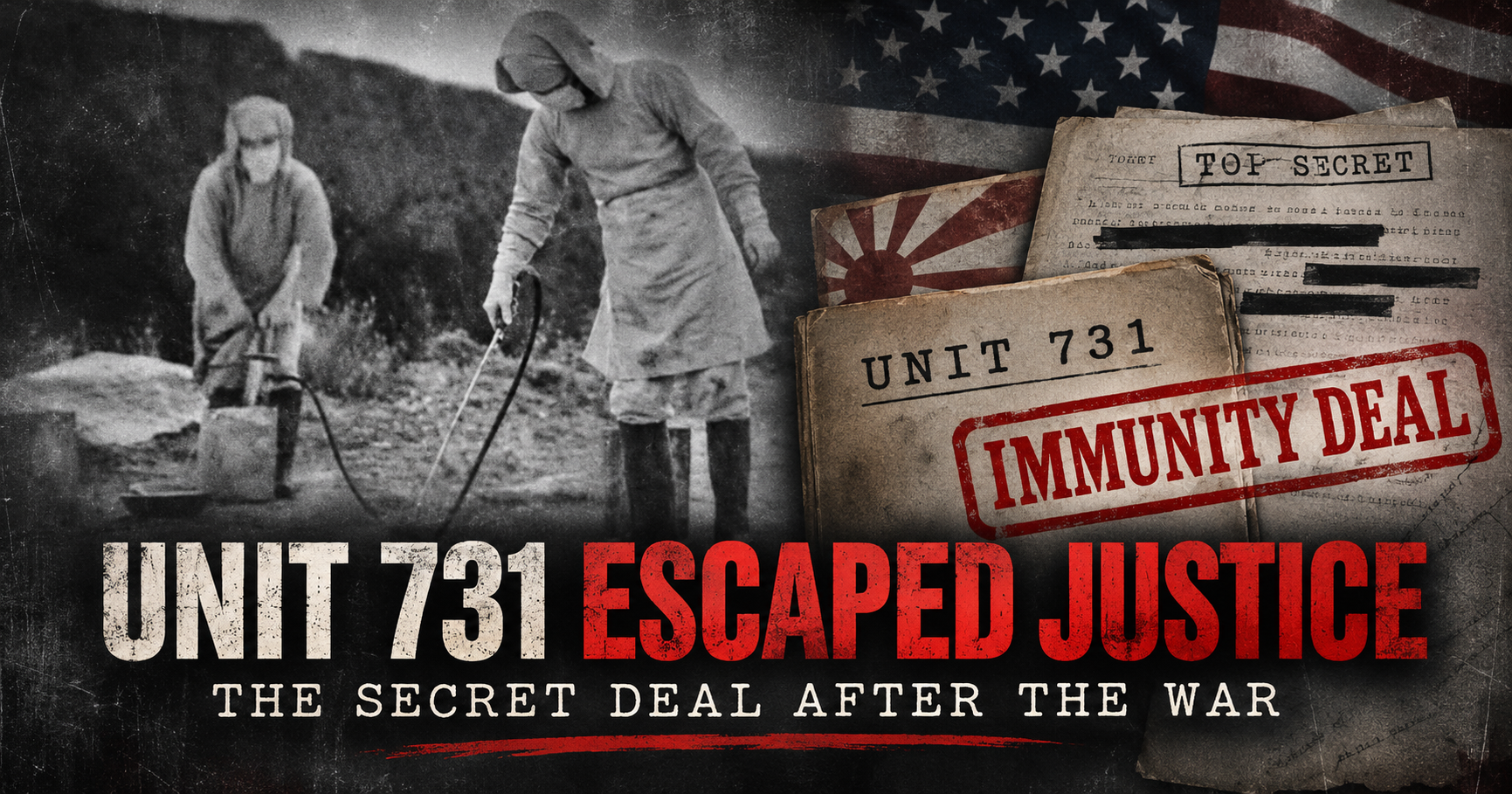
By then, the war had been over for 61 years. The men who had run the compound had been questioned. American officials had obtained information about what went on there. Shirō Ishii, the commander, had escaped prosecution under an arrangement that protected him and key associates in exchange for that information. The Soviet Union prosecuted other men connected to the program.
Fengqin Li still had questions about her father. Finding his name was the beginning of another search.
The railway worker who vanished into a military file
In the account historians Yan-Jun Yang and Yue-Him Tam recorded with Fengqin Li, her father had studied communications at a railway school, married Guilan Su, and taken a job at Mudanjiang station. One of his former coworkers remembered a quiet man who tended to keep to himself. That memory survived in paperwork collected during a background investigation involving Li’s son decades later.
The coworker’s account also preserved what the station manager had told him. In that version, Li had passed information to the Soviets and was shot in Harbin. The coworker hadn’t seen the killing. He’d heard about it from a manager who wouldn’t discuss it in front of Li’s mother.
The military paperwork offered a different lead. An order dated July 28, 1941, directed that Li and others accused of spying for the Soviets be sent to the military police in Harbin. The historians also identified a surviving “special transfer” document connected to him. The accusation was the authorities’ claim. The transfer was something researchers could trace.
It’s easy to read “special transfer” and imagine a prisoner changing jails. In the surviving files, the phrase identifies a process that sent people into Unit 731’s custody without a court trial. The records can sometimes tell you who authorized the transfer or where a person was sent. They may tell you nothing about the hour a family member finally realized that person wasn’t coming home.
What Unit 731 was and why it had a prison
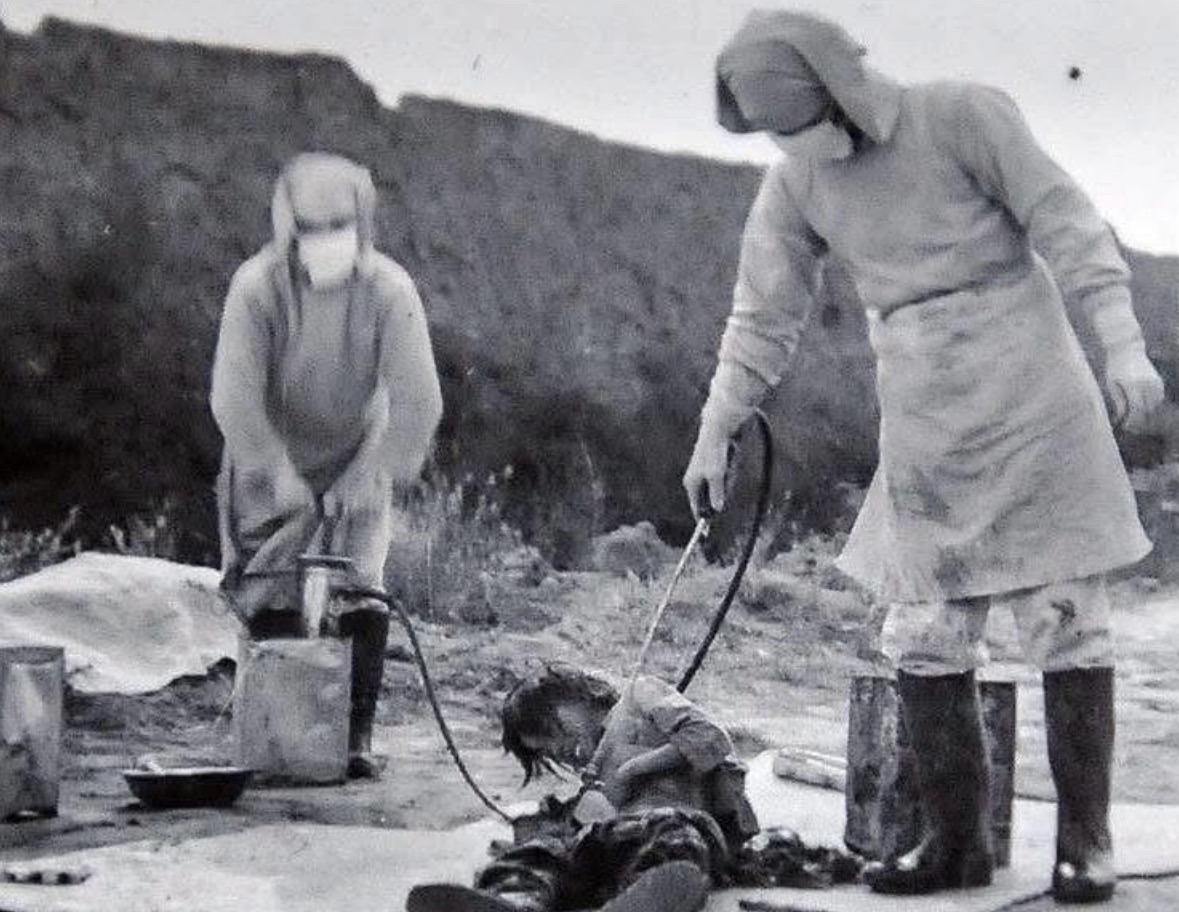
Unit 731 was part of the Imperial Japanese Army. Its main compound stood at Pingfang, near Harbin, in Japanese-occupied northeastern China. The area was part of Manchukuo, the puppet state Japan had established in Manchuria. The unit operated under a name associated with epidemic prevention and water purification.
Those are words you’d expect to find on the door of an office responsible for keeping people safe. At Pingfang, they covered a program that held prisoners and used them in experiments without their consent.
Historical accounts document deliberate infection, extreme cold experiments, and surgery performed on living prisoners. Japanese forces also carried out biological attacks outside the compound, harming civilians who had never been imprisoned there. The prison and the attacks were connected to the same broader wartime program. They left different kinds of evidence and different groups of families looking for answers.
The compound had military doctors and researchers, but it took people outside its walls to keep the prison supplied with captives. Someone made the arrest. Someone questioned the prisoner. Someone approved the transfer. China’s national archives account of the transfer system describes a process that could take days or weeks, carried out through military police and related agencies without a judicial hearing.
That is what makes Li’s file so revealing. An order could move him from the town where his mother knew to look for him to a place she had no reason to know existed.


What happened at Pingfang in August 1945
As Japan’s defeat approached, personnel at Pingfang destroyed parts of the compound. According to the U.S. National Archives’ history of the war crimes investigations, Ishii ordered experimental facilities demolished and the remaining prisoners killed to conceal the program’s crimes.
Blasting the buildings could destroy evidence on the grounds. It couldn’t reach every piece of paper made before someone arrived. An arrest report might survive in a provincial archive. A transfer order might survive in the files of the military police. Someone who worked alongside a missing man might live long enough to write down what his mother had asked him.
But those pieces couldn’t give investigators what testimony from the prisoners could have. The people with the clearest firsthand knowledge of what had happened inside were largely the people who had run the place.
The Americans could question them. The question was what the Americans were willing to offer in return.
Why the United States protected Ishii from prosecution
After the war, American occupation authorities pursued Unit 731 for two different reasons. War crimes investigators wanted evidence they could use to bring charges. Military scientists and intelligence officers wanted information about Japan’s wartime program. For a while, both groups were trying to learn what the same men knew.
Then the work pulled in opposite directions.
Ishii indicated that he could disclose more if he were protected from prosecution. American military and intelligence officials saw value in what he and his associates could tell them. They also worried that the Soviet Union might acquire the information first. The former wartime allies were already competing for strategic advantage, and the men who had run Unit 731 understood that their knowledge gave them something to bargain with.
In Jeanne Guillemin’s history of American obstruction at the Tokyo trial, the interference went beyond declining to file charges. U.S. military intelligence blocked prosecutors’ access to key witnesses and classified incriminating documents. The people responsible for preparing a public case didn’t have the same access as the people gathering intelligence behind closed doors.
The interviews with American scientists Edwin Hill and Joseph Victor in 1947 show how officials justified the trade. Their report acknowledged that some of the information could not have been obtained in American laboratories because of the “scruples attached to human experimentation.” They understood why they couldn’t have gathered the information themselves. They treated that very fact as part of what made it valuable.
Then there was the Soviet request to question Japanese specialists. American authorities eventually permitted the questioning with an American official in the room. The National Archives account says U.S. officials had already told the specialists how to answer. There’s a difference between sitting in on an interview and deciding in advance what the interviewers get to hear.
The evidence for the immunity arrangement doesn’t rest on a rumor about a secret meeting. In a Congressional Research Service report on the U.S. decision not to prosecute, a 1998 Justice Department letter is cited as confirmation. The letter describes two formerly classified reports that supported the same finding: Ishii and his colleagues received protection from prosecution and gave U.S. authorities information in return.
Did the U.S. get a medical breakthrough out of the deal?
The records show that officials believed the information was valuable. They show that Americans obtained information and that key figures avoided prosecution. Those facts don’t establish a claim that a particular treatment or medical breakthrough came from the material.
I’d be careful about that distinction even if the dramatic version sounds more satisfying. The officials who wanted the deal had their own reasons to describe the information as exceptionally valuable. Their assessment tells us why they were willing to protect Ishii. It can’t, by itself, tell us whether the bargain delivered everything they thought it would.

Tokyo, Khabarovsk, and the trial Ishii never faced
The Tokyo war crimes tribunal prosecuted Japanese leaders after the war. Ishii and the key associates protected by American authorities did not stand trial there for Unit 731’s experiments.
In December 1949, the Soviet Union held a separate tribunal in Khabarovsk, in the Russian Far East. A historical study of the Khabarovsk proceedings traces the prosecution of twelve former Japanese servicemen connected to the broader biological warfare program. All twelve were convicted. Their sentences ranged from two to 25 years of forced labor. Ishii was not a defendant.
The Soviet trial took place in a political climate that gave both sides reasons to talk past each other. The Soviets had reasons to publicize Japanese crimes the Americans had declined to prosecute. American officials had reasons to dismiss a proceeding that drew attention to information they had kept from the public. Neither fact resolves every question about the testimony. Neither changes the fact that there were convictions in Khabarovsk and no trial of Ishii in Tokyo.
That’s why “everyone got away with it” is too broad, even if it captures the anger people feel reading this history. Twelve people were convicted in one court. The commander and other key figures shielded by U.S. authorities escaped prosecution. For families looking for an account of what happened to one person, even a conviction in the Soviet case might not provide the detail they needed.
The Chinese families who went to court decades later
In 2001, men from China took the witness stand in Tokyo. They had come to talk about people killed outside the compound, in communities affected by Japan’s wartime biological attacks. One of the witnesses had been eight when he lost his father. By the time The Washington Post covered his testimony in Tokyo, he was 68. What he remembered was his father looking at him and crying, unable to speak.
This was a civil case brought by Chinese plaintiffs seeking redress from the Japanese government, long after the postwar criminal trials. In 2002, the Tokyo District Court ruling reported by The Japan Times recognized that Japanese forces had carried out biological attacks in China and harmed civilians. The court denied compensation.
Think about the wait in that one man’s testimony. He had been old enough to remember the look on his father’s face, but too young to understand what was happening. Six decades later, he sat in a courtroom and described it. The ruling finally acknowledged the attacks. It still left the people asking for compensation without it.
What the number 3,000 does and doesn’t tell us
About 3,000 deaths at Pingfang is a commonly cited historical estimate. It refers to the main site through the end of the war. Historian Keiichi Tsuneishi’s study of the surviving Japanese military records helps distinguish the estimate for the compound from the losses caused by attacks elsewhere. The two figures aren’t interchangeable, and the roughly 3,000 deaths should not be described as a complete tally of Chinese victims alone. People of other nationalities were imprisoned there too.
There’s a third number worth keeping separate: 284. That was the number of people identified in the Jilin Provincial Archives’ holdings as victims of special transfers when Chinese archival authorities reported their findings in December 2025. It covers what archivists had identified in that collection. It isn’t an estimate of everyone who died at Pingfang.
Three thousand is an estimate of lives lost at one site. Two hundred eighty-four is a count of people traced through one body of records. The number of people killed in attacks outside the compound answers a wider question. If you see those figures presented as though historians are simply disagreeing about the same death toll, check what each one is counting.
There’s also a detail in that December announcement I don’t want to gloss over. Archivists had identified seven more people. Among them were Song Shaokui, recorded as a farmer, and Wang Yuxiang, recorded as a logging worker. The files preserve Wang’s alternate names too. Those entries could look incidental until you imagine a relative searching under a name different from the one at the top of the page.
Why some of the files took so long to surface
No single archive holds the whole story. Chinese provincial files can trace people arrested and transferred. American occupation records show what investigators learned and how officials dealt with Ishii. Soviet court records document a prosecution the Americans never brought. Each collection exists because someone was doing a different job.
In 2007, the U.S. National Archives announced the release of about 100,000 newly declassified pages from a broader search for records related to Japanese war crimes. Those were not 100,000 pages about Unit 731 alone. The announcement matters because it shows how much material remained to be opened and examined decades after the occupation ended.
Personnel files can reveal a different side of the story. In 2025, Le Monde reported on Japanese service records newly made public that identified assignments to related units in Nanjing and Guangzhou. An assignment record can help establish who served where. It doesn’t establish what every person on the roster did. A transfer file can help establish who was taken. It doesn’t always tell a family how that person died.
That’s the frustration of reading this history. The paperwork can be precise about an authorization, a date, or an assignment and silent about the thing you most want to know.
The man who remembered the buildings
Hideo Shimizu was 14 when he was recruited as a technical trainee and sent to Pingfang in 1945. He spent about four and a half months there. Decades later, Shimizu described that time to The Japan Times, recalling how recently he had finished school before the military sent him to occupied China.
He returned to Harbin in 2024, 79 years after he left. At the former compound, footage of Shimizu’s visit shows him explaining the layout to a reporter. At the memorial, he bowed and expressed remorse for his part in what had happened there.
I keep thinking about what he could do that Fengqin Li couldn’t. He could return to those grounds and point out where things had been. She could return with her father’s name and still need someone to tell her where to look.
What Fengqin Li took home
Finding her father’s name at the museum in 2006 didn’t end the search. In 2011, researchers went back to Mudanjiang railway station to look for traces of his life there. The next year, the provincial government formally recognized Pengge Li’s death and issued a martyr certificate.
When the historians visited Fengqin at home, she made dumplings and put out fruit. They talked about her children and grandchildren. Then they talked about the man who had worked at the railway station. His certificate hung on her wall.
His mother had once gone to the station hoping somebody would tell her why he hadn’t come home. His daughter could now show visitors a document bearing his name. The historians still couldn’t tell her what his last days had been like.
Was Unit 731 located in Harbin or Pingfang?
Both descriptions point to the same main site. The compound stood in Pingfang, now a district of Harbin in northeastern China. Parts of the former site survive, and there is a museum and memorial there. Records also refer to other facilities and units, so an image or document connected to the wider program should not automatically be identified as coming from the Pingfang prison.
Did any prisoners survive Unit 731?
The historical accounts describe the killing of the remaining prisoners at the main Pingfang compound as the war ended. When an account calls someone a “Unit 731 survivor,” check where that person was and what they survived. A civilian who survived an attack outside Pingfang, a former member who lived to testify, and a prisoner who came out of the compound alive are three different claims.
How are archivists still finding the names of Unit 731 victims?
Some names survive in records made before the prisoners reached Pingfang, including military police documents. A file may give a name, an alias, an occupation, or the place where a person was arrested. That is how researchers could add seven names in 2025 without discovering seven new accounts of what happened inside the prison. The papers show that those people were sent there. For many families, what happened after the transfer is still the part nobody can tell them.