

Somewhere on shortwave radio, Yosemite Sam kept threatening to blow someone to smithereens.
There was a burst of electronic noise, a few seconds of the cartoon character’s voice, and then silence. Before long, the transmission returned.
No host introduced it. Nobody explained the noise. Listeners began comparing frequencies, recordings, and reception reports.
The voice was familiar. Everything around it was wrong.
The Yosemite Sam numbers station was a real series of unusual radio transmissions reported in late 2004 and early 2005. Its nickname came from the cartoon audio it repeatedly played. Two amateur radio operators later reported tracing a signal to a military communications testing facility in New Mexico.
Why someone was broadcasting it has never been established by the public evidence examined for this account.
That makes this a more interesting story than a signal that simply vanished without a trace. People went looking for the transmitter.
They reported finding it.
The Cartoon Voice That Didn’t Belong There
The broadcasts became widely known among radio listeners in December 2004.
A short burst that sounded like digital data preceded a clipped recording of Yosemite Sam. Listeners associated the line with Bunker Hill Bunny, the Warner Bros. cartoon featuring Sam and Bugs Bunny.
In a cartoon, the threat was a joke.
On a radio frequency with no explanation, it became a question.
Was someone testing equipment? Was it interference from a prankster? Did the noise carry information intended for another receiver?
I think the familiar voice is what makes the recording so effective. A completely strange noise can remain just noise. Recognizing Yosemite Sam gives your mind something to hold onto while the rest of the transmission refuses to explain itself.
It is a similar reason Swedish Rhapsody’s unsettling voice and music stayed with shortwave listeners. A recognizable sound can become disturbing when it arrives without the context that normally makes it harmless.
What Did the Yosemite Sam Broadcast Sound Like?
The basic sequence was simple: an electronic burst, a piece of cartoon dialogue, then a pause.
The recognizable line included, “Varmint, I’m a-gonna blow ya to smithereenies!”
Reports also describe a shortened version that retained little more than the word “Varmint.”
That variation is worth remembering. The story did not consist of one identical recording transmitted without interruption for months.
Listeners logged changes.
They also found the signal on multiple frequencies. Four commonly reported frequencies were 3,700, 4,300, 6,500, and 10,500 kilohertz.
To someone listening casually, it might have sounded like the same joke happening again.
To the people keeping logs, the timing, frequency changes, and electronic burst were clues.
There Are Recordings, Not Just Recollections
This is not a case built entirely around somebody remembering something strange from childhood.
The surviving Yosemite Sam recordings and monitoring notes include audio files and dated observations from the period.
They preserve something useful about how the mystery developed. Listeners were discussing possible locations and explanations while the broadcasts were still being heard.
Some guesses were speculative. Others came from comparing what receivers in different places could detect.
A recording establishes that a signal existed. The accompanying guess about who transmitted it still needs its own evidence.



Why Do People Call It a Numbers Station?
Numbers stations are commonly associated with broadcasts carrying coded information, often as spoken groups of digits or letters.
Yosemite Sam did not fit the familiar image of a mechanical voice reading a long list of numbers.
It attracted the same audience because it was anonymous, repetitive, and accompanied by an electronic burst that sounded as though it might contain data.
That resemblance helped put it into collections of mysterious signals and supposed spy stations.
But a mysterious transmission is not automatically an intelligence operation.
There are documented reasons for sending secret information over a radio signal anyone can hear. Those reasons do not establish the purpose of every unidentified broadcast.
With Yosemite Sam, calling it a numbers station is useful for finding the story. Treating that label as proof that spies were receiving instructions would go too far.
The Signal Disappeared, Then Returned
The initial December broadcasts stopped shortly before Christmas.
They did not stay gone.
Monitoring accounts describe renewed activity in January 2005, including reports on frequencies used by standard time broadcasts. The original group of frequencies was heard again in February.
That January activity is easy to lose in abbreviated versions that jump directly from December to February.
The interruption matters because it changes the picture. This was a series of appearances, changes, and disappearances.
It also created practical trouble for people using the affected frequencies.
To an internet reader, Yosemite Sam could be a delightful mystery. To a radio operator trying to listen past it, he could be an unwanted interruption that kept coming back.



Why Was Yosemite Sam Heard Near Time Signals?
Some listeners reported hearing the shortened transmission alongside WWV.
WWV is a real time-and-frequency station operated by the National Institute of Standards and Technology. Its broadcasts provide reference signals and time announcements.
That made the intrusion especially conspicuous.
People tuning to a predictable service were encountering a burst and a cartoon voice instead.
Nothing in those reception reports establishes that WWV itself was transmitting Yosemite Sam. A separate signal can be heard on the same frequency.
This was not evidence that the official time station had secretly adopted a cartoon character as part of its programming.
It was another reason for listeners to investigate.
Two Radio Operators Decided to Follow It
One frequency in particular helped bring the story down from speculation to a search on the ground.
The signal on 3,700 kilohertz was being heard in spectrum used by amateur radio operators.
In February 2005, Mike Stark and Mike Langner set out to find it.
A contemporary Amateur Radio Newsline report describes them heading west from the Albuquerque area, following the signal with mobile receiving equipment and then a field-strength meter with a directional loop antenna.
They reported locating the source at the Mobility Assessment Test and Integration Center, generally called MATIC, on Laguna Pueblo land.
The report said that someone approached while they were photographing the site and ordered them away.
It also said the transmission stopped later that afternoon.
That is a remarkable sequence. It remains a reported sequence, not a confession from whoever operated the transmitter.
What Was MATIC?
Contemporary radio coverage identified MATIC as a facility connected with military communications testing.
That connection makes an equipment test a plausible explanation.
It does not prove that the cartoon recording carried military instructions, that it was part of an intelligence program, or that every transmission attributed to Yosemite Sam came from the same equipment.
The June 2005 issue of Monitoring Times discussed the broadcasts and the reported pursuit of the transmitter while the incident was still recent.
The facility connection gave the mystery a more concrete setting. It did not supply the missing operator’s explanation.
That is where many retellings take an unnecessary leap.
Finding a signal near a place where radios are tested makes testing worth considering. It does not establish exactly what was being tested or why someone selected that audio.
Was Yosemite Sam a Prank or a Military Test?
Both have been proposed.
A recognizable voice clip could serve as easily identifiable test audio. It could also be someone entertaining themselves with equipment they had access to.
The electronic burst might have carried test information. It might have served another function. Its presence alone does not prove encryption or espionage.
An explanation needs to account for the whole transmission, including its timing, frequencies, and changes.
That is why I would resist choosing a dramatic answer just because it fits the location.
We have a sound, a monitoring history, and a reported source hunt. We do not have a verified instruction from the operator explaining the purpose.
The Moment It Stopped Is Suggestive, Not Conclusive
The report that the broadcast ceased hours after the visit is one of the story’s strongest details.
It supports the possibility that the visit brought attention to the interference and someone stopped it.
But timing cannot tell us who made that decision.
A supervisor could have intervened. An operator could have stopped a test. Someone could have decided a joke had attracted enough attention.
Those are possibilities, not additional events we can insert into the account.
The documented incident is unusual enough without imagining a secret conversation inside the building.



How Much of the Mystery Was Actually Solved?
There are three separate questions.
Was the broadcast real? Recordings and contemporary monitoring accounts support that.
Was a likely source identified? Two operators reported tracing the signal to MATIC.
Do we know why it was transmitted? The public material examined here does not establish that.
Keeping those questions separate prevents the story from swinging between “completely unexplained” and “fully solved.”
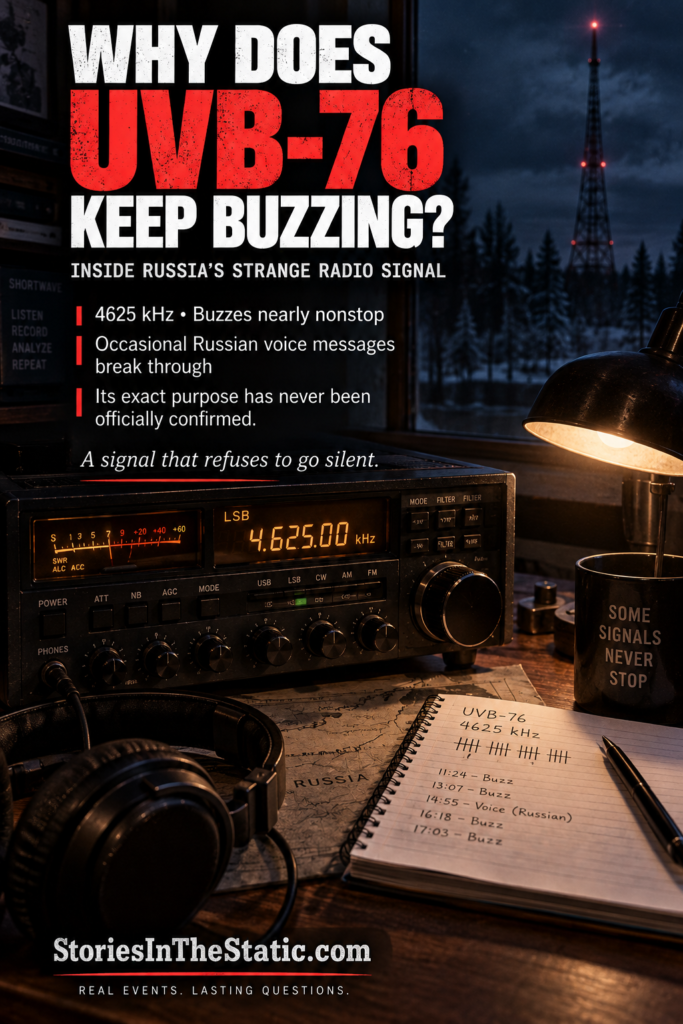
Radio mysteries often become more revealing when listeners find part of the answer. With UVB-76’s persistent buzzing and occasional voice messages, hearing a pattern still leaves questions about its purpose.
Yosemite Sam offers a different problem: a reported physical destination, with no complete explanation waiting at the end of the drive.
Questions About the Yosemite Sam Radio Station
Was the Yosemite Sam numbers station real?
Yes. Surviving recordings and dated monitoring accounts document unusual shortwave transmissions using the character’s voice in 2004 and 2005.
What did the broadcast say?
The familiar version used a clip in which Yosemite Sam threatens to blow someone to smithereens. Later reception reports also describe a shortened version featuring the word “Varmint.”
Where was it coming from?
Two amateur radio operators reported tracing a signal to the MATIC communications testing facility on Laguna Pueblo land in New Mexico. That reported discovery should be distinguished from an official explanation by the transmitter’s operator.
Was it definitely a spy station?
No. Its anonymity and electronic burst attracted speculation about intelligence communications, but those features do not establish that it was sending instructions to spies.
Did Yosemite Sam hijack another station?
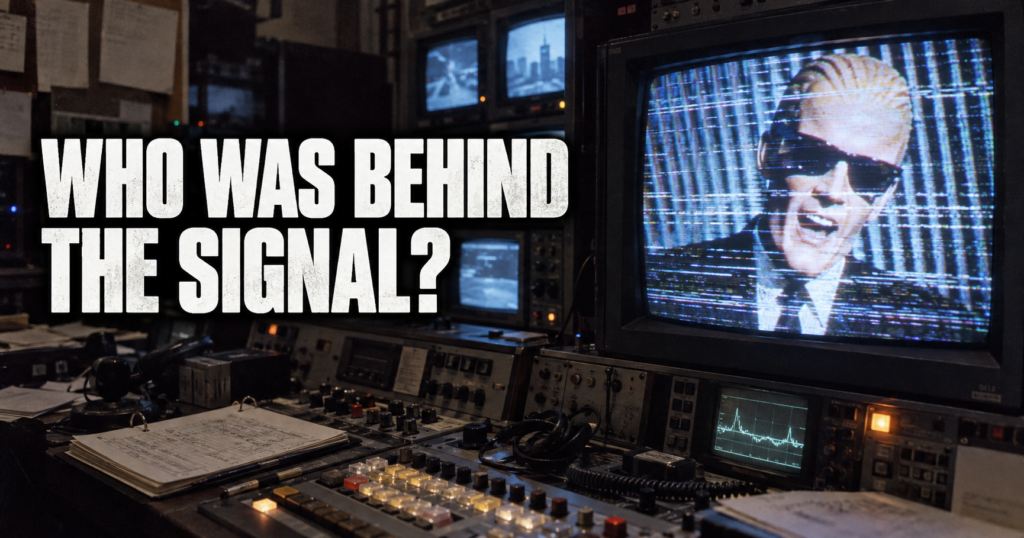
The monitoring accounts describe an interfering shortwave signal, rather than a demonstrated takeover of another broadcaster’s equipment. That differs from the Max Headroom intrusion that interrupted television programming.
Can you still listen to the broadcasts?
Archived recordings remain available. They let you hear the electronic burst and clipped voice without needing the original transmitter to be operating.
Why did someone choose Yosemite Sam?
That is one of the unanswered questions. The clip is distinctive and easy to recognize, which could make it useful for testing. It could also have been chosen for humor. Neither possibility has been established as the operator’s reason.
Somewhere, someone selected that recording, connected it to a transmitter, and sent it out where strangers could hear it.
The strangers kept records. Then two of them went looking.
About the Author
The Stories in the Static team explores strange broadcasts, historical mysteries, and the evidence behind unsettling stories. Find more unusual true accounts at Stories in the Static.