
A 4.89 rating looks pretty good when you need a ride.
In 2019, that was the number beside Yusuf Abdi Ali’s name on Uber. His account showed Pro Diamond status. When undercover CNN producers requested a ride in northern Virginia, he picked them up.
There was something his passenger rating couldn’t tell them.
Before he drove American streets, Ali had commanded soldiers under Somali dictator Siad Barre. A man named Farhan Warfaa accused those soldiers of imprisoning and torturing him as a teenager. He had spent years trying to hold their commander accountable.
While Ali was picking up passengers, Warfaa’s case was approaching trial.
That is the part of this story I keep coming back to. Two men carrying the same history, living thousands of miles apart, with completely different reasons to remember it.
One was working as a driver.
The other was preparing to face him in court.
Who Was the Man Behind the Wheel?
Yusuf Abdi Ali was also known as Colonel Tukeh. During the late 1980s, he commanded the Somali National Army’s Fifth Brigade in the northwestern part of the country, including the Gebiley area.
He served a government that used detention, torture, and violence against perceived opponents.
Members of the Isaaq community were particularly targeted. The opposition Somali National Movement drew much of its support from that community, and civilians suffered under the government’s campaign against it.
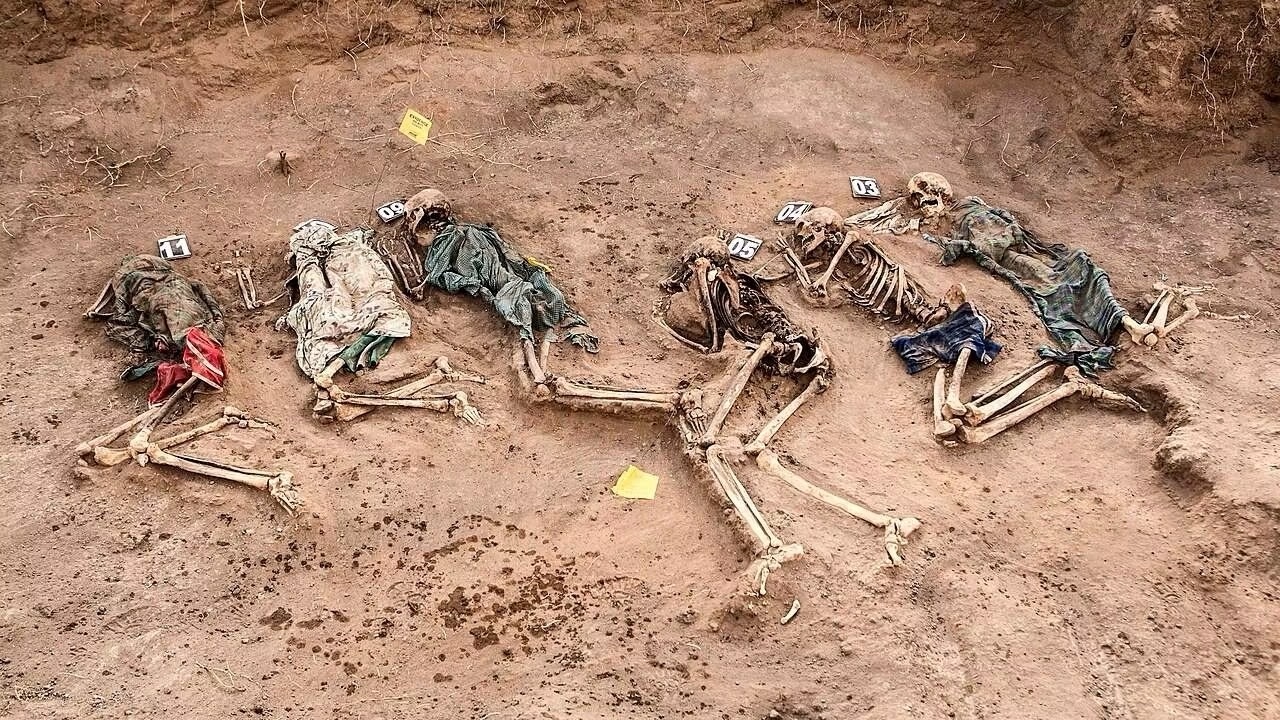
The scale becomes clearer in Human Rights Watch’s account of attacks on Isaaq communities, which describes aerial bombardment, civilian killings, poisoned wells, and the destruction of crops and livestock during 1988 and 1989.
Think about what destroying a well means in a place where people depend on it.
The damage continues after the soldiers leave. Families still need water. Animals still need to drink. People who survive the initial violence can lose the things that make staying alive possible.
That was the larger history behind the case that eventually reached Virginia.
But Warfaa’s story began with something much smaller: a missing water truck.
Why Did Soldiers Take Farhan Warfaa?
Warfaa testified that he was 17 when soldiers rounded him up in December 1987.
He had been herding camels and cattle for his family. The arrests followed a dispute over a missing military water-tanker truck.
Soldiers took him to a military base.
According to his account, he was detained for months, repeatedly restrained, beaten, and interrogated. His lawsuit described beatings that left him unconscious. He alleged that Ali witnessed some of the abuse.
The court record describing Warfaa’s detention places the allegations in late 1987 and early 1988.
There is no need to invent a dark hallway or imagine what anyone whispered. The known circumstances are disturbing enough.
A teenager was taken away from his family. The people holding him had weapons, authority, and control over whether he could leave.
How does someone in that position know whether another interrogation will end with a return to his cell?
Warfaa said his imprisonment ended with gunfire.


He Said They Thought He Was Dead
Warfaa testified that Ali shot him multiple times and left him for dead.
According to the lawsuit, soldiers were ordered to dispose of his body. When they discovered he was still alive, a bribe secured his release.
He survived.
Ali denied torturing him, and the eventual verdict did not accept every claim against Ali. The jury found him responsible for torture but declined to find him liable on the separate attempted extrajudicial killing claim.
That distinction matters throughout this story.
Warfaa’s account of being shot belongs to his testimony. The torture finding belongs to the jury’s verdict. They should not be blended into a claim that jurors proved every part of his account.
For me, keeping that distinction makes the story more compelling. We can follow what a survivor described, hear that the accused denied responsibility, and then examine what the jury actually decided.
The truth does not need help becoming frightening.
How Did Ali End Up Living in Virginia?
Ali’s path to the United States involved several moves and earlier immigration proceedings.
A federal court opinion recounts that he entered Canada through the United States in 1990. Canada deported him to the United States in 1992 over gross human rights abuses in Somalia.
Facing deportation from the United States, he left for Somalia in 1994.
He returned in December 1996 and lived in the United States as a lawful permanent resident.
This is one reason the Uber headline can leave the wrong impression. Ali’s background had already attracted attention long before anyone booked that recorded ride.
The lawsuit against him began in 2004.
By 2016, CNN was reporting on his work as a security guard at Dulles International Airport. Three years later, its reporters found him driving for ride-sharing services.
His American working life continued while the allegations and legal proceedings remained unresolved.


How Could He Pass a Background Check?
This is the question almost everyone asks once they hear about the driver.
How could a man facing allegations of torture qualify to transport passengers?
The explanation offered by the background-check company centered on the difference between accusations and criminal records.
Checkr chief executive Daniel Yanisse said Ali had no U.S. criminal history or international sanctions listing to report. In his explanation of why Ali cleared screening, Yanisse defended the company’s reliance on verified government records.
That answers part of the question. It also raises another one.
What do we think a background check tells us?
A passenger might reasonably picture a broad investigation into someone’s past. The actual screening process can be much narrower, depending on the records searched and the rules being applied.
A person can face serious public allegations without having a criminal conviction that appears in the database a company checks.
That does not make every allegation true. It means passing that check cannot settle those allegations.
After the reporting, Uber permanently removed Ali’s access to its app. Lyft also banned him.
The Rating That Made the Story So Unsettling
The 4.89 rating is a small detail, but it helps explain why this case reached so many people.
It was familiar.
Most of us have looked at a driver’s name, checked the rating, and watched a little car move toward us on a screen. We use those details to make quick decisions about a stranger.
CNN’s recorded encounter with Ali behind the wheel brought a distant history into that ordinary experience.
But the rating was measuring rides. It could not measure what happened in Somalia.
There is also a risk in letting that detail take over. The story becomes a startling fact about an Uber driver, and the person who endured the abuse gets pushed into the background.
Warfaa had been pursuing his case long before most American readers knew Ali’s name.
The investigation brought attention. The survivor had already done years of work.
Why Did Warfaa Wait So Long for a Trial?
The lawsuit began in 2004. The jury delivered its verdict in 2019.
Fifteen years passed between those events.
Much of the delay involved legal questions about whether the case could proceed in an American court. Ali raised immunity issues. Courts considered which laws could apply to conduct that occurred overseas.
The history of the case’s repeated delays includes pauses while related cases moved through the courts. Some claims were dismissed. Claims under the Torture Victim Protection Act survived.
Those arguments decided whether Warfaa would get a trial at all.
It is easy to read a court timeline as a series of dates. Filed. Stayed. Reopened. Appealed.
For the person bringing the case, those dates are years of his life.
By the time Warfaa testified in Virginia, more than three decades had passed since his detention.
What Did the Jury Find Ali Responsible For?
On May 21, 2019, a federal civil jury in Alexandria found Ali liable for Warfaa’s torture.
It awarded Warfaa $500,000, including $100,000 in punitive damages.
The jury did not find Ali liable for the separate attempted extrajudicial killing claim. The recorded outcome of Warfaa’s lawsuit includes both decisions.
This was a civil case. The verdict imposed financial liability. It did not sentence Ali to prison.
That can feel unsatisfying when the conduct at the center of a case is so severe. But calling the judgment a criminal conviction would give readers the wrong answer about what happened.
Warfaa had obtained a legal finding that Ali was responsible for his torture.
Whether the money could be collected was another question.



Did Warfaa Actually Receive the Money?
A court awarding damages does not mean the defendant immediately pays them.
At the time of the verdict, Ali’s lawyer said his client did not have the money to satisfy the judgment. Reporting on the decision left collection uncertain.
I could not verify that Warfaa received the full $500,000.
His public response, though, made clear that the judgment carried meaning beyond the award. In his statement after the verdict, Warfaa described the outcome as vindication for himself and others in Somaliland who suffered under Ali’s command.
That is an important part of the story to sit with.
Someone can win a case without recovering everything he lost. A judgment cannot return the months spent imprisoned or make the intervening decades disappear.
It can create a public record that the person responsible was held to account.
What Happened to Ali After the Verdict?
Ali’s story in the United States did not end in 2019.
He was later deported to Somalia on December 20, 2024, as reporting on his removal from the country confirmed.
The civil judgment and deportation were separate outcomes. The first established liability for Warfaa’s torture. The later removal ended Ali’s residence in the United States.

Questions about accountability across borders also run through the killing of Georgi Markov on a London street. Warfaa’s case offers something different: the victim survived and was able to testify.
After years of legal delays, he could tell jurors what he remembered.
They had to decide what the evidence established.
Questions About the Former Colonel Who Drove for Uber
Was Yusuf Abdi Ali really an Uber driver?
Yes. CNN producers booked a ride with him in northern Virginia in 2019. His profile showed a 4.89 rating and Uber Pro Diamond status.
Who was Colonel Tukeh?
Colonel Tukeh was the name associated with Yusuf Abdi Ali, a former Somali National Army commander who served under Siad Barre.
Was Ali convicted of torture in Virginia?
The 2019 proceeding was a civil trial. The jury found him liable for torture and awarded damages. That was not a criminal conviction or a prison sentence.
Did the jury find that Ali shot Warfaa?
Warfaa testified that Ali shot him, but the jury declined to find liability on the separate attempted extrajudicial killing claim. It found Ali liable for torture.
Why was the case heard in the United States?
Ali lived in the United States, and Warfaa’s surviving claims proceeded under the Torture Victim Protection Act. That law provides a civil route for certain claims involving torture or extrajudicial killing committed under foreign governmental authority.
Is this a real story?
Yes. The ride-sharing investigation, federal lawsuit, torture verdict, damages award, and later deportation are documented. The disputed allegations should be read alongside the specific findings the jury made.
By Miles Rowan for Stories in the Static.