

Eight days.
According to Frank Hart’s daughter, Rebecca, that was how close her father was to leaving prison when his cellmate killed him. She shared that detail with reporters at Florida State Prison on the day of the killer’s execution.
I keep returning to that number because it gives the story a weight the execution headline alone cannot.
James Robertson’s name became news because of his unusual stated motive. He said he murdered Hart to get a death sentence.
Hart was the person who lost his life in that plan.
Florida executed Robertson on October 13, 2026, nearly eighteen years after the killing. He was 63.
But to understand what happened, we need to go back to the prison cell, the conviction, and a detail buried in the court record: Robertson rejected an offer that would have kept him alive.
Why Did James Robertson Kill Frank Hart?
Robertson said he killed his cellmate because he wanted to be convicted of first-degree murder and sentenced to death.
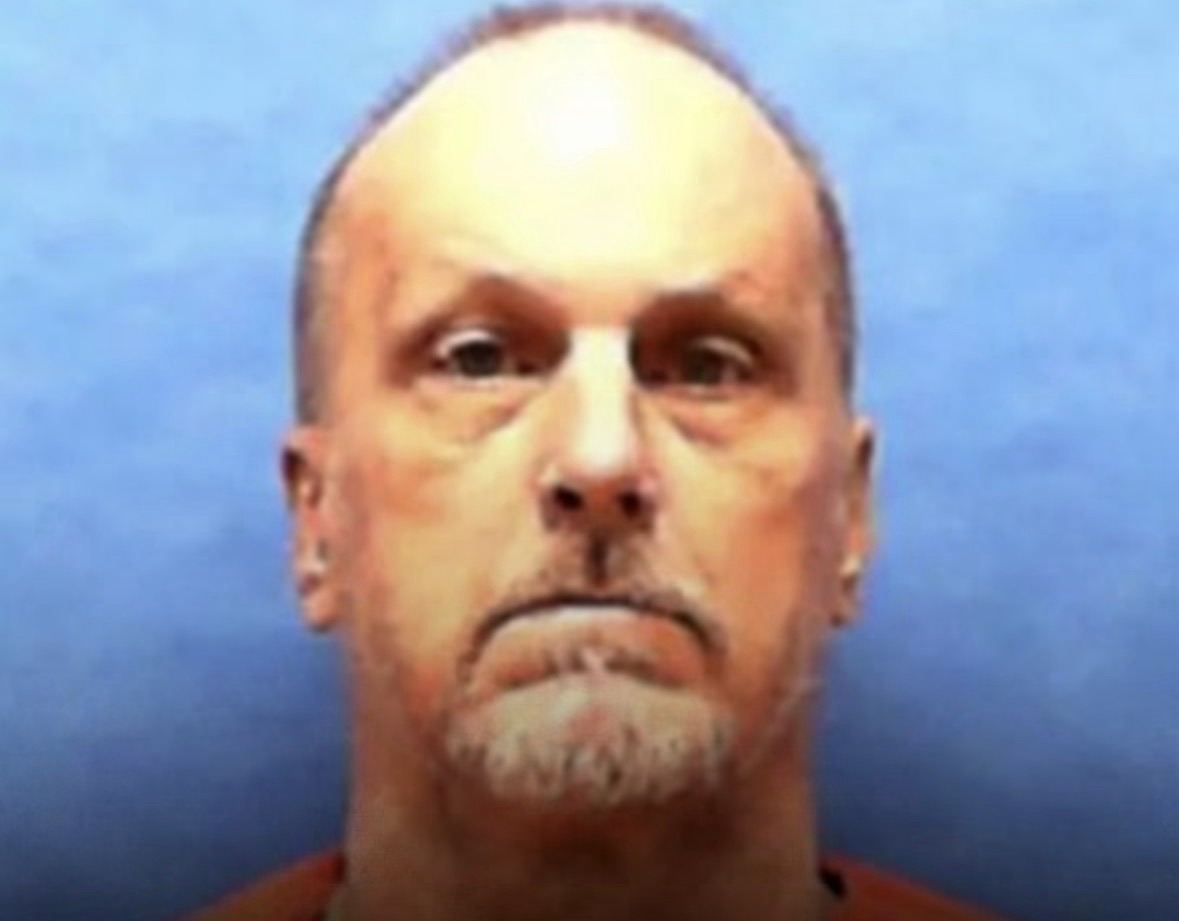
This was more than a claim repeated in an execution-day headline. The Florida Supreme Court’s 2016 opinion records his affidavit stating that purpose.
According to the same opinion, Robertson initially faced a second-degree murder charge. Prosecutors offered a life sentence in exchange for a guilty plea. He rejected it and insisted that the killing was premeditated.
That is the detail that makes his stated motive especially disturbing.
A life sentence was an available outcome he turned down. He wanted the court process to move toward death.
It would be easy to describe that as Robertson “getting what he wanted.” I think that wording gives too much of the story to him.
The person he killed did not get a choice.
The Court Record Does Not Describe a Fight
Robertson’s statement described an unprovoked killing at Charlotte Correctional Institution in December 2008. He said he waited until Hart was asleep before attacking him.
That matters because “cellmate murder” can suggest a confrontation: two men arguing, a threat escalating, a violent struggle.
The account Robertson supplied described a planned attack.
There is no need to reconstruct the room with invented dialogue or imagine Hart’s final thoughts. The established circumstances are disturbing enough.
One man was asleep.
The other had decided to use his death to pursue a different sentence.


Frank Hart Was More Than the Victim in an Unusual Case
Rebecca Hart emphasized that her father should not be reduced to a piece of Robertson’s story. Her statement described the continuing loss her family carried while other people’s lives moved forward.
That perspective deserves to shape the article, rather than appear as a brief emotional paragraph before we return to the killer.
A victim’s life can be difficult to reconstruct from public reporting. The absence of a detailed public biography does not make that life less important.
I cannot tell you what Hart planned to do after release, who he expected to see first, or what conversations his family had about his return. The sources reviewed here do not establish those details.
But we do have his daughter’s account of how close release was.
That is enough to understand why this murder represents more than a strange route to death row. It ended a life and took a father from his daughter.
Robertson Had Already Spent Decades in Prison
The 2016 court opinion says Robertson had been imprisoned for twenty-eight years when he killed Hart. Additional convictions for offenses inside prison had extended his sentence. His projected release date at the time was 2038.
That last detail corrects a possible misunderstanding.
Saying Robertson did not want to spend the rest of his life behind bars describes his stated outlook. It does not mean he was already serving a formal life sentence before Hart’s murder.
A projected release date and a person’s expectations about his future are different things.
The distinction is worth preserving because this case depends heavily on Robertson’s own explanation. We should attribute that explanation without quietly turning it into a different sentencing history.

Wanting a Death Sentence Did Not Make It Automatic
A defendant’s request is not a substitute for the court’s responsibility to decide a sentence lawfully.
Robertson pleaded guilty and waived the presentation of mitigating evidence. The Florida Supreme Court later upheld his conviction and death sentence.
Mitigating evidence is information that may weigh against imposing the harshest punishment. It can concern the circumstances of an offense or the defendant’s background.
Choosing not to present it changes how a defense proceeds. It does not mean a court can simply treat death as an option someone orders.
That distinction becomes especially important when the defendant is trying to steer the case toward execution.
The government still has obligations independent of his wishes.
He Tried to Stop the Appeal, but the Court Required Review
One of the most revealing documents in this case concerns the appeal.
In 2014, Robertson’s appellate lawyer asked to withdraw from representing him because Robertson wanted execution and opposed advocacy on his behalf.
The Florida Supreme Court refused to abandon its established process for mandatory review. It required counsel to continue pursuing the appeal and allowed Robertson to submit his own statement of his position.
This is an important qualification to execution-day accounts saying he “waived all appeals.”

His opposition to appeals did not mean his conviction and death sentence passed through the legal system without review. That distinction helps explain how death sentences undergo legal review, even when a condemned prisoner does not want to challenge the outcome.
The court treated review as a responsibility owed by the system, not merely a service the defendant could decline at that stage.
I find that distinction useful beyond this particular case. A person may want an outcome that the government is still required to examine.
Why Review Matters Even When the Prisoner Objects
A death sentence is irreversible.
If the defendant wants execution, ordinary assumptions about the defense can change. Readers cannot simply assume that he is asking his lawyer to challenge every weakness in the prosecution’s case.
That does not prove a conviction is wrong.
It means independent scrutiny matters.
The 2014 decision explains the court’s interest in ensuring that death sentences have a proper legal basis. Robertson’s wishes did not eliminate that responsibility.
Our account of Willie Francis’s fight after surviving the electric chair follows a very different legal struggle. Reading the cases together shows why a prisoner’s position and the government’s authority are separate questions.
Neither story can be understood solely through what happened in the execution chamber.
Does This Case Prove the Death Penalty Does Not Deter Murder?
No single case can settle a question that broad.
What Robertson’s case shows is narrower: his stated goal was to obtain the punishment that is usually described as the most severe consequence of murder.
For him, according to his own account, that consequence was something he sought.
That creates an uncomfortable problem for a simple deterrence argument. A threatened punishment cannot discourage a person in the expected way if he is actively pursuing it.
But we should not leap from that observation to a claim about every offender, every prison, or overall murder rates.
The strongest version of this story does not need that leap.
It asks how a justice system should respond when a defendant’s stated motive includes obtaining the sentence prosecutors may seek.
That question remains difficult whether someone supports or opposes capital punishment.



The Execution Took Place on October 13, 2026
Florida carried out Robertson’s sentence by lethal injection at Florida State Prison. Reporting attributed the execution confirmation to the Florida Department of Corrections.
The date closes one part of the timeline.
It does not explain away the years between Hart’s murder and Robertson’s execution, and it does not establish how Hart’s family felt afterward.
I would be cautious about promising “closure” on their behalf. An execution may be significant to a victim’s relatives, but outsiders should not decide that it completes their grief.
Rebecca’s public statement is a reminder that the consequences of a murder extend beyond the defendant’s final court date.
How This Fits Into the Wider Execution Debate
This case adds a different question to our execution coverage.
Our explanation of what happens after an execution attempt fails concerns the limits on another attempt. Robertson’s story concerns a defendant who sought a death sentence in the first place.
The connection is the responsibility of the state: what must it establish, examine, and justify before carrying out an irreversible punishment?

That same responsibility belongs in discussions about the proposed Fort Hood execution livestream. Public attention can focus on an execution’s presentation while leaving the underlying decisions less examined.
Robertson’s case is a reason to slow down and read those decisions.
The most important part of the record is not necessarily the part that produces the most striking headline.
Questions About James Robertson and Frank Hart
Who was Frank Hart?
Hart was Robertson’s cellmate and the victim of the 2008 murder. His daughter, Rebecca, spoke publicly about losing her father.
Was Hart really eight days from release?
That detail comes from Rebecca Hart’s statement to reporters. It should remain attributed to her rather than presented as a release record independently reviewed for this article.
Did Robertson claim self-defense?
The statement described in the court opinion said there was no provocation or fight leading to the killing.
Did he automatically receive a death sentence because he requested one?
No. The sentencing process and legal review remained necessary. His stated preference did not replace them.
Did the case receive an appeal?
Yes. The Florida Supreme Court required appellate advocacy despite Robertson’s objections, and it upheld the conviction and sentence in 2016.
Is this a real case?
Yes. The conviction, his stated motive, and the appeal are documented in Florida Supreme Court decisions. The execution was reported on October 13, 2026.
The Eight Days That Belonged to Hart
The unusual motive explains why Robertson’s case draws attention.
It should not decide whose life matters most in the telling.
I keep thinking about the difference between a distant projected release date and the approaching release described by Hart’s daughter. Both men were prisoners, but their circumstances were not the same.
Robertson made his own future the reason for taking someone else’s.
The headline may belong to the man who wanted execution.
The eight days belong to Frank Hart.
By Miles Rowan for Stories in the Static, examining criminal cases through overlooked evidence, unresolved questions, and the lives behind the headlines.