I keep coming back to the camera.
A death sentence is one decision. Inviting the world to watch it happen is another.
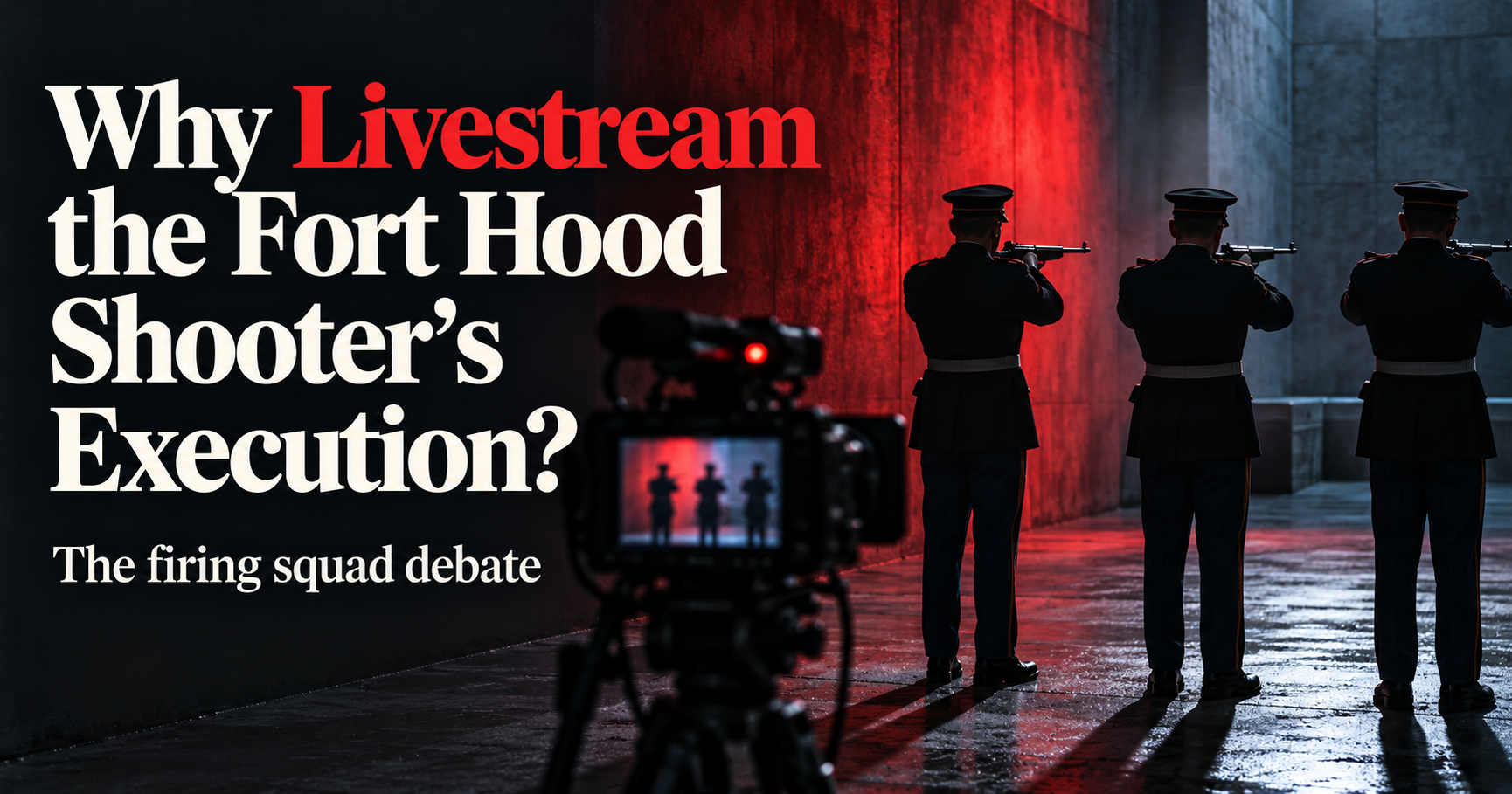
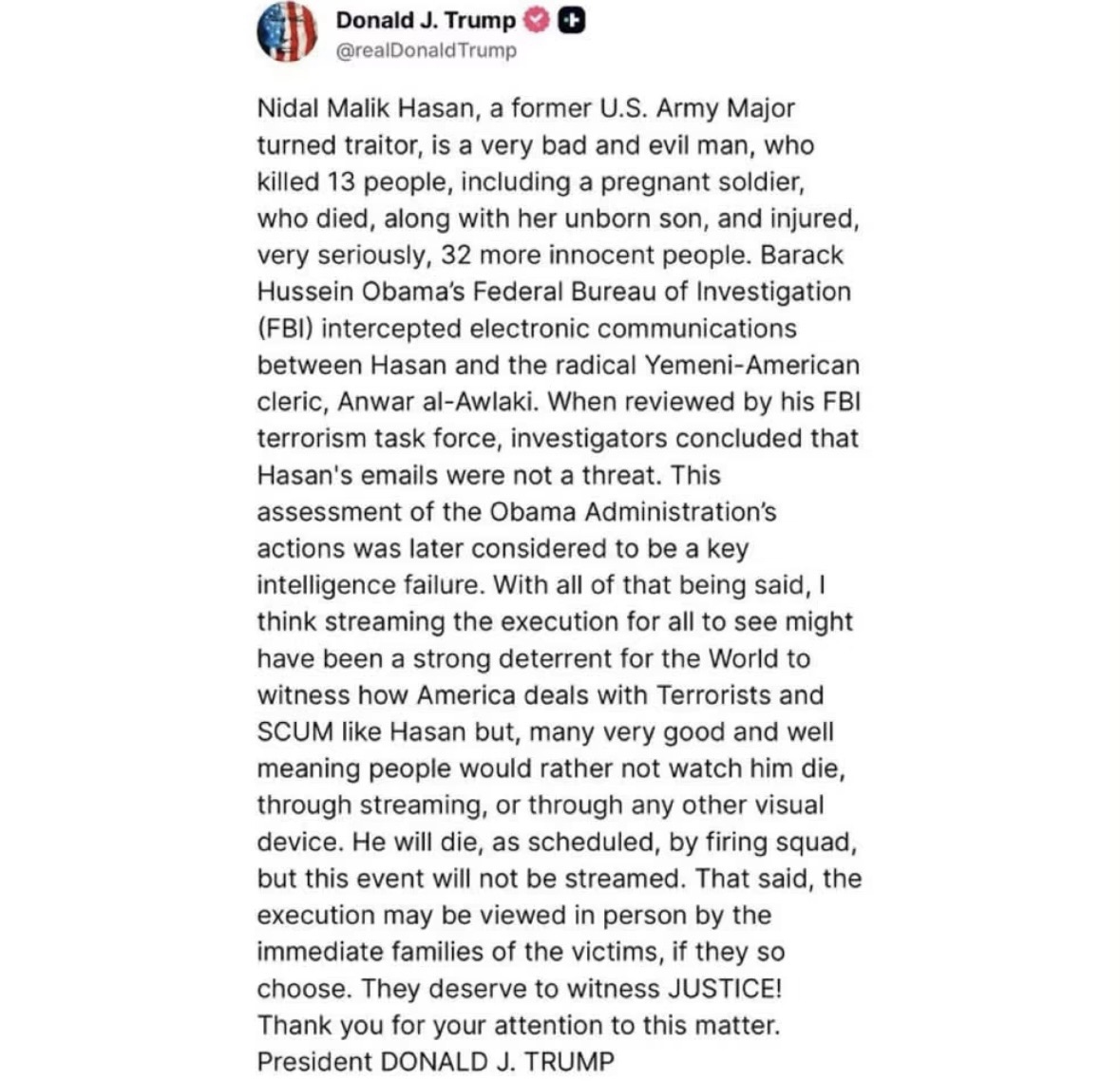
As of October 9, 2026, the Pentagon says it plans to livestream the firing squad execution of Nidal Malik Hasan, the former Army psychiatrist responsible for the Fort Hood shooting. His execution is scheduled for December 3 at the Texas military installation. Officials have announced the broadcast, but its full arrangements remain unclear.
There is something unsettling about how easily that possibility fits into ordinary life. A phone on a kitchen counter. A browser window open at work. A notification arriving between messages from your family.
Those are imagined circumstances, not descriptions of an existing broadcast. But they explain why this announcement deserves more thought than a quick argument about whether Hasan deserves his sentence.
What is the public supposed to gain by watching?
And what happens when the government’s intended message becomes a recording that other people can edit, replay, and use for purposes of their own?
Before the Camera, There Was Fort Hood
On November 5, 2009, soldiers were processing for deployment at Fort Hood’s Soldier Readiness Processing Center. Hasan opened fire there. Thirteen people died, including twelve soldiers and a retired soldier working as a civilian employee.
A place meant to prepare people for service became the scene of an attack against them.
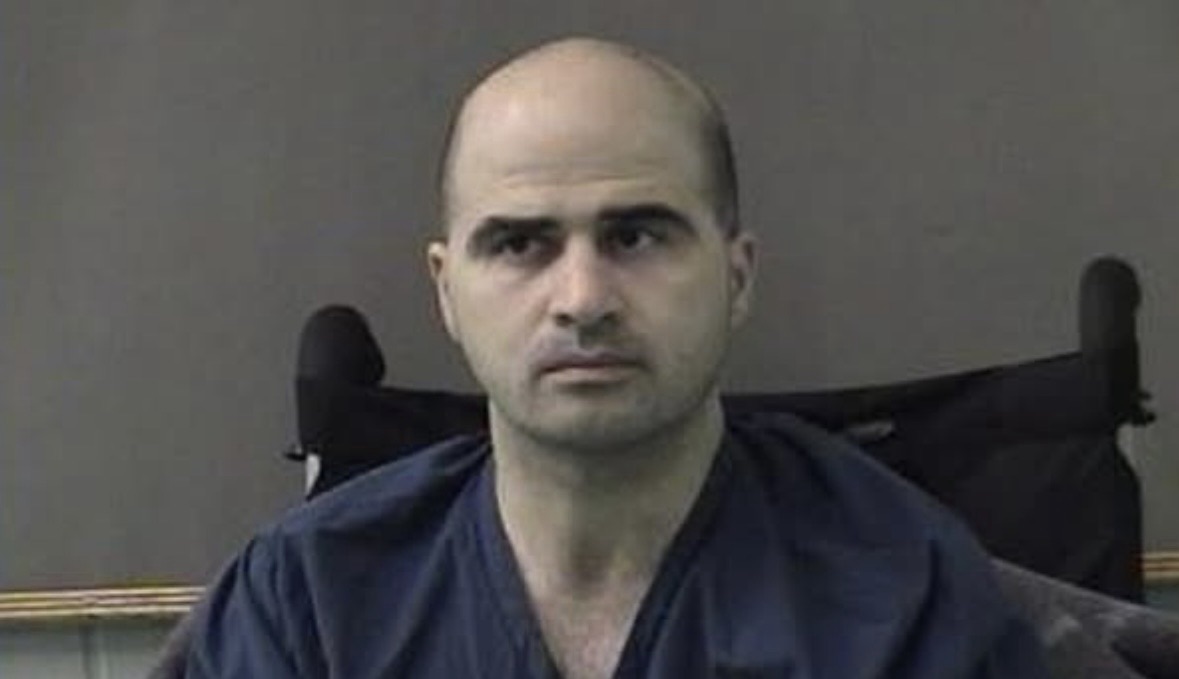
That matters when discussing the execution. It is easy for a story about a notorious killer to become a story almost entirely about the killer. His face appears in the headline image. His name becomes the search term. His punishment becomes the event everyone discusses. The story of James Robertson’s stated motive for killing shows how an execution narrative can also need room for the person whose life was taken.

The people he killed deserve more than a number tucked beneath his photograph.
The Army’s memorial account names Juanita Warman, Libardo Caraveo, John Gaffaney, Russell Seager, Justin Decrow, Amy Krueger, Jason Hunt, Frederick Greene, Aaron Nemelka, Michael Pearson, Kham Xiong, Francheska Velez, and Michael Cahill.
I want those names in this story because a broadcast could give Hasan another enormous audience. Remembering the victims should be a deliberate choice, rather than something we assume will happen automatically.
His 2013 convictions included thirteen counts of premeditated murder and thirty-two counts of attempted premeditated murder.
The question here concerns the additional decision to make his punishment publicly viewable.
Is Hasan’s Execution Actually Going to Be on Live TV?
The announced plan is a public livestream.
Television coverage is a separate question. Major networks have not announced plans to carry it.
That distinction is easy to lose in a social media headline. “Public execution,” “televised execution,” and “livestreamed execution” sound interchangeable until you consider who would control the feed and how someone would encounter it.
A television network might decide to report on an execution without showing the moment of death. An internet broadcast could operate independently of that decision.
There are also practical questions the announcement does not settle.
Would viewers have to deliberately enter a restricted website? Would the broadcast include a delay? What would the camera show? Could viewers hear everything? What would happen if officials interrupted the procedure?
Those questions affect whether the event functions as public observation, an official statement, or a spectacle.
Readers following the broader subject can also explore what happens after someone survives an execution attempt. An announced punishment and the actual events inside an execution chamber can raise very different questions.


The Strongest Argument for Letting People Watch
The most serious argument for a broadcast is transparency.
The government would be carrying out an irreversible punishment in the public’s name. Supporters of public viewing can reasonably ask why citizens should have to rely entirely on official descriptions of what happens.
That argument deserves a fair hearing.
A person might strongly support capital punishment while having little understanding of its physical reality. Another might oppose it without understanding the procedures involved. Seeing an execution could force both to confront something usually discussed through legal terms and political slogans.
Fordham law professor Deborah Denno told the Associated Press that public viewing could make executions more transparent and give people a fuller understanding of capital punishment.
I find that argument more substantial than the idea that a disturbing video will automatically teach everyone a lesson.
Public accountability has value even when what it reveals is uncomfortable. If the state exercises the power to take a life, asking how that power is used is reasonable.
But transparency requires more than pointing a camera at the final moments.
Would viewers have access to the rules? Would independent witnesses be able to describe what the camera missed? Would officials explain interruptions or unexpected events afterward?
Without that context, a broadcast could reveal one narrow part of the process while leaving everything surrounding it obscure.
A Camera Can Show Something Without Explaining It
Imagine watching a silent camera feed of a complicated procedure.
You can see movement. You can see that someone enters or leaves the frame. You might hear an instruction.
You may have no way to know whether what you are seeing follows the approved procedure.
That is the limitation I would want addressed before calling a livestream complete transparency. A camera records the view selected for it. Someone chooses the position, the start time, the ending, and whether to include sound.
Those decisions would shape the public’s understanding.
An uninterrupted recording might help establish what occurred within its frame. It would not, by itself, answer every question about the preparation, decisions, or medical assessments outside it.
Our coverage of Christa Pike’s execution attempt and the questions surrounding it belongs alongside this debate because scrutiny should include the process, not just the intended outcome.
A meaningful transparency policy would explain what viewers can observe and what remains beyond their view.


Would Watching an Execution Stop Someone Else From Killing?
Officials have framed public visibility as a warning about the consequences of such crimes.
The reasoning is understandable: show the punishment, make the threat real, and discourage others.
The evidence question is harder.
A major 2012 National Research Council review concluded that the research it assessed could not reliably determine whether the death penalty increased, decreased, or had no effect on homicide rates. That finding did not establish that deterrence was impossible. It established that the available studies could not settle the issue.
That review was about capital punishment generally. It did not demonstrate what a publicly livestreamed military execution would accomplish.
To claim that this particular broadcast will prevent future attacks, we would need evidence for the added effect of broadcasting it.
The distinction matters. A punishment can be severe without every additional way of displaying it making people safer.
A supporter might still favor public viewing for accountability or as an expression of justice. Those are arguments we can examine on their own terms. They should not depend on presenting an unproven deterrent effect as a settled fact.
The Recording Would Outlive the Government’s Message
The part that concerns me most begins after the original broadcast ends.
Consider the possibility of someone recording the feed, cutting a short segment, and attaching a different caption.
One version could celebrate the punishment. Another could condemn it. Someone else could use the same images to portray the condemned man as a victim or a symbol.
Those are possible uses, not predictions that any specific group will act in a particular way.
The underlying problem is control.
An official broadcast would have an intended meaning. A copied recording would no longer depend on that meaning. The explanation could disappear while the images remained.
That creates a difficult question for supporters: would the value of public access outweigh the possibility of the footage being used against the purpose of the broadcast?
It creates a question for critics, too: if executions remain outside public view, what forms of independent observation would provide sufficient accountability?
Both sides need an answer that goes beyond whether they personally want to watch.
America Has Had Execution Crowds Before
This proposal connects to a history older than television.
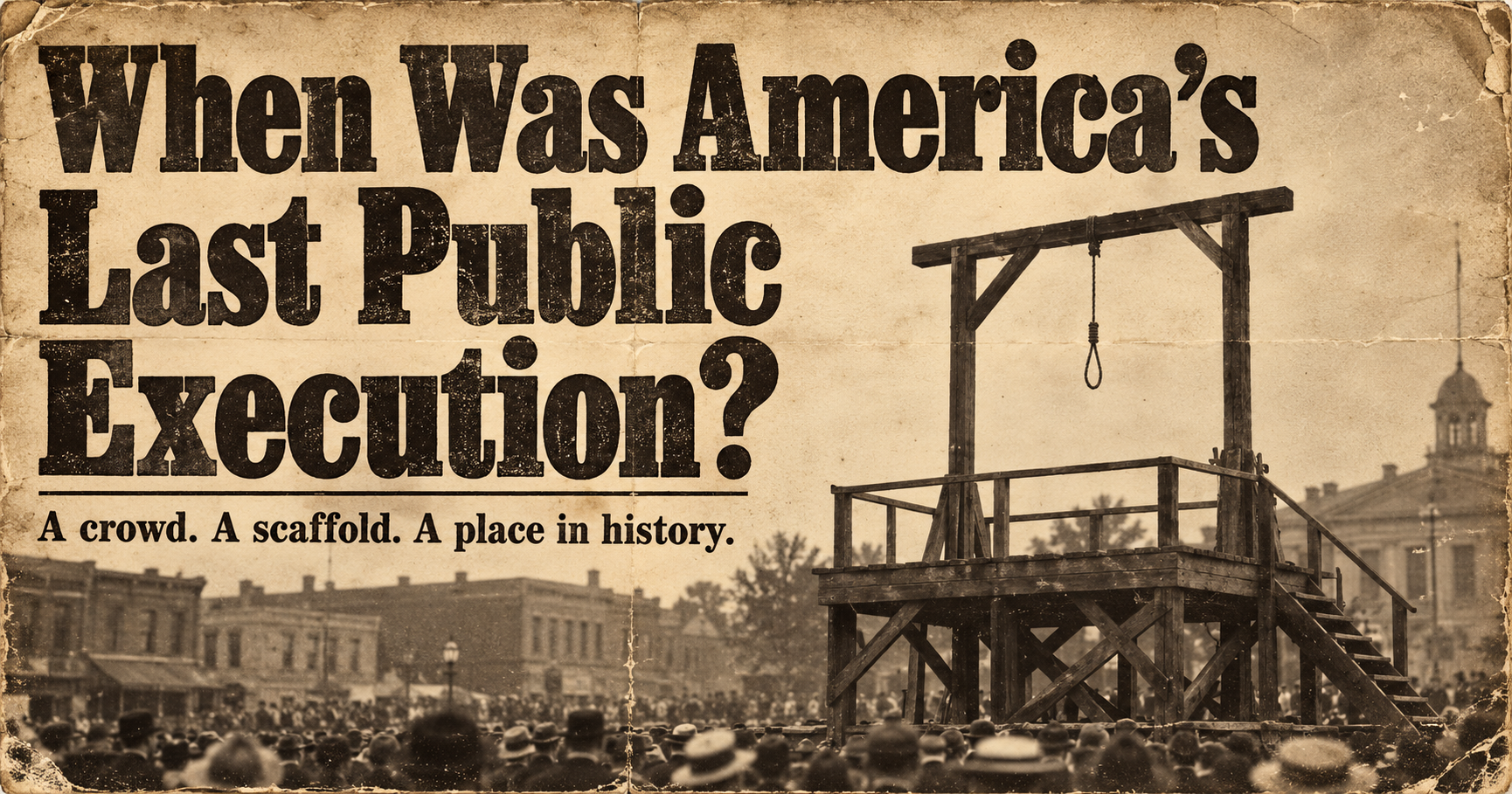
Rainey Bethea’s 1936 hanging in Owensboro, Kentucky, is often described as America’s last public execution. Thousands attended. However, the Associated Press also identifies a 1937 Missouri hanging witnessed by members of the public, making the simple “last public execution” label less tidy than it sounds.
That historical complication is worth preserving. A dramatic headline should not flatten it.
Reuters reports that experts it consulted knew of no previous lawful execution broadcast live to a public audience.
The proposed livestream would therefore involve more than bringing back a crowd at an execution site. It could allow people far from the location to watch, including people with no connection to the crime.
That is the unsettling difference.
An observer would not have to travel, stand in a crowd, or consciously enter a place associated with the punishment. Depending on how the footage circulated, the distance between everyday entertainment and an actual death could become very small.
Timothy McVeigh’s Execution Shows Another Way to Handle Viewing
There is an important example between complete secrecy and unrestricted public access.
In 2001, the Justice Department arranged for victims and survivors of the Oklahoma City bombing to view Timothy McVeigh’s execution through a closed-circuit transmission.
The arrangements were specific. Remote attendance was restricted to eligible people who confirmed they wanted to participate. Viewers had to be at least eighteen. Officials planned a briefing about what they would see.
Recording devices, video cameras, phones, and other electronic devices were prohibited to keep the transmission from being recorded or made public.
Those rules show a deliberate effort to provide access to a defined group while limiting wider distribution.
That offers a useful question for the Hasan debate: if the purpose includes allowing affected families and survivors to witness the sentence, why would that require opening the feed to everyone?
A global broadcast needs its own justification.
The Victims’ Families Should Not Become Props in the Argument
I would be careful with any claim that watching will give families “closure.”
That word can make grief sound like a task with a final step.
We should not assume that every survivor or relative wants the same thing. A person could support the execution and want to witness it. Another could support the sentence while wanting no images of it. Someone could oppose the broadcast without defending Hasan.
Their positions deserve to be heard individually.
There is also a difference between choosing to attend a controlled viewing and knowing that strangers may circulate a recording for years.
If officials argue that the livestream serves the victims, the public should ask which victims have been consulted and how their preferences would affect the arrangements.
I would also want to know how the broadcast would acknowledge the people killed. Would their names and lives receive meaningful attention, or would the camera make the offender the central figure once again?
That is an editorial choice as much as a technical one.
What Would Make Public Viewing More Responsible?
Before treating the announcement as a complete plan, I would look for answers about access, context, and accountability.
An age requirement would address who could enter the original viewing site, though it would not settle what happens to copies. A delay could give officials time to interrupt the public feed, though viewers would need to know that it existed.
Independent reporting would matter. So would an explanation of what the camera could not show.
Families should have clear information about their options. Viewers should receive enough context to understand what they are observing. Officials should explain how they would respond to unexpected events rather than leaving the public to interpret fragments.
These are standards I would use to assess the proposal. They are not claims about safeguards already adopted.
For readers exploring the larger subject, our true crime coverage of punishment and its consequences follows the questions that remain after a sentence is announced.
Questions About the Fort Hood Execution Livestream
Has Nidal Hasan already been executed?
This article discusses an announced future execution. It does not report a completed execution or an existing recording of one.
Does a livestream mean every television network will show it?
No. An internet feed and a television network’s decision to carry it are separate matters. A headline promising “live TV” should identify an actual broadcaster before readers treat that wording as confirmed.
Is public viewing the same as allowing selected witnesses?
No. Selected witnesses observe under defined access arrangements. A public livestream would make viewing available to a much broader audience, depending on its restrictions.
Can someone support the death penalty and oppose the broadcast?
Yes. Supporting a sentence does not require supporting every proposed way of presenting it to the public. The broadcast raises additional questions about purpose, audience, and distribution.
Would refusing to watch mean someone does not care about the victims?
No. Watching an execution is not a measure of respect for the people killed. Learning their names, understanding what happened, and taking survivors’ experiences seriously are meaningful ways to remember them.
The Question I Would Ask Before Turning on the Feed
If this plan goes ahead, I would want officials to finish this sentence clearly:
“We are inviting the public to watch because…”
If the answer is accountability, explain how the viewing arrangements support independent scrutiny.
If the answer is deterrence, distinguish the intended warning from evidence of its effect.
If the answer is justice for the families, explain how their different wishes have been considered.
The camera deserves its own justification.
Whatever happens to the announced plan, thirteen people were killed at Fort Hood. Their lives should remain central to the story. A broadcast might make the punishment impossible to overlook. It could also make the offender’s final appearance the image people remember most.
The execution would end.
A recording could keep circulating long after the people who released it had lost control of what it meant.
By Miles Rowan for Stories in the Static, examining criminal cases through overlooked evidence, unresolved questions, and the lives behind the headlines.