

When deputies found Michael Comer late Monday night, there should have been an 11-month-old boy to look for in the same place. The last time anyone had reported seeing Koah Sharpe, he was with his father. Now deputies had found his father in a shed in Batesburg, South Carolina.
Koah wasn’t there.
By the next afternoon, nearly 100 responders had been involved in the search. A team looking in the woods near a relative’s house stopped at a patch of freshly disturbed dirt. They started digging. Only then did they hear Koah crying.
He was alive inside a buried dog crate. Searchers pulled him out, and he was taken to a hospital. The sheriff estimated that he’d been underground for about a day. To understand how anyone found him at all, go back to a house deputies had already visited. The doors were open, and some of Koah’s things were still inside.
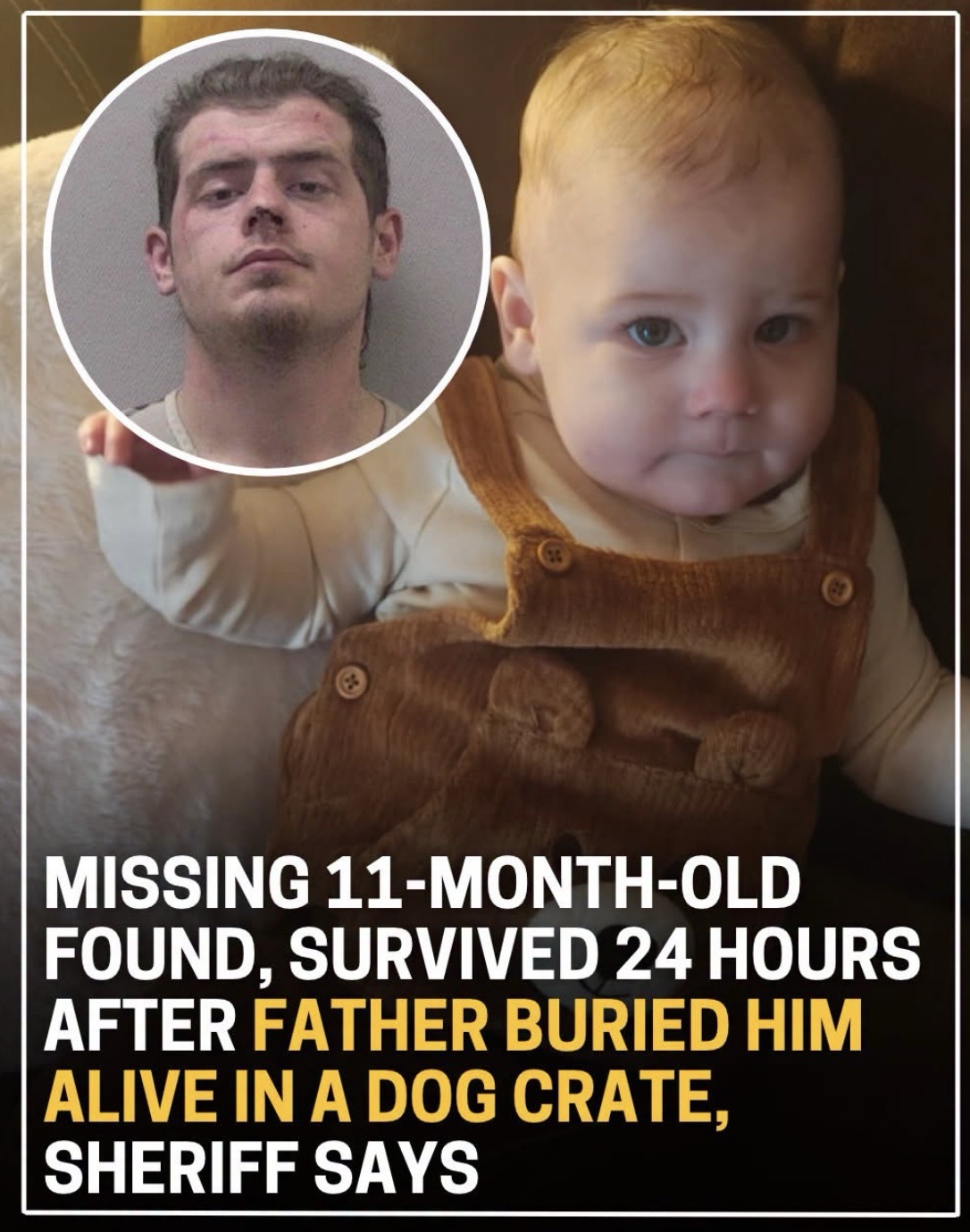
The next caregiver arrived, but Koah was gone
On Monday, November 9, 2026, Koah’s grandmother had been looking after him. Sheriff Jay Koon said she went out on an errand and left Koah with Comer while another caregiver was on the way. By the time that person got there, neither father nor son was present.
Local station WRDW reported that the two had last been seen together around 11 a.m. near Parthenon Road. A family member filed a missing-person report around 3 p.m. Those times give some shape to the first day of the search: investigators had a sighting in the late morning, and by that afternoon, relatives were asking for help finding the boy.
At the home of Comer’s father, deputies found Koah’s belongings. Koon said the doors were open. There was no one there to tell deputies what had happened, and neither of the people they were looking for was inside.
Reading that part of the account, I had to stop and put myself back at the beginning of the search. Knowing where Koah was eventually found makes the house seem like an obvious lead. But at the time, his belongings could tell deputies where his things had ended up. They couldn’t tell them where he was, whether he was still nearby, or who had last seen him.
The footage showed where Comer had been
As Monday went on, investigators obtained video showing Comer at several locations without Koah. The sheriff’s department said Comer didn’t have access to a vehicle of his own, and Koon said investigators believed he had been getting rides. They could piece together parts of his day without being able to place Koah at those same stops.
Koon said authorities hoped Comer might have left Koah with somebody else. If he had, the person looking after the boy might not have known there was a search underway. But as the day passed, no one came forward to say they had him.
Deputies located Comer at about 10:30 that night, according to the local reporting. Koon said he offered little about where Koah was. That meant the searchers going into Tuesday had more information about the father’s movements than they’d had Monday morning, and still no confirmed sighting that told them where to find the child.
That’s the part of the night I find hardest to get past. An arrest sounds like the point at which the family might finally get an answer. Here, the deputies had found the person they’d been looking for, and they had to go on looking for the baby.



Tuesday morning, deputies were still asking who might have him
The sheriff’s public appeal on Tuesday morning describes a little boy with reddish blond hair and blue eyes who often had a pacifier. It asks anyone who might have been given Koah to care for to come forward. Read it without knowing what happened later, and you can see how many possibilities were still open that morning.
People have also asked why there was no AMBER Alert. Koon said investigators didn’t have a vehicle description or plate number to put out. The state’s published AMBER Alert criteria are worded more broadly: authorities need enough information to help the public locate the child, suspect, or vehicle. Koon was explaining why the alert wasn’t issued in this case, given what investigators knew about how Comer was traveling.
Meanwhile, the search near Batesburg-Leesville continued. Lexington County firefighters were working with deputies, and the South Carolina Law Enforcement Division, FBI, and ATF were involved. In the woods near the house where deputies had found Koah’s belongings, the clue that finally mattered was something a searcher could see right at their feet.
The dirt caught their attention. Then they heard Koah.
It was Tuesday afternoon, November 10. Koon described searchers noticing pine straw and freshly disturbed dirt in the woods near the home of Comer’s father. In the sheriff’s briefing on the discovery, the order of events is clear: they found the spot, started digging, and then heard the baby.
There’s a reason that sequence sticks with me. A patch of dirt could have turned out to be nothing. For the people digging, hearing a cry meant they had found him alive before they’d even gotten him out.
Koon called it “the most joyful sound you ever heard of a crying baby.” He also described Koah as clinging to life. Those two descriptions belong together. The cry was a reason for relief, and the child still needed help right away.
Searchers reached the crate and brought Koah out. A local crew reported that he was placed in an ambulance at about 2 p.m. He was taken to a hospital. Earlier that day, investigators were still asking the public to help identify a boy by his pacifier. Now the people tending to him knew exactly where he was.


What the 24-hour estimate actually tells us
The sheriff estimated that Koah had been buried for about 24 hours, based on what investigators had learned about Comer’s movements. The last known sighting and the rescue give us two points on the timeline. They don’t give us a confirmed time for when the burial began. That’s why about matters here.
Koon suggested that an air pocket may have helped the boy survive. That was his explanation at the briefing. There was no medical finding in the reporting I reviewed that established exactly what kept Koah alive or what conditions he experienced underground.

When we looked into what can be verified about Octavia Hatcher’s burial, the first question was whether the central claim could be established at all. Here, the rescuers could hear Koah alive, and they pulled him out. The part still being pieced together is what happened before they got there.
The rescue answered where Koah was. The investigation continued.
Comer’s initial arrest was on burglary and resisting arrest charges, Koon said. That happened before the rescue. At the briefing afterward, the sheriff said investigators were working with local prosecutors to determine whether additional charges would be filed. The initial charges did not establish who buried Koah, and the reporting I could verify on November 11 did not establish a motive.
How is Koah Sharpe doing after the rescue?
Koah was taken to a hospital for treatment. Koon said he hoped the boy would make a full recovery. As of the November 11 reporting I reviewed, there was no confirmed discharge or public prognosis.