
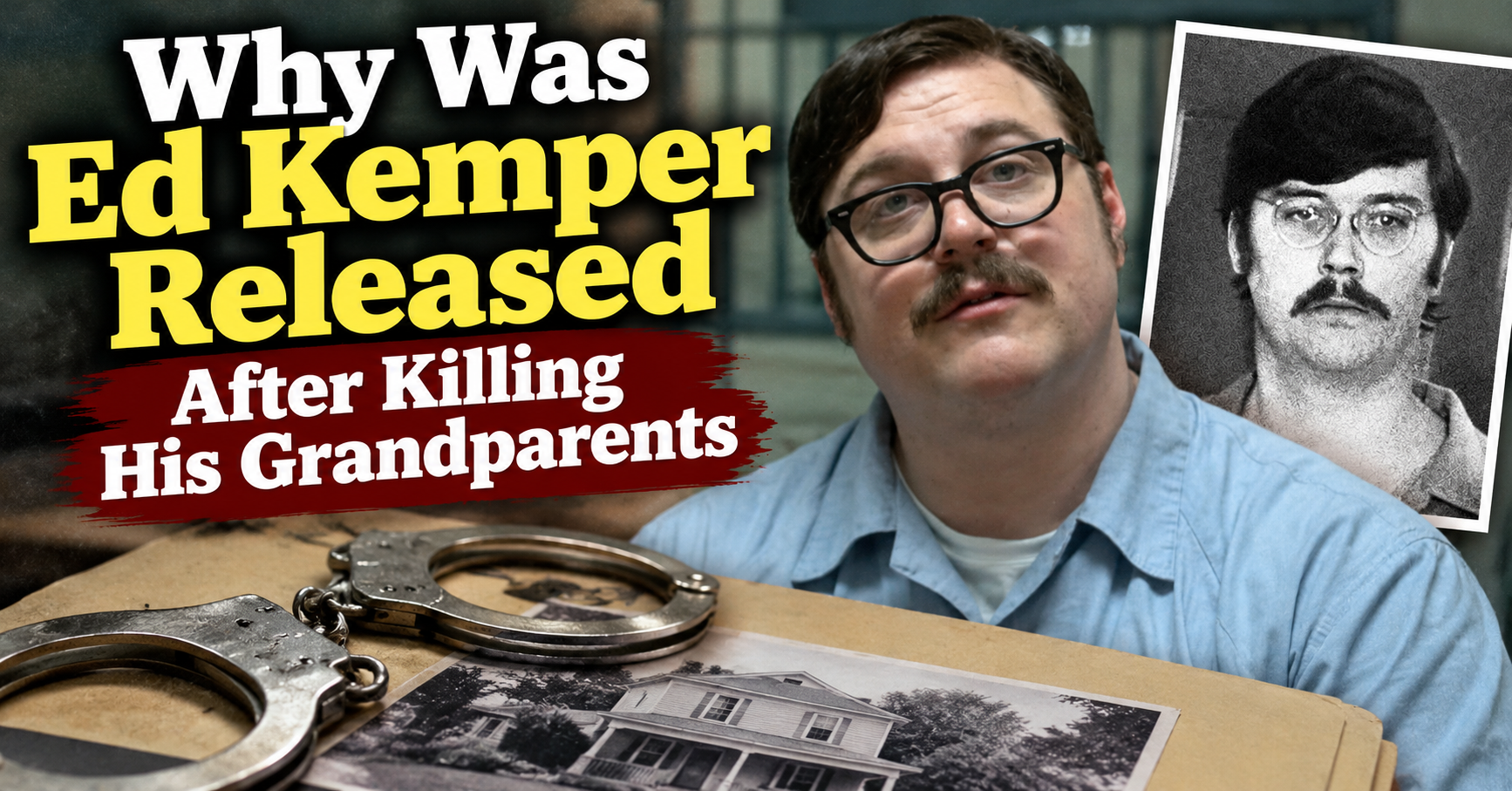
On August 27, 1964, 15-year-old Edmund Kemper killed his grandmother. When his grandfather returned home, Kemper killed him, too.
The victims were Maude and Edmund Kemper Sr. They had taken their grandson into their home near North Fork, California.
Kemper’s reported explanation for killing his grandmother was that he wanted to know what it felt like.
Five years later, he was released.
That is the part of this case I find harder to absorb than the familiar photographs or the nickname that followed him. Authorities already knew he had killed two people. He had been confined, examined, and treated.
Yet he returned to life outside an institution.
Between May 1972 and April 1973, he murdered eight more people.
Kemper was released after years in psychiatric custody because the juvenile and treatment systems handling his case permitted his return to the community, supported by assessments of apparent improvement. But the record is more complicated than everyone agreeing he was safe. Accounts describe concerns about his release and, particularly, his return to his mother’s home.
Understanding that distinction matters. It separates a disturbing history from the simpler story that a clever killer effortlessly fooled every person he met.
His Grandparents Were the First Known Victims
Kemper was living with his paternal grandparents when he killed them in 1964.
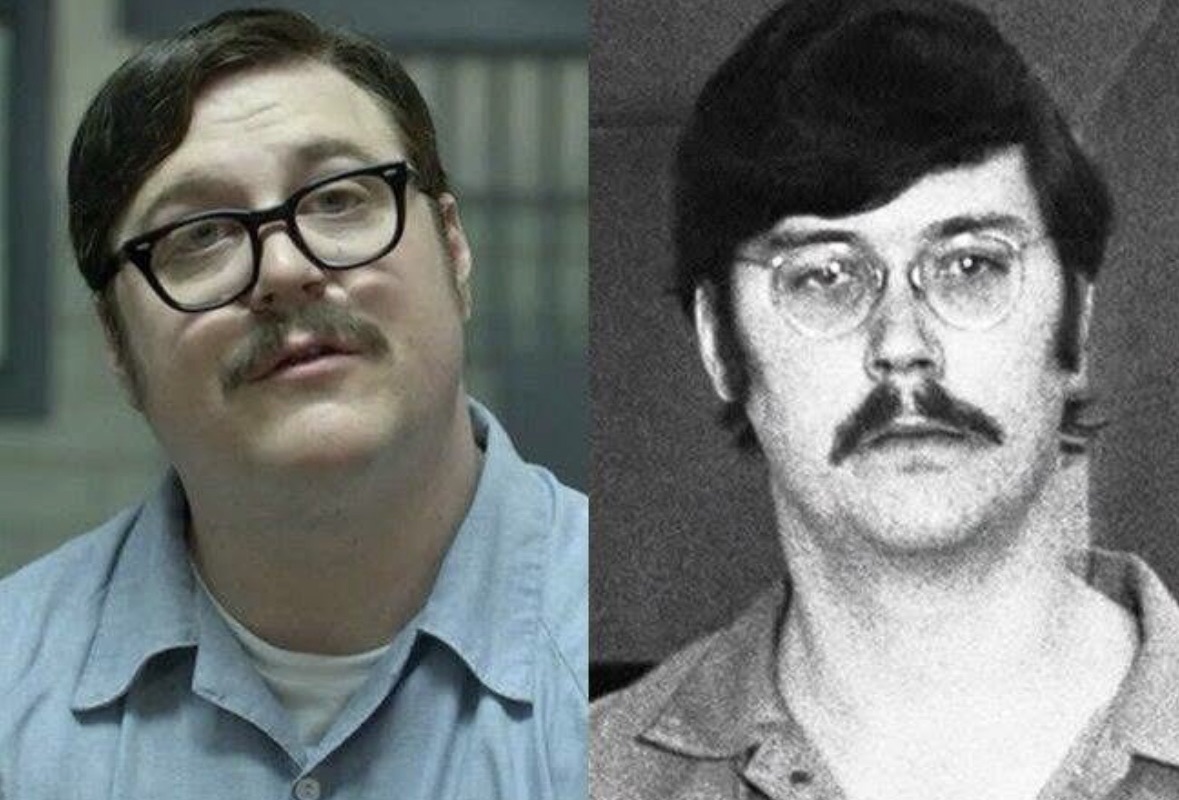
He shot Maude first, then shot Edmund Sr. after he returned home. Kemper contacted his mother and subsequently surrendered to authorities.
He was 15.
The local history of the murders near North Fork identifies his grandparents and traces the case into juvenile proceedings and confinement at Atascadero State Hospital.
There is an important distinction here: this was not an adult serving the life sentences he would receive after his later murders.
His first case passed through the juvenile system and psychiatric custody.
That does not make the killings less serious. It explains why the process that eventually allowed his release differed from the prison and parole proceedings associated with his adult convictions.
Maude and Edmund Sr.’s deaths were already known. What authorities had to decide afterward was whether the young person responsible would remain dangerous.
Why Was Kemper Sent to Atascadero State Hospital?
Following the killings, Kemper entered California Youth Authority supervision and was confined at Atascadero.
He received a diagnosis of paranoid schizophrenia, according to historical accounts. Later experts have questioned whether that diagnosis accurately described him.
The setting matters. A forensic psychiatric hospital holds people whose circumstances involve both mental health treatment and the criminal justice system.
Kemper’s case therefore involved assessments of his condition, behavior, and readiness to return to the community.
From outside, it is tempting to reduce the question to whether he behaved well inside the hospital. But behaving within a closely controlled environment and living safely outside it are different tests.
One involves rules, routines, observation, and restricted opportunities.
The other requires judging what someone might do when those controls are removed.
Kemper’s later crimes made that gap catastrophic. The Madera Tribune


Why Did Authorities Think He Could Be Released?
The commonly repeated answer is that Kemper appeared rehabilitated.
Accounts describe him as intelligent, cooperative, and capable of presenting himself favorably. Some reporting also describes his involvement in psychological testing work within the institution.
But apparent improvement does not fully explain who supported release, who opposed it, or what arrangements were considered appropriate afterward.
A contemporary report published after his adult convictions stated that an Atascadero psychiatrist had opposed his return to society, even though a parole board eventually released him.
That complicates the familiar claim that everyone simply pronounced him cured.
A more careful reading is that the system ultimately allowed his release despite concerns within that system.
I find that more unsettling than a story about one spectacular deception. A warning can exist and still fail to prevent a decision. Different people can assess the same person differently, with the consequences falling on people who had no part in that assessment.
Kemper returned to the community in 1969. Widely published accounts place his parole on his 21st birthday, December 18.
Did He Really Fool the Psychiatrists?
Kemper’s story is often told as a contest between an exceptionally intelligent patient and professionals who failed to recognize him.
There is evidence that he could be calculating and manipulative. But the claim that he understood and defeated every safeguard can become a legend of its own.
It also gives him enormous control over how the story is remembered.
In an examination of the hospital release and competing explanations, A&E interviewed experts who offered differing interpretations. Author Dary Matera emphasized Kemper learning to manipulate the institution. Psychologist Louis Schlesinger challenged parts of the popular account, including a sensational story that depended on Kemper’s own claim.
That is a useful distinction.
A killer describing how thoroughly he deceived everyone is still describing himself. His confidence is not independent proof.
The evidence supports a terrible failure to recognize or contain his danger. It does not require us to accept every story he told about his ability to outsmart people. time.com


Why Did He Return to His Mother’s Home?
After his release, Kemper lived with his mother, Clarnell, in the Santa Cruz County area.
Accounts describe a deeply troubled relationship between them. Reporting also states that hospital psychiatrists had advised against his living with her.
That is another reason “they thought he was cured” leaves too much out. Judging someone suitable for release and judging a particular home suitable for that person are separate decisions.
The arrangement placed Kemper back in a relationship he would later discuss repeatedly when explaining his crimes.
But his explanations should not become an excuse.
A difficult childhood or abusive family relationship does not make murder inevitable. Nor does it explain away the deaths of people outside that family.

The question of how someone returns to society after earlier killings also appears in the circumstances surrounding Pedro López’s release. The histories differ, but both require looking at the actual decisions and institutions involved rather than assuming release meant the danger had disappeared.
The Years Before He Killed Again Can Be Misleading
Kemper did not begin his adult murder series immediately upon release.
His return to the community came in 1969. The later killings began in May 1972.
During the intervening period, he attended community college and worked, eventually obtaining employment with California’s highway department.
Those ordinary details are part of what makes the timeline disturbing.
A job and a daily routine can create the appearance of stability. They do not allow us to see everything happening in someone’s private life.
At the same time, knowing the later outcome can make every earlier event look like an obvious warning. People assessing him then did not possess our hindsight.
Both points can be true: the risk was disastrously underestimated, and we should still examine the evidence rather than rewrite the intervening years as a sequence everyone must have understood.

Our discussion of whether serial killers can go years without killing explores why an interval between crimes is not, by itself, proof that a person has permanently stopped.
Eight More People Died After His Release
Between May 1972 and April 1973, Kemper killed six young women, followed by his mother and her friend.
The victims were Mary Ann Pesce, Anita Luchessa, Aiko Koo, Cindy Schall, Rosalind Thorpe, Allison Liu, Clarnell Strandberg, and Sara “Sally” Hallett.
They were eight separate people whose lives cannot be adequately represented by a nickname or a total.
Kemper eventually contacted police from Colorado and confessed.
In November 1973, he was convicted of eight counts of first-degree murder.
The record of his later parole proceedings identifies those adult convictions and records the board confronting him about his explanations.
One exchange in the 2017 hearing stands out. When Kemper referred to his limited experience with women and expectations following his release, the commissioner pushed back: other people had difficult family histories and little dating experience without committing murders.
That response deserves as much attention as anything Kemper said.
He could describe circumstances. He still had to answer for his choices. www.aetv.com
Why Do Accounts Give Different Reasons for His Release?
Part of the difficulty is that later summaries compress several questions into one.
Was his original diagnosis accurate? Did his behavior improve? Did evaluators believe he remained dangerous? Who authorized release? Where should he live afterward?
Those questions are related, but they are not interchangeable.
A favorable assessment can coexist with another professional’s objection. A release decision can be followed by an unsuitable placement. A patient can appear cooperative without every underlying risk being understood.
There is also a difference between a contemporary record and a later expert interpreting events decades afterward.
For me, the most useful approach is to keep those layers visible. The case is frightening enough without presenting one disputed explanation as a complete answer.

It also helps explain why catching a serial killer can involve missed connections across years. Information may exist in separate places without producing a complete picture of the danger.
The 1969 Release Was Different From His Later Parole Hearings
Readers sometimes encounter the word “parole” and assume all of Kemper’s hearings concern the same period of confinement.
They do not.
His 1969 release followed the juvenile case and psychiatric confinement arising from his grandparents’ deaths.
His later parole hearings concern the adult murder convictions from 1973.
California’s official July 2024 parole results record a seven-year denial for Edmund Emil Kemper III on July 9, 2024.
A hearing means release is being considered under the applicable process. It does not mean release has been granted.
That distinction is especially important when older articles describe a future eligibility date as though it were a scheduled homecoming. Board of Parole Hearings
Questions About Ed Kemper’s Release
How old was Ed Kemper when he killed his grandparents?
He was 15 when he killed Maude and Edmund Kemper Sr. on August 27, 1964, near North Fork, California.
How long was he confined before being released?
Approximately five years passed between the 1964 killings and his release in 1969. His case involved juvenile supervision and confinement at Atascadero State Hospital.
Was he released because of his high IQ?
Intelligence alone does not explain the release. Accounts describe his behavior, psychiatric assessments, and decisions within the juvenile and hospital systems. Reducing the outcome to an IQ score leaves out the process that permitted it.
Did all his psychiatrists agree he was safe?
No such agreement should be assumed. Historical reporting describes objections to his release and concerns about his returning to live with his mother.
How many people did Kemper kill after being released?
He killed eight more people between May 1972 and April 1973. Including his grandparents, his known victim total is ten.
Was he released again after his adult murder convictions?
The official parole result reviewed for this article records a seven-year denial in July 2024. His release in 1969 should not be confused with parole consideration following his 1973 convictions.
By Miles Rowan for Stories in the Static.