People traveled to Owensboro, Kentucky, to watch a man die.
That is the detail I have trouble getting past. Whatever brought each person there, the gathering required a decision. They had to leave home, make the trip, and find somewhere to stand.
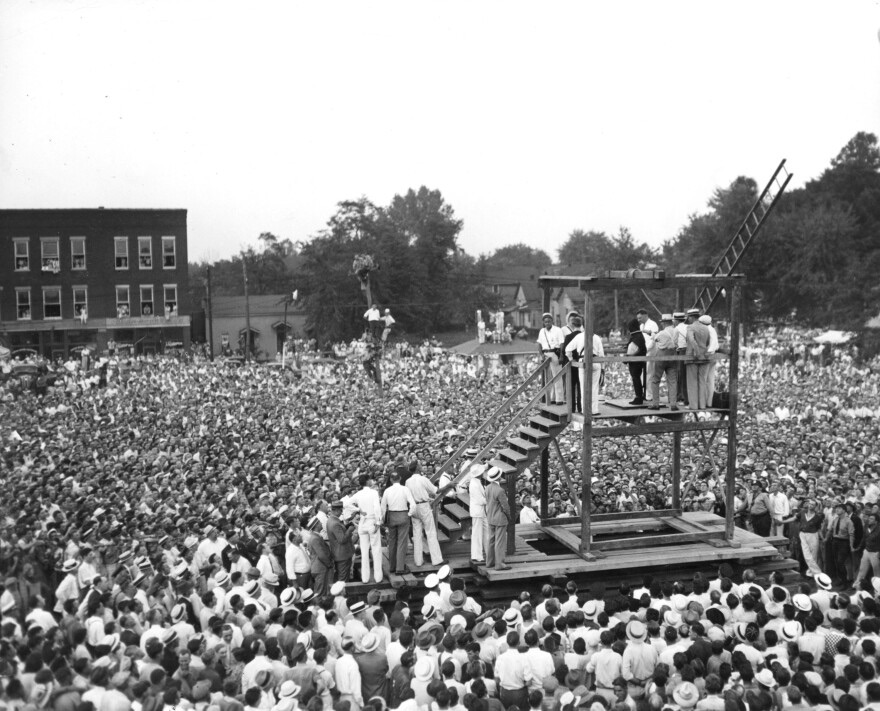
On August 14, 1936, Rainey Bethea was publicly hanged before thousands of spectators. His death became the event most often identified as America’s last public execution. But a later hanging in Missouri complicates that familiar answer.
The history is real. The simple label is less certain.
To understand it, we need to look at the crime, the crowd, and the difference between an execution open to everyone and one witnessed by a restricted audience.
There is also a reason this old story has returned to public discussion: an announced plan to livestream the execution of the Fort Hood shooter.
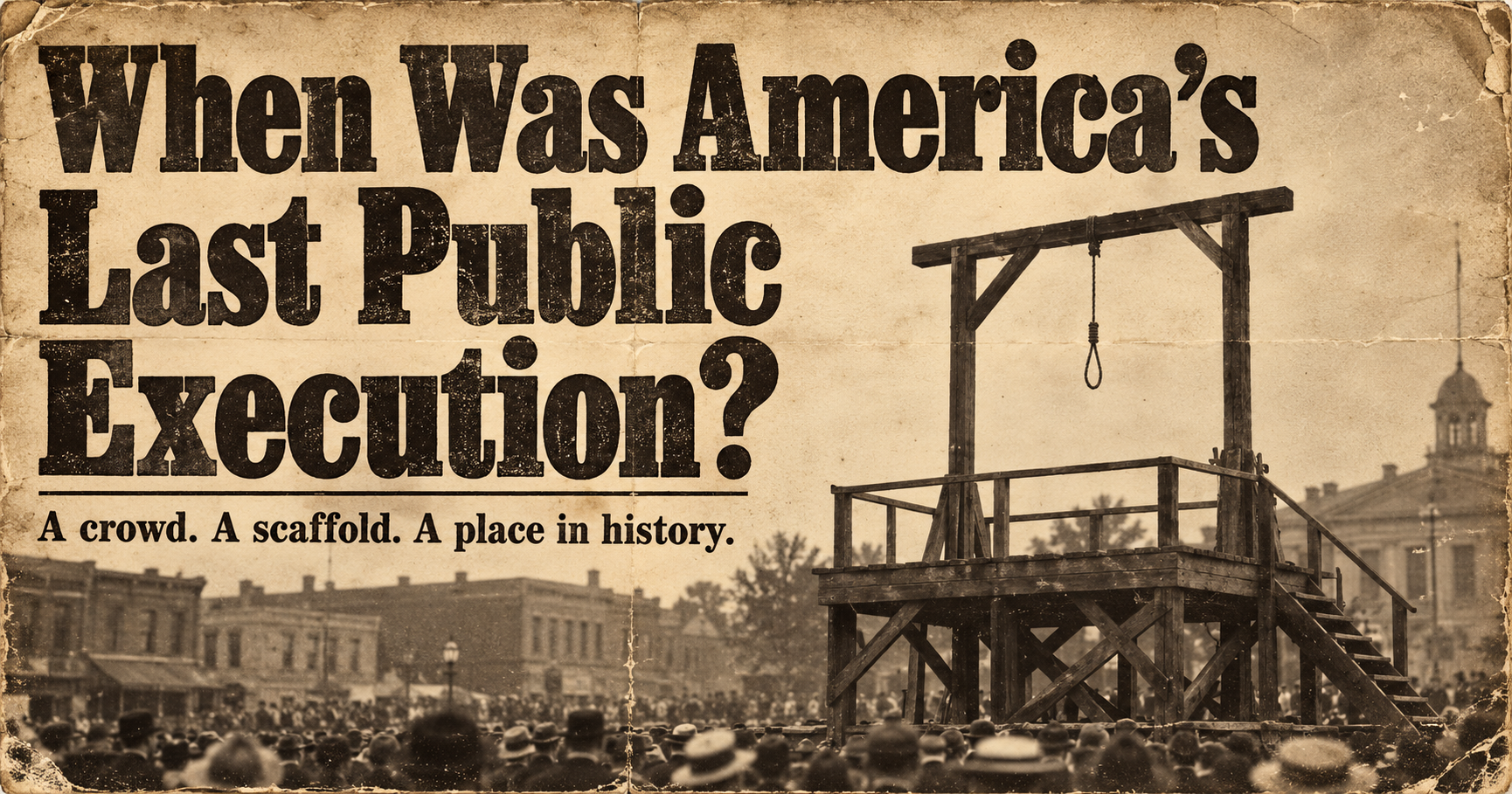
When Was the Last Public Execution in America?
The usual answer is Rainey Bethea’s hanging on August 14, 1936, in Owensboro, Kentucky. It is widely remembered as the last fully public execution in the United States.
However, Roscoe “Red” Jackson was hanged in Galena, Missouri, on May 21, 1937, with spectators present. A 1992 Washington University law review article identifies that event as the last public execution and cites a contemporary newspaper report describing more than 1,500 witnesses.
Other accounts distinguish Jackson’s restricted gathering from Bethea’s open public spectacle, describing the Missouri execution as partly public.
That is why two different answers appear.
Bethea is the familiar answer when “public” means a large, openly accessible crowd. Jackson matters when the definition includes a later execution attended by members of the public under more limited arrangements.
I would rather explain that difference than give you a clean answer that falls apart as soon as you find the second name.
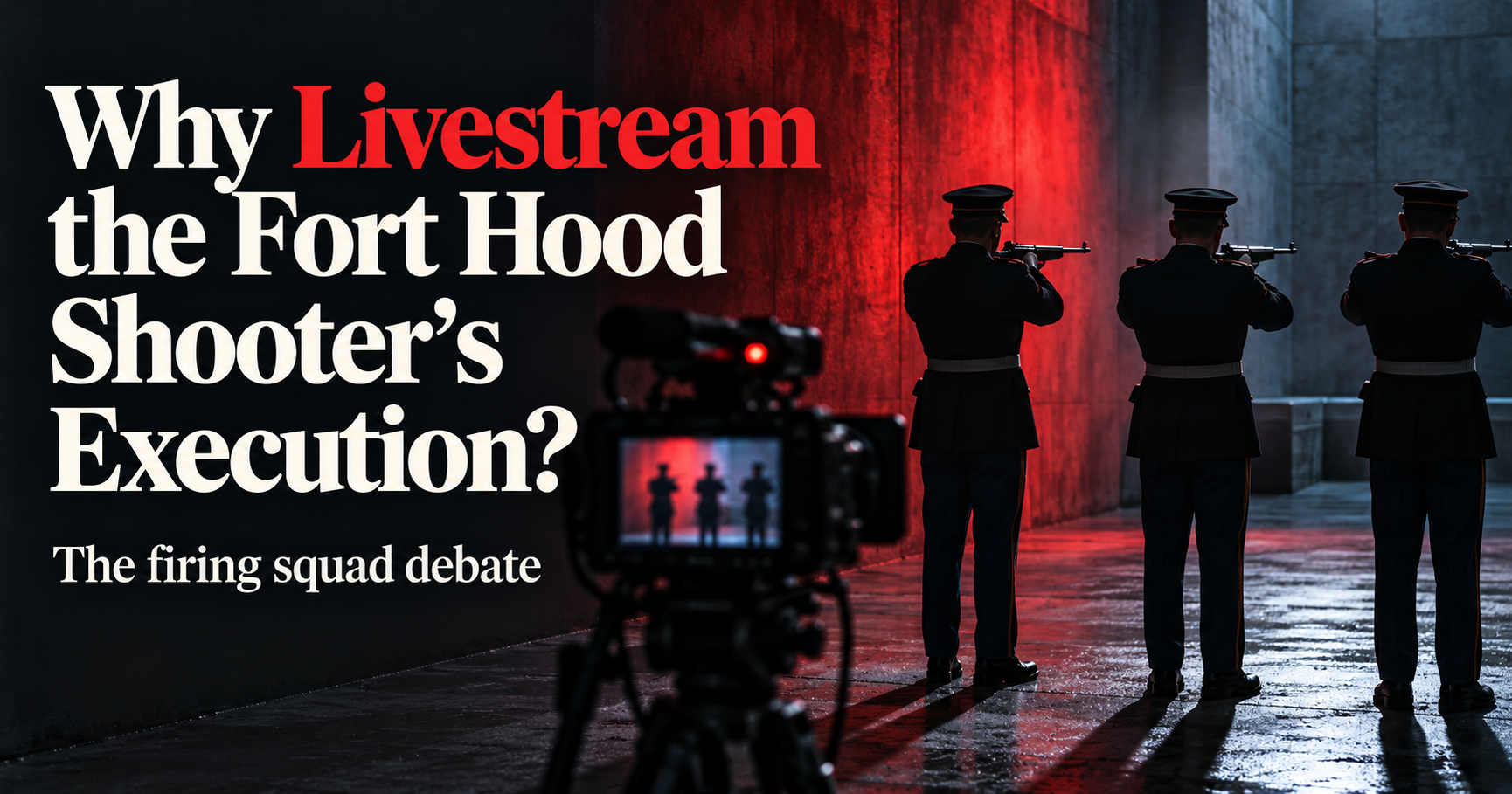
Our examination of the planned Fort Hood execution livestream explores how the same word, “public,” takes on another meaning when the audience can watch through a screen.
The Woman Behind the Bethea Case
Before the crowd gathered, there was Lischia Edwards.
She was a seventy-year-old white woman whose rape and murder led to Bethea’s prosecution. Bethea, a Black man, confessed to both crimes, according to the Death Penalty Information Center’s account. Prosecutors pursued the rape charge rather than charging him with murder.
That charging decision had a consequence that sounds strange today.
Under Kentucky law at the time, a murder conviction could lead to execution in the electric chair at the state penitentiary in Eddyville. A capital rape conviction could lead to hanging in the county where the crime occurred.
The charge helped determine whether the punishment happened inside a prison or before a local crowd.
It is an important part of the story because retellings sometimes describe Bethea as having been executed on a murder conviction. The underlying case involved a killing, but that was not the conviction under which he was hanged.

Edwards also deserves to remain visible in the account. Once an execution becomes famous, the victim can disappear behind photographs of the condemned person and arguments about the punishment. That same victim-centered approach is important in James Robertson’s execution case, where the execution story can otherwise overshadow the man Robertson killed.
Her death was the reason there was a case at all.

Owensboro Prepared for Thousands of Witnesses
Officials anticipated such a large gathering that the hanging was held in a parking lot to avoid damage to the courthouse lawn. Newspaper estimates reached as high as 20,000 spectators. Those are estimates, rather than a verified attendance count.
The location detail is unsettling in its own right.
Before the execution, someone had to consider where all those people would fit. Someone had to think about traffic, security, and the ground beneath their feet.
The punishment became a public event requiring crowd management.
In his book The Last Public Execution in America, Perry T. Ryan describes visitors arriving from surrounding counties and neighboring states. Hotels filled, some people stayed awake through the night, and others brought cots and slept outside while waiting for morning.
Those preparations make the crowd feel less like an abstract number.
People arranged their time around the hanging. For some, witnessing it involved an overnight stay.
I cannot tell you what every spectator felt. Curiosity, approval, fear, and other motives could have existed within the same gathering. The historical record does not let us climb inside each person’s head.
But the decision to attend is documented.
The Sheriff Became Part of the Attraction
Florence Thompson, the Daviess County sheriff, drew enormous attention because observers expected a woman to oversee the hanging.
A later Associated Press account explains that Thompson declined to operate the trap herself. A former Louisville police officer pulled the lever, while she watched from a nearby car.
That distinction matters. The story is often reduced to the novelty of a female sheriff hanging a man, even though that shorthand obscures who performed which task.
The attention also reveals how a punishment can acquire a second story.
There was the crime and the sentence. Then there was the question of what the sheriff would do, what photographers would capture, and what readers elsewhere would find remarkable.
The execution had become news partly because of the people administering it.
I find that more revealing than a dramatic description of the scaffold. It shows how easily an audience can shift its attention away from the victim and toward the presentation of the punishment.


Even in 1936, the Cameras Were an Issue
One detail in Ryan’s account feels surprisingly current.
A Kentucky State Police captain announced that cameras found at the hanging would be destroyed. Reporters sought the governor’s intervention, and the order was overruled. Photographers were able to document the event.
Officials were already confronting two different forms of public access.
One was the crowd physically present.
The other was the audience that would encounter photographs afterward.
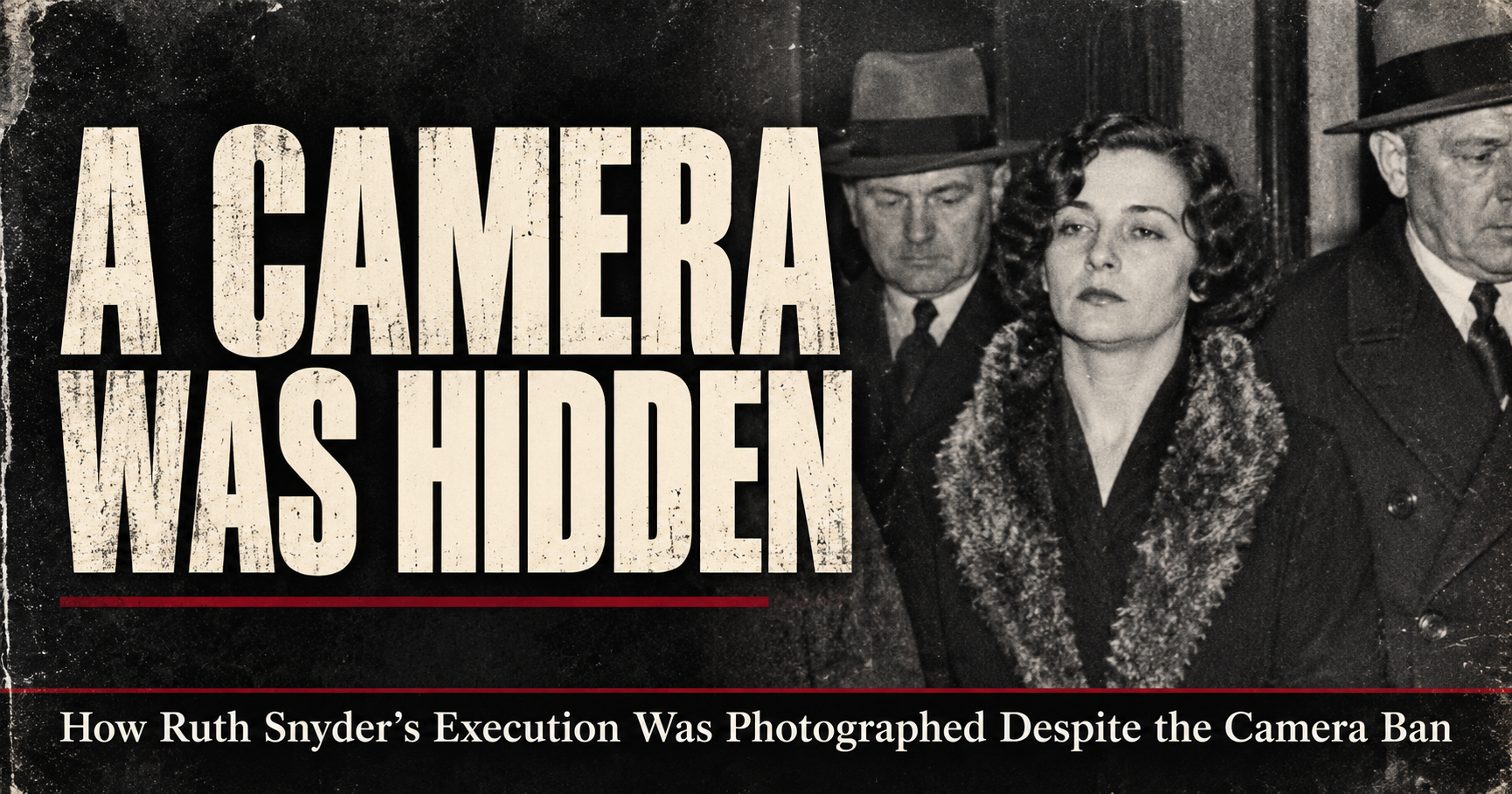
That distinction helps explain why the story remains relevant. A person can permit spectators at an event while trying to control its wider circulation. Once images leave the site, they reach people who were never part of the original gathering. Ruth Snyder’s execution offers a striking example of that tension, when the hidden photograph from Sing Sing carried a forbidden scene beyond the prison walls.
Ryan also describes the press preparing to move photographs quickly, including a newspaper truck equipped for developing and transmitting images.
The technology was different, but the desire to deliver the scene to distant audiences was already there.
Was the Hanging Really a Carnival?
Accounts of the atmosphere deserve careful handling.
The 2011 Associated Press retrospective describes national coverage portraying the gathering as a festive spectacle, with vendors and crowded drinking establishments. It also reports disagreement from people connected to the event.
Ryan said witnesses he consulted did not remember a rowdy atmosphere at the moment Bethea died. Thompson’s son also disputed the carnival description.
Those accounts need not describe every part of the gathering in exactly the same way.
A crowd can be noisy while assembling and quiet when something irreversible happens. A newspaper can emphasize the most striking behavior without capturing every witness’s experience.
I would be cautious about turning the whole audience into one cheering character. That makes for a vivid scene, but it claims more than the disagreement in the record supports.
The disturbing fact does not require exaggeration: thousands assembled to witness an execution.
Why Did Public Executions Disappear?
Bethea’s hanging did not single-handedly create the move away from public executions.
Many states had already restricted public access. The Associated Press retrospective describes concerns about painful or mishandled hangings and the behavior of spectators. It reports that Kentucky lawmakers cited the negative publicity surrounding Bethea’s execution when ending public executions in the state in 1938.
The broader change concerned where executions occurred and who could observe them.
Moving the punishment behind prison walls reduced access for ordinary spectators. It also created another question: how could the public evaluate what happened without being present?
That tension remains.
The public has an interest in understanding government actions. The existence of that interest does not settle whether every action should be available as unrestricted live footage.
Our explanation of the questions raised when an execution attempt does not end as planned examines another reason the procedure itself deserves scrutiny.
Where Missouri Fits Into the Story
The Missouri exception belongs here because it prevents us from overstating Bethea’s place in history.
Jackson’s 1937 hanging occurred after the Owensboro execution. The Death Penalty Information Center’s Missouri timeline calls it the last public execution in the United States.
That directly complicates the familiar claim attached to Bethea.
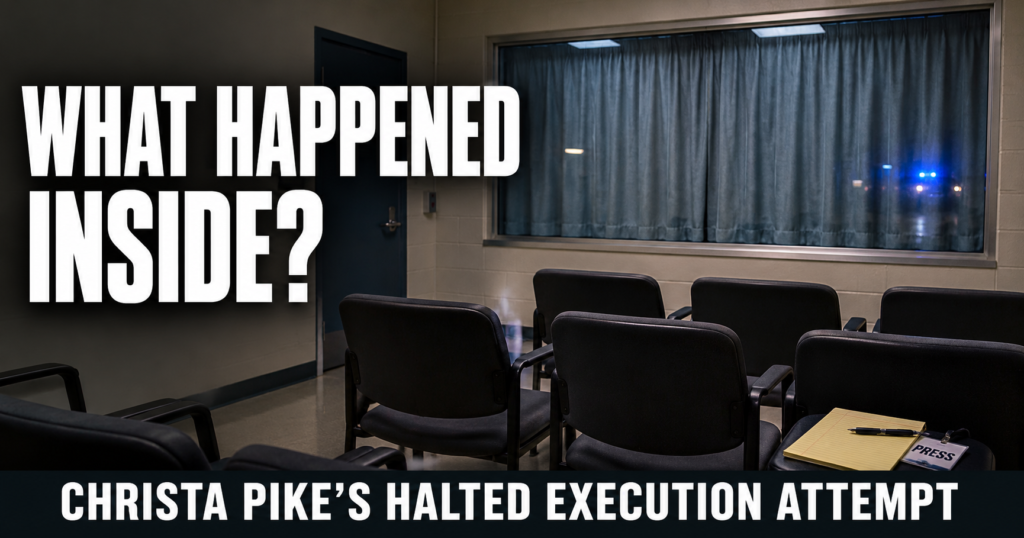
The distinction is about access. Contemporary discussion cited by the Associated Press describes people receiving passes to view Jackson’s hanging, while others sought vantage points outside those arrangements. A modern execution attempt raises similar questions about what witnesses could see and what remained outside public view; Christa Pike’s restricted execution viewing examines that uncertainty.
A restricted audience is different from an open gathering, but it is also different from an execution witnessed only by a small official group.
That middle category explains the disagreement.
The most useful answer preserves both cases: Owensboro became the defining example of America’s last fully public execution, while Galena provides a later case that some sources classify as public.
What About Timothy McVeigh’s Execution?
A camera does not automatically make an execution public.
In 2001, the Justice Department arranged a closed-circuit transmission of Timothy McVeigh’s execution for eligible Oklahoma City bombing victims and survivors.
Attendance was restricted. Viewers had to be at least eighteen, and recording devices and phones were prohibited to prevent the transmission from becoming public.
That arrangement allowed remote witnesses without creating an open broadcast.
It is a useful example because it separates three things that often get mixed together: selected witnesses, remote viewing, and unrestricted public access.
An execution can involve the first two without involving the third.
The Announced Fort Hood Execution Brings the Question Back
Status as reported on October 9, 2026: The Pentagon has announced plans to livestream Nidal Malik Hasan’s execution by firing squad at Fort Hood on December 3, 2026. This is a scheduled event and announced broadcast plan, not a completed execution.
Dating that information matters. A future reader should be able to distinguish what officials announced from what eventually happened.
The proposed livestream would create a different kind of audience from the crowds in Owensboro and Galena. Viewers could be far from the execution site, with no need to travel or stand among other witnesses.
Our article on why officials would invite the world to watch Hasan’s execution examines the arguments about transparency, deterrence, and what could happen to the recording afterward.
The historical comparison has limits. A firing squad livestream would differ from a hanging before a local crowd.
But both raise a recognizable question: what role is the audience supposed to play?
Questions About America’s Last Public Execution
Was Rainey Bethea definitely the last person publicly executed in America?
He is commonly identified that way, especially when discussing fully open public executions. Jackson’s later hanging creates an exception that should be explained rather than ignored.
How many people watched Bethea’s hanging?
Reports describe thousands, with some estimates reaching 20,000. The exact attendance should be treated as uncertain.
Was Bethea executed for murder?
His execution followed a rape conviction. Although the underlying case involved Edwards’ murder, prosecutors did not pursue a murder charge against him.
Why does a later Missouri hanging change the answer?
Because Jackson was executed after Bethea with spectators present. Sources differ over whether restricted attendance should count as a public execution or a partly public one.
Does “private execution” mean nobody witnesses it?
No. Restricted witnessing and open public attendance are different arrangements. Calling an execution private generally distinguishes it from one accessible to an ordinary crowd.
Would a livestream be the same as an old public hanging?
It would share the element of public observation, but the audience, technology, method, and possibilities for recording would differ substantially.
The Faces Beside the Scaffold
The historical photographs are difficult to look at for a reason beyond the scaffold itself.
They contain the people who came to watch.
I find myself wondering what those witnesses remembered afterward. Whether the scene matched what they expected. Whether they discussed it at home. Whether they wished they had stayed away.
The photographs cannot answer those questions.
They can establish that the gathering happened. The execution was real, and the spectators were real. The disagreement concerns how we classify the last of these events, not whether Americans once assembled in large numbers to watch them.
That is what makes this history stay with me.
For the condemned man, the morning had one irreversible ending. For the crowd, there was a journey home.
By Miles Rowan for Stories in the Static, examining criminal cases through overlooked evidence, unresolved questions, and the lives behind the headlines.