
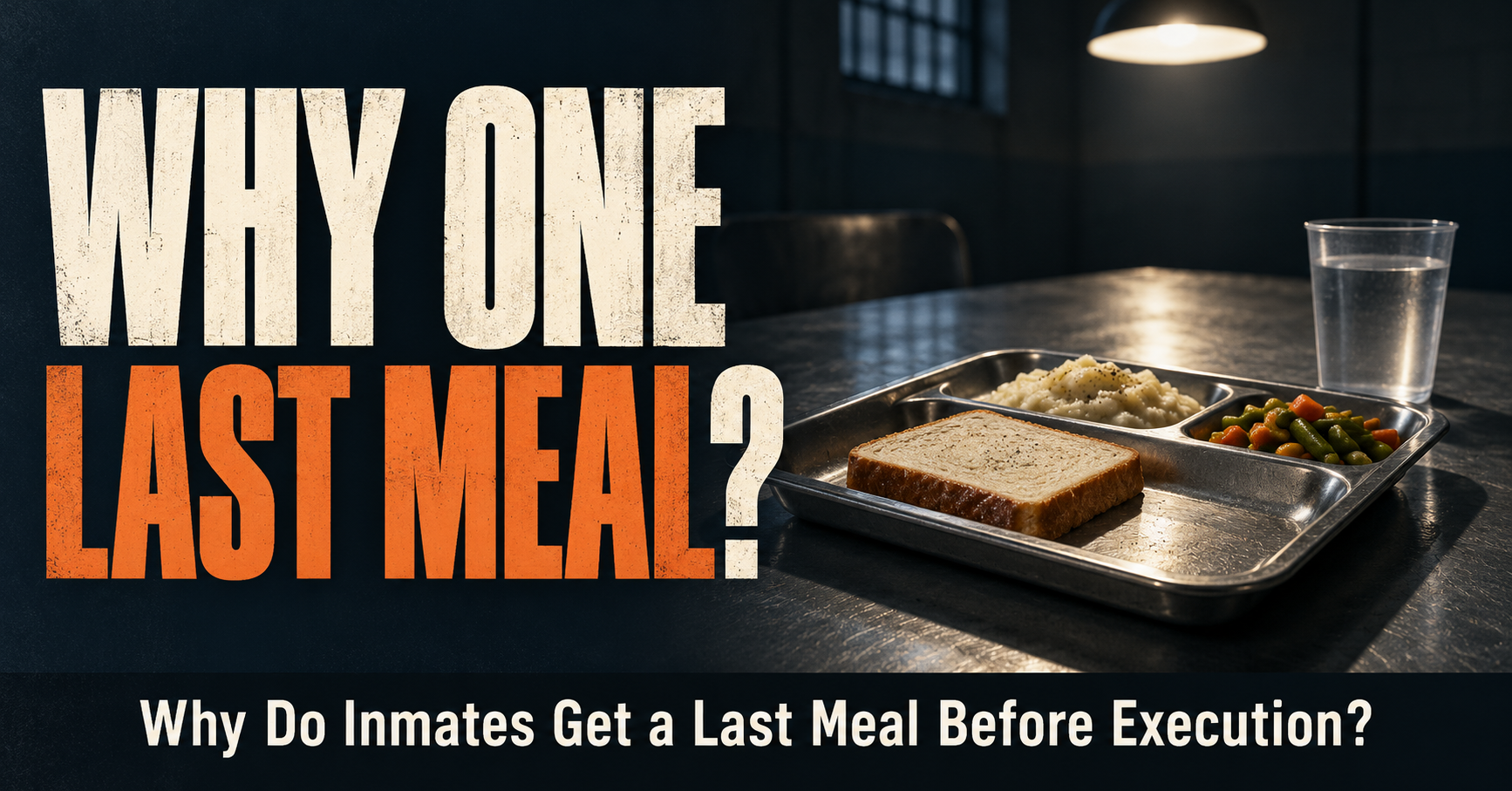
Ordering dinner usually means there is still an evening ahead.
Maybe dishes to wash. Something to watch. A reason to save the leftovers.
A last meal before execution takes that ordinary act and removes everything that normally comes after it.
The person may get to choose the food. They cannot choose to leave when they finish.
That is what makes this tradition so uncomfortable to me. A prison recognizes a small personal preference while preparing to end the person’s life.
Inmates may receive a special last meal because of a longstanding execution tradition associated with comfort, dignity, and a final measure of choice. The practice can also help prison staff manage the hours before an execution.
But there is no single nationwide rule. Some prisons allow special requests within limits. Others serve ordinary prison food.
And beneath the practical questions about menus and prices sits a harder one.
Who is the gesture really for?
Why Give Someone Dinner Before Executing Them?
A special meal does not change a sentence.
It does not undo a crime, compensate a victim’s family, or settle whether the conviction was right.
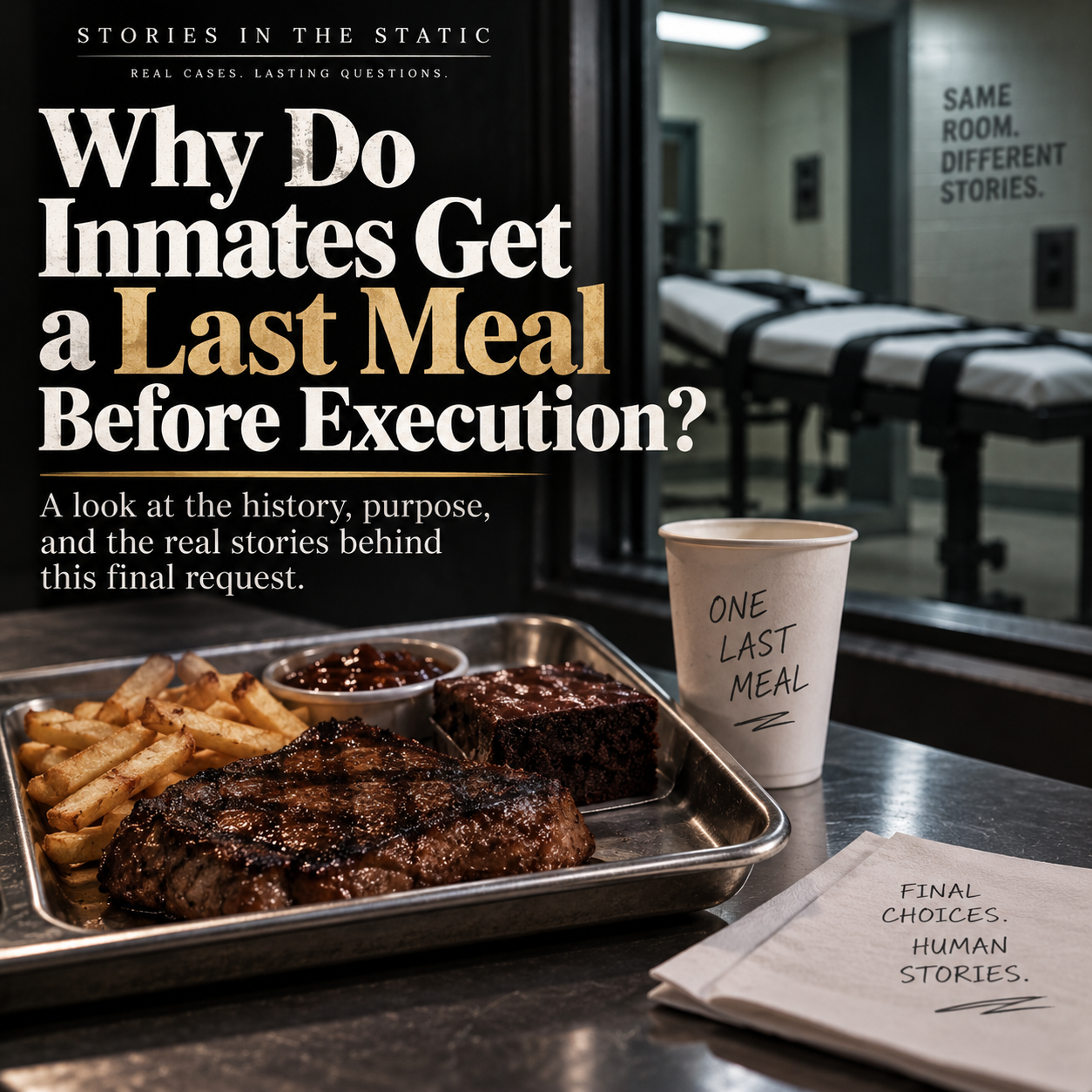
Its purpose exists within those final hours.

Food is one of the few ordinary comforts that can fit inside an extraordinary situation. A familiar dish can offer a small choice when almost everything else is being decided by someone else. That loss of ordinary choice is also part of the prison’s final preparations before execution, when routine meals and other daily activities take place under heightened supervision.
That choice is real, but limited.
The prison can approve the menu while continuing preparations for the execution.
In research examining the meaning of the last-meal ritual, comfort and institutional control appear as overlapping parts of the practice. A gesture can benefit the prisoner while also making the process easier for the people supervising it.
That is the uncomfortable contradiction.
Serving someone a preferred meal can be considerate. It does not mean the state intends to spare them.
Where Did the Last-Meal Tradition Come From?
There is no single, firmly established starting point.
Meals before execution have appeared in different places and periods, carrying meanings connected to religion, forgiveness, hospitality, and the passage from life to death.
The history of meals shared with condemned prisoners includes eighteenth-century German meals attended by officials, clergy, and sometimes the executioner. Some English prisoners received a final drink on their journey to execution. Accounts also describe Massachusetts Puritans holding meals with the condemned that echoed the Christian Last Supper.
Those examples show how varied the practice has been.
They do not establish one uninterrupted line from a single ancient ceremony to today’s prison procedures.
The familiar explanation that every last meal comes directly from Jesus’ Last Supper is too neat. Religious symbolism belongs in the history, but it does not explain every version of the custom.
What these practices share is an effort to place a familiar human ritual around a scheduled death.
People eat together to welcome someone, reconcile, celebrate, or say goodbye.
Before an execution, those meanings become difficult to separate.
A farewell meal can resemble hospitality even when the person providing it has no intention of protecting the guest.



Is a Special Last Meal a Legal Right?
A special meal of the prisoner’s choosing is generally a matter of execution policy, rather than a recognized nationwide constitutional entitlement.
There is no uniform national menu or guaranteed spending allowance. The legal differences between state last-meal policies help explain why one prisoner’s request tells us little about what another prison would permit.
The word “last” also causes confusion.
A last meal and a special last-meal request are different things.
Someone can eat ordinary prison food before an execution without receiving a custom meal. Ending special requests does not mean the prison stops feeding people.
That distinction became especially important in Texas.
The Untouched Meal That Changed Texas Policy
On September 21, 2011, Lawrence Russell Brewer was executed for his role in the racist murder of James Byrd Jr.
Beforehand, Brewer requested an enormous meal. It included chicken-fried steaks, a triple-meat cheeseburger, an omelet, fried okra, barbecue, fajitas, and ice cream.
He reportedly ate none of it.
The following day, state Sen. John Whitmire demanded that special last meals end. Prison director Brad Livingston announced that condemned prisoners would receive the same meal served to others on the unit.
The Texas decision to replace special requests with regular prison meals concerned the accommodation, not whether prisoners would receive food.
Brewer’s refusal became the detail people remembered.
But the decision reached beyond him. It changed the treatment of other prisoners facing execution.
That makes the case more revealing than an oversized menu.
One unused meal became the reason for removing a longstanding practice. The question was no longer whether a kitchen could prepare a particular dish.
It was whether someone convicted of a terrible crime should receive a final personal accommodation at all.



Can an Inmate Ask for Anything?
No. A request is not an unlimited order.
Prisons can restrict cost, ingredients, availability, preparation, and what can safely enter the institution.
Florida has used a $40 limit with local sourcing requirements. Some execution procedures expressly prohibit alcohol.
A request may be approved, modified, or denied.
It is also important to distinguish what someone requested from what they actually received. Those are not automatically the same.
A menu repeated in a news story can sound like a restaurant order. Behind it may be a prison kitchen making substitutions and working with available supplies.
The choice exists inside the institution’s control.
Why Would Someone Choose an Ordinary Dinner?
In 2020, Nicholas Sutton selected fried pork chops, mashed potatoes with gravy, and peach pie with vanilla ice cream.
Tennessee’s announcement of Sutton’s final dinner described something recognizable, rather than an exotic feast.
Its ordinariness is part of what makes it difficult to read.
We should not invent what those foods meant to him. A menu does not establish whether a dish recalled childhood, a family member, or simply something he liked.
But it invites an uncomfortable recognition.
A person whose crime feels distant from our own life can still choose food we recognize.
That does not lessen the crime. It makes the person harder to reduce to the crime alone.

After the years a death sentence can take to reach an execution, a familiar plate of food may become one of the last personal details outsiders learn about someone.
That detail is real.
It is also incomplete.
Can an Inmate Refuse a Last Meal?
Yes. A prisoner can decline the special request.
In Tennessee, Donnie Johnson did so before his 2019 execution. The prison said it would offer the regular menu instead. He also asked supporters to provide food to homeless people.
The account of Johnson’s decision to forgo a special meal illustrates why declining a request does not necessarily mean refusing every opportunity to eat.
Nor does refusing the meal automatically stop an execution.
Johnson’s execution proceeded. Brewer’s did, too.
What a refusal means depends on the person. It might be a deliberate statement, a lack of appetite, or a preference not to participate in the ritual.
Without that person’s explanation, assigning a motive becomes guesswork.
An untouched tray does not prove remorse.
It does not prove defiance, either.
Does the Meal Help the People Carrying Out the Execution?
This is the question that changes how I see the tradition.
We usually focus on the person eating. But someone must approve the request, prepare the food, carry it in, and remove whatever remains.
Those people are working inside a process that ends in a death.
Offering food provides a recognizable act of care within that work. It may also give staff something practical to do during hours otherwise defined by the approaching execution.
That does not mean every employee experiences the meal the same way.
It means the ritual involves more people than the prisoner alone.
The broader research on personal choice during the execution process examines last meals alongside final statements. Both allow individuality to remain visible within a tightly controlled procedure.
My reading is that the small choice feels significant partly because so many larger choices are absent.
The person can name a dessert.
The institution still determines what happens next.


Why Are We So Interested in What They Ate?
Food gives us an easy question to ask about a difficult event.
We know how to picture fried chicken or peach pie. Understanding a capital trial, a clemency decision, or an execution procedure takes more effort.
A menu can therefore become the most memorable detail in a story whose most important facts lie elsewhere.

There is a familiar pattern here. In the story of Ruth Snyder’s forbidden execution photograph, a striking image became inseparable from the case. With last meals, an ordinary object can take on a similar role.
The plate becomes something an audience can picture, discuss, and remember.
That attention is not automatically wrong. It can make a scheduled death feel less abstract.
But it can also turn an execution into a collection of curiosities: the biggest order, the strangest request, the person who refused dessert.
I would rather keep the harder questions visible.
What happened to the victim? What did the court establish? What happened during the years before execution? What does this small act of hospitality accomplish?
The audience’s curiosity should not become more important than the lives involved.
Questions About Last Meals Before Execution
Why do death-row inmates get a last meal?
Where special meals are offered, they are part of an execution tradition associated with comfort, personal choice, and the management of the final hours. The practice varies by jurisdiction.
Do inmates get whatever they want?
No. Requests can be restricted by cost, availability, security, and prison policy. Some jurisdictions serve ordinary prison food instead of allowing a special request.
Why did Texas stop special last meals?
Texas ended special requests in September 2011 after Lawrence Russell Brewer reportedly left his large requested meal untouched. Officials replaced custom requests with the regular unit meal.
Can an inmate refuse the meal?
Yes. Declining a special request does not necessarily mean declining ordinary food, and it does not automatically prevent the execution.
Can someone request alcohol?
There is no general entitlement to alcohol. Execution policies may expressly prohibit it, and the prison’s rules control what is allowed.
Does eating the meal mean someone accepts the execution?
No. Eating is not reliable evidence of agreement, remorse, guilt, or peace of mind. A person can eat while still opposing the sentence.
Does a last meal have to be expensive or elaborate?
No. It can be an ordinary dinner. The circumstances make it a last meal, not the size or price of the order.
By Miles Rowan for Stories in the Static.