
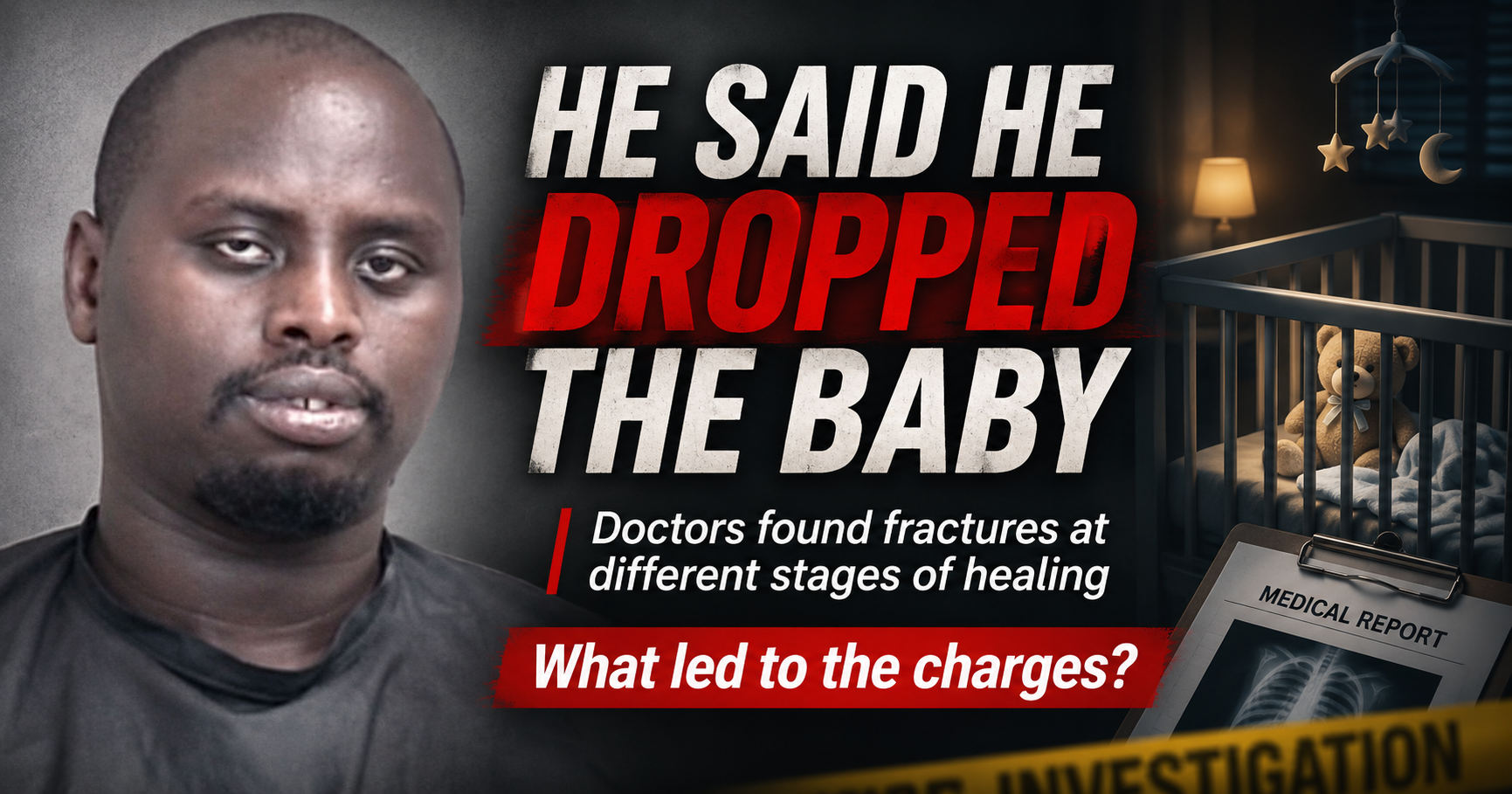
Muhire Augustin told Columbia police the baby didn’t cry after hitting the floor.
That detail comes from his own account of the night. He said he was carrying his 3-month-old through the living room when he slipped on water. The baby fell from his arms, he told detectives, and struck the wooden floor. When he looked at the child, the baby’s eyes stayed closed.
By Wednesday morning, November 11, 2026, the baby was at a Columbia, Missouri, hospital with life-threatening injuries. A doctor told investigators about the skull fractures and bleeding in the brain. Then came a finding that changed the scope of the investigation: some of the baby’s broken bones were already healing.
I keep coming back to what that meant for the first question police had to answer. They could spend hours figuring out what happened on that living room floor and still have injuries left to explain.
Prosecutors charged Augustin, the baby’s 30-year-old father, the following day. He faces charges of abuse or neglect of a child and first-degree child endangerment. The charges are allegations, and he is presumed innocent.
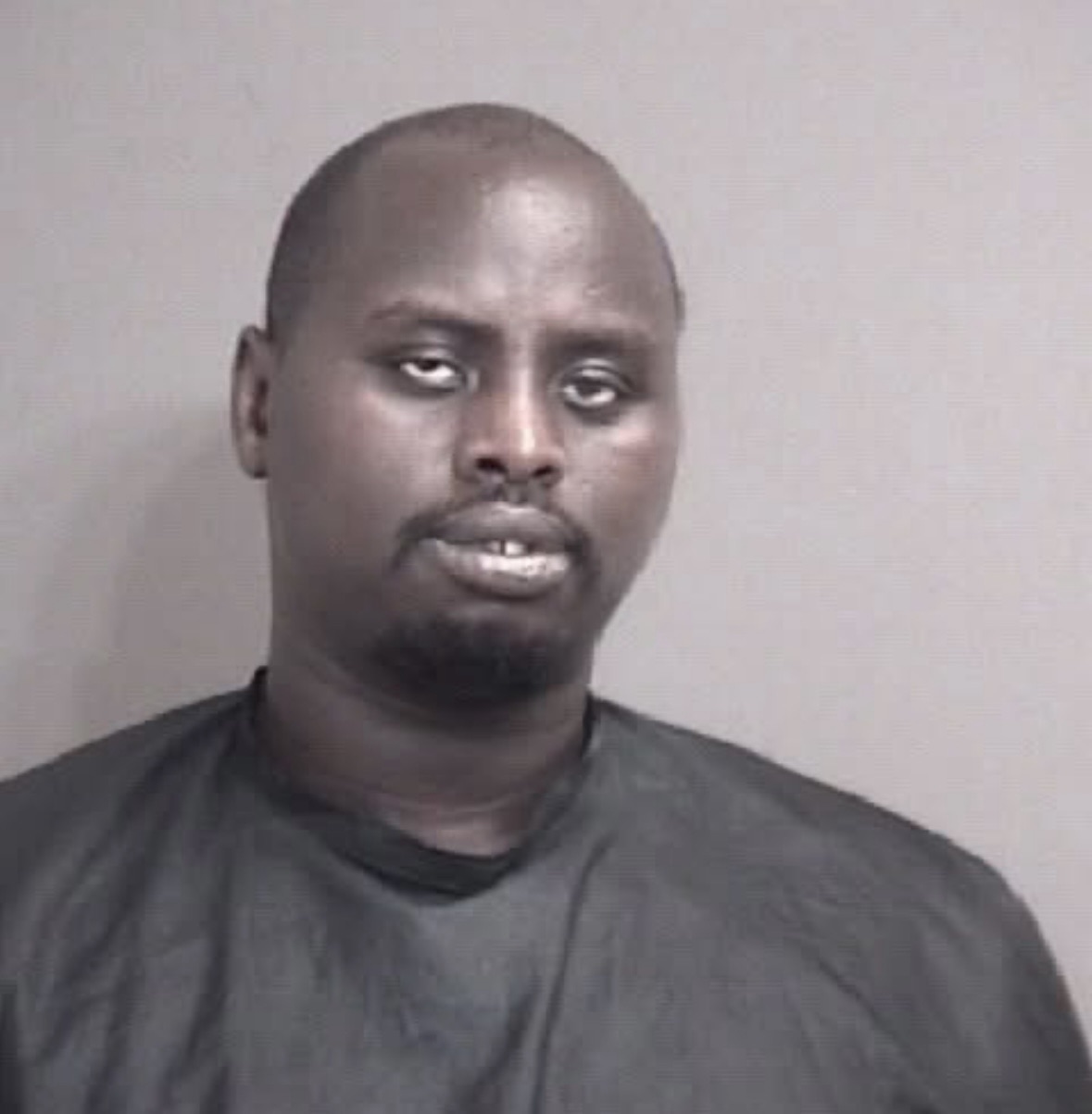
His account started with a bath
The baby’s mother was working overnight. Augustin told police he had been caring for the child during her shifts since she returned to work on November 4.
He described giving the baby a bath on the night of November 10. Later, he said, the child began crying. He told detectives he was carrying the baby across the living room when he lost his footing and fell backward.
Those are his descriptions of events inside the house. In the probable cause statement reviewed by ABC 17 News, police say his account of when the fall happened changed during questioning.
That matters because the timing of the fall is the starting point for everything he said came next. How long had the baby been struggling to breathe? When did another adult learn something was wrong? You can put those events in order from his account. Pinning them to the clock is harder.
He said he called the baby’s mother. He didn’t call 911.
Augustin told detectives the child wasn’t moving or breathing normally. He said he tried rescue breaths and chest compressions. He also said he did not call 911.
In his first interview, he estimated that about an hour passed between the reported fall and his call to the baby’s mother. That was his estimate, and it depended on the timing of a fall police say he described differently as the interviews went on. The available account doesn’t establish how long the baby went without medical care.
Augustin was asked why he hadn’t called emergency services. He told police it hadn’t occurred to him at the time. The baby’s mother came home from work and took the child to the hospital.
By about 7:45 a.m. on November 11, police were investigating suspected child abuse. Columbia police’s November 12 release tied the report to Fourth Avenue. The probable cause statement, as reported by ABC 17, describes officers being dispatched to University Hospital as part of that investigation.


The injuries that sent detectives looking further back
The baby needed surgery and a breathing tube. A doctor described multiple skull fractures and bleeding in the brain. There were fractures elsewhere, too, including in the ribs and shoulder. The doctor described the rib fractures as being at different stages of healing and noted a healing fracture near an elbow.
That’s where the case stopped being a reconstruction of a single night. Investigators could ask when Augustin said he slipped, when he called the baby’s mother, and when she got the child to the hospital. None of those answers would establish when the other injuries happened. An officer wrote that the fall Augustin described did not account for the different stages of healing.
There’s a limit to what those findings can tell a reader, too. Research on estimating the age of children’s fracturesdescribes how difficult it is to put a precise date on an injury from signs of healing. A doctor can see signs that a bone has started to repair itself without being able to name the day it broke. And a fracture can’t identify who was there when it happened.
Augustin’s account of when he started covering the overnight shifts gives the story a date. It would be a mistake to use that date to fill in blanks the medical findings leave open.
Why detectives paid attention to a mop
Augustin told police he cleaned up the water after the fall. That gave investigators something specific to look for when they searched the house.
A detective described the mop as dry and brittle. Investigators also reported dust on the floor and no obvious sign it had recently been mopped. The baby’s mother told them she hadn’t noticed water when she came home.
A dry mop can’t tell you what the floor looked like hours earlier. Neither can someone arriving home after the alleged fall. But you can see why detectives put those observations in the statement. Augustin offered an explanation for why the floor would be dry by the time anyone else saw it. Police looked for signs of that cleanup and didn’t report finding them.
The mop and the hospital findings address different parts of the story. One concerns whether detectives could corroborate his account of the room. The other concerns whether his account, even taken on its own terms, could explain all of the baby’s injuries.

What the booking and the charges tell us
Early on November 12, 93.9 The Eagle reported that Augustin was jailed without bond while charges were under review. Later that day, prosecutors filed two charges: abuse or neglect of a child involving serious emotional or physical injury, and first-degree child endangerment involving physical injury.
Those are two different moments in the same case. The booking tells you how Augustin was held when he entered the Boone County Jail. The filing tells you what prosecutors formally accused him of. Neither tells you what a judge or jury will ultimately decide.
The distinction matters especially when so much of the publicly reported detail comes from the police account. As Missouri’s guide to the criminal court process explains, the state bears the burden of proving a criminal charge beyond a reasonable doubt. At this stage, the account in the probable cause statement explains why police pursued the case. It hasn’t been tested at trial.
How is the Columbia baby doing?
The doctor’s assessment reported in the probable cause statement was grave. The child had undergone surgery and needed help breathing. As of November 13, I couldn’t verify a later medical update.
That’s the part of the story that’s easiest to lose once the booking photo and charges start circulating. There’s an exact time in the jail record. There are names for both charges. But the question most people want answered, whether the baby pulled through, remains open in the public reporting I could verify.
Where can someone share information with Columbia police?
Columbia police are asking anyone with information to call 573-874-7652 and reference police case 2026-00309143. Anonymous tips can go to CrimeStoppers at 573-875-8477.