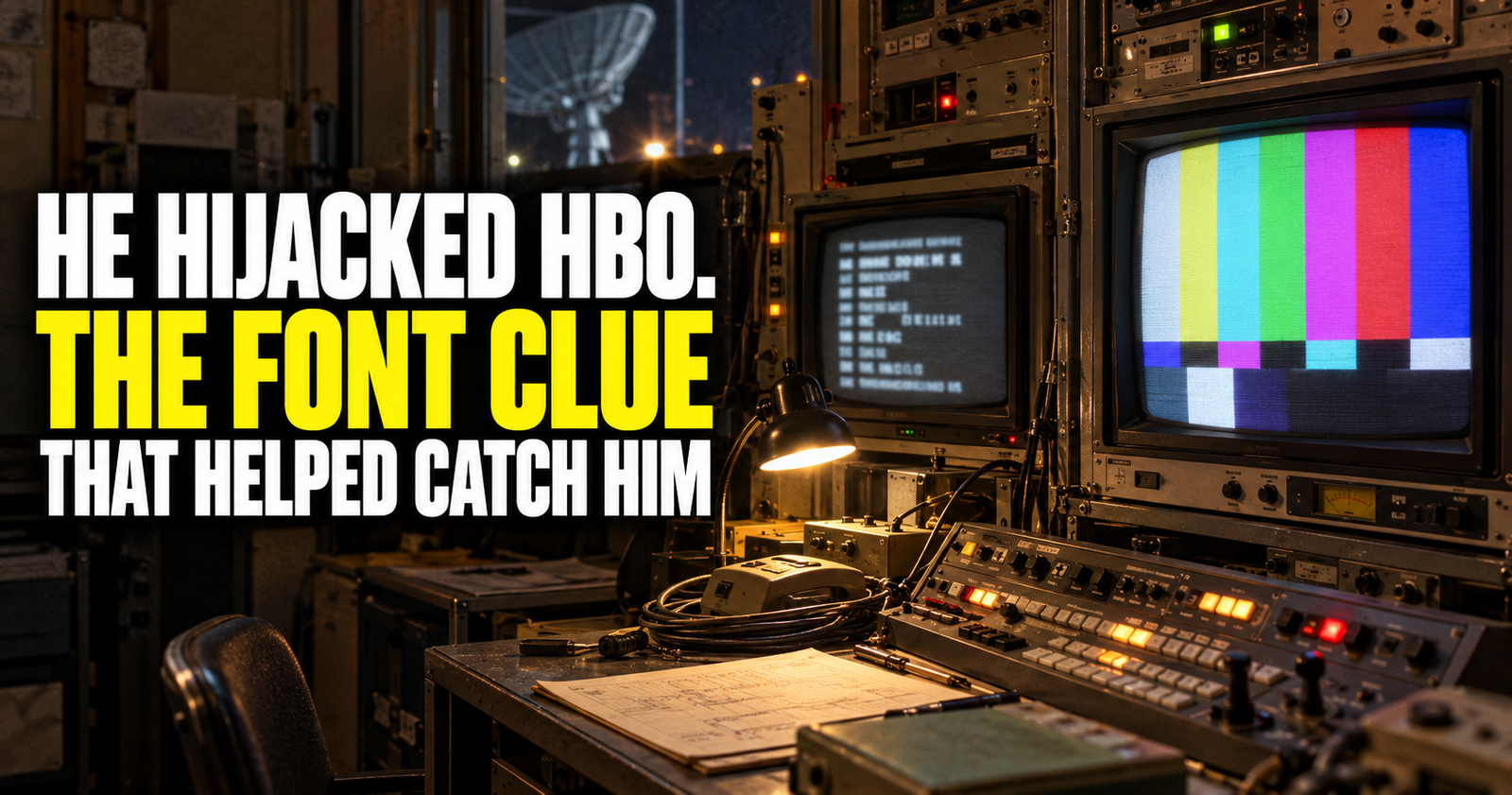
Shortly after midnight on April 27, 1986, someone interrupted HBO with a complaint about the bill.
Viewers watching The Falcon and the Snowman suddenly saw a color test pattern and a message signed “Captain Midnight.” The intruder objected to a $12.95 monthly charge and warned two other movie channels that they could be next. The interruption lasted about four minutes.
A nickname hid the person responsible. It did not hide the equipment he had used.
Captain Midnight was John R. MacDougall, a satellite dish dealer and part-time uplink operator in Ocala, Florida. Investigators narrowed the search using the transmission’s technical requirements, the equipment that produced the lettering, and a tip reported at the time. MacDougall pleaded guilty in July 1986.
The interesting part is how an anonymous message on a television screen became a trail investigators could follow.
The Man Behind the Message Had Something to Lose
MacDougall was 25 when authorities identified him. He sold satellite television equipment and also worked at Central Florida Teleport, a facility that transmitted programming to satellites.
That second job mattered. He had access to equipment capable of sending a signal upward, rather than simply receiving television at home.
His business supplied the motive. HBO had begun scrambling its satellite programming in January 1986, preventing dish owners from watching without the required decoding equipment and subscription. MacDougall told authorities that the change was hurting his livelihood.
From a customer’s perspective, this was a dispute over paying for television. From a dealer’s perspective, the change affected the appeal of an expensive piece of equipment he was trying to sell.
MacDougall’s response turned that business frustration into a federal case.
Why Was He Angry About $12.95?
The number in the message was not random. It referred to HBO’s monthly subscription charge for home satellite viewers.
HBO began scrambling its signal full time on January 15, 1986. Other premium channels followed that spring. Contemporary reporting described the changes as a blow to home satellite dish sales.
The price gives the incident its strange, almost ordinary center. A man with specialized communications access used it to broadcast a complaint that could have appeared in a customer-service letter.
That contrast makes the case memorable: a familiar grievance delivered through an extraordinary intrusion.
What Did Captain Midnight Put on the Screen?
His message identified HBO, signed off with the Captain Midnight name, rejected the monthly price, and warned Showtime and The Movie Channel.
There was no explanation of who he was. No business address. No face for investigators to identify. Just lettering over a television test pattern. The recorded interruption preserves that simple presentation.
I find that restraint more striking than a complicated performance. He did not need an elaborate speech to demonstrate that someone outside HBO could replace its programming.
The message made two statements at once. One was about subscription prices. The other was about control of the broadcast.
How Did He Interrupt HBO?
MacDougall interfered with HBO’s satellite transmission using an uplink facility. His transmission overrode the programming HBO was sending from Long Island, New York.
The important distinction is between receiving a signal and transmitting one.
A household dish owner watching television was receiving programming. MacDougall’s workplace gave him access to the other side of that process.
Calling the incident a “hack” is understandable, but it can create the wrong picture. This was a broadcast signal intrusion, not a stolen streaming password or a break-in to a modern website.
The equipment that made the interruption possible also limited the number of plausible suspects.
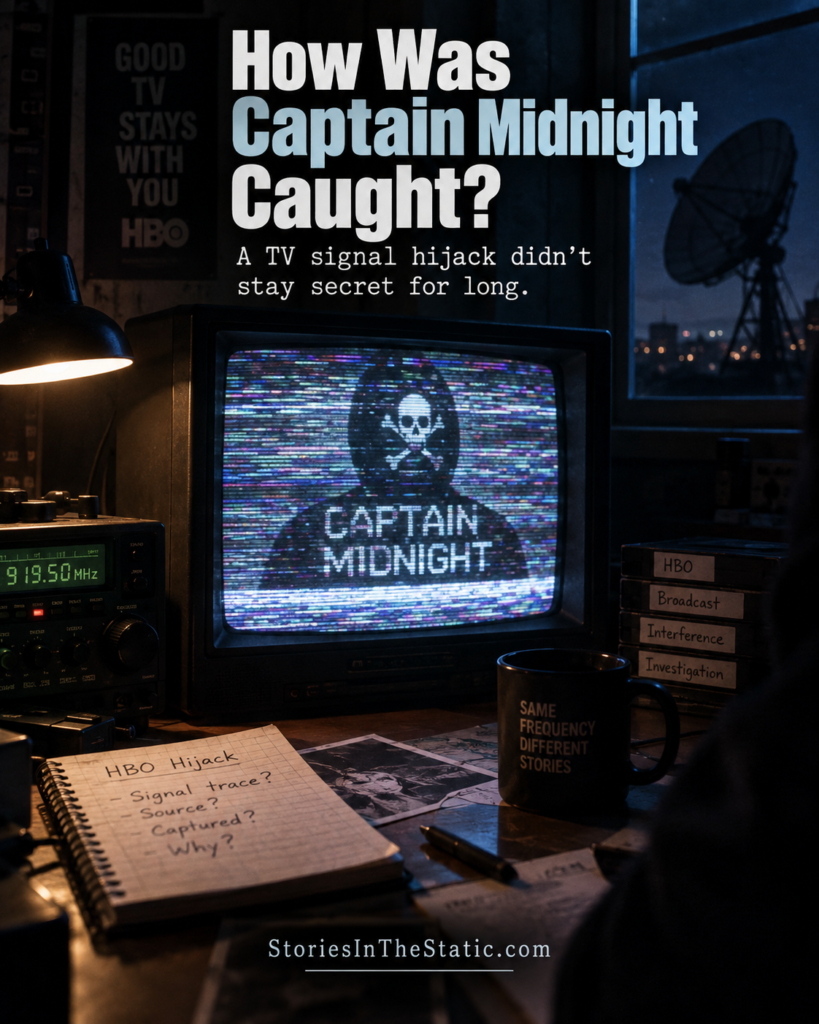
How Was Captain Midnight Caught?
The investigation worked by narrowing possibilities. Authorities did not have to identify every person angry with HBO. They needed to identify a person with the means to transmit that particular interruption.
The Transmission Required Powerful Equipment
UPI’s contemporary account reported that investigators reduced a field of roughly 2,000 facilities to fewer than a dozen with the necessary power to disrupt the transmission.
That was a major change in the investigation. A television audience could include countless unhappy customers. The list of technically suitable transmission facilities was far smaller.
The Lettering Was Another Clue
Investigators also examined how the on-screen text had been generated.
An industry tribute to broadcaster Kurt Elfers describes the investigation’s analysis of the lettering and its connection to a particular model of character generator, the equipment used to create television text.
The distinction matters. A font was a clue to equipment, not a name attached to a person. Its value came from combining it with the other requirements of the intrusion.
A Reported Tip Helped Narrow the Search
The July 22 UPI report also described a Wisconsin tourist who overheard a compromising telephone conversation in Florida and supplied a tip.
This is why I would be cautious with the neat version that Captain Midnight was caught “because of a font.”
The contemporary record describes more than one lead. Technical capability, the displayed text, access to a suitable facility, and a reported tip all belong in the account.
A catchy explanation is not always a complete explanation.
What Happened When Authorities Identified Him?
By July 1986, the Captain Midnight nickname had been connected to John MacDougall.
He pleaded guilty to unlawfully transmitting the interfering signal. A contemporary account described the process as an extensive elimination of possible sources that ultimately led to the Florida operator.
The outcome removes one of the ambiguities that surrounds many broadcast-intrusion stories. In this case, there was an identified perpetrator and a guilty plea.
That gives the mystery a firm ending, even if later retellings disagree about which investigative detail deserves the most credit.
Did Captain Midnight Go to Prison?
MacDougall received a $5,000 fine and one year of probation. His sentence was approved in August 1986. He did not receive a prison sentence in that disposition.
The interruption itself had been brief. The concern extended beyond one disrupted movie.
Contemporary reporting noted the implications for other organizations using satellite communications. Authorities had reason to investigate how the intrusion happened, not simply restore HBO’s programming and forget it.
What Captain Midnight Later Said About His Motive
In a 1996 interview published in Satellite Times, MacDougall discussed the incident from his own perspective, including his objections to the treatment of home satellite customers.
Years later, he continued to frame the interruption as a protest over pricing and business practices. A 2011 interview, cited in historical accounts, also described his regret that his motivations had not been understood as he intended.
His explanation helps establish how he viewed his actions. It does not turn that viewpoint into an excuse, or change the fact that he pleaded guilty.
Both parts belong in a fair account.
The Detail That Changes How I Read This Story
Captain Midnight tried to speak anonymously through equipment that was anything but ordinary.
The nickname concealed his identity from viewers. The transmission exposed requirements investigators could examine.
That is the tension at the heart of the case. The screen offered almost no personal information, yet the act of putting the message there supplied useful evidence.
The most memorable question is not simply how a man interrupted HBO. It is how much he revealed while doing it.
Was Captain Midnight ever identified?
Yes. Authorities identified him as John R. MacDougall, and he pleaded guilty in July 1986.
How long did the HBO interruption last?
Contemporary UPI reporting described it as approximately four minutes.
Did investigators catch him using the font?
Analysis of the lettering was part of the investigation. Accounts also describe the transmission requirements and a reported tip, so the font should not be presented as the only lead.
Written by the Stories in the Static editorial team, sharing documented mysteries and strange true stories with a clear distinction between evidence and speculation.
Comments
One response to “How Was Captain Midnight Caught After Hijacking HBO?”
[…] account of how investigators caught Captain Midnight after the HBO hijacking follows the transmission requirements, equipment clues, and reported tip that helped narrow […]