
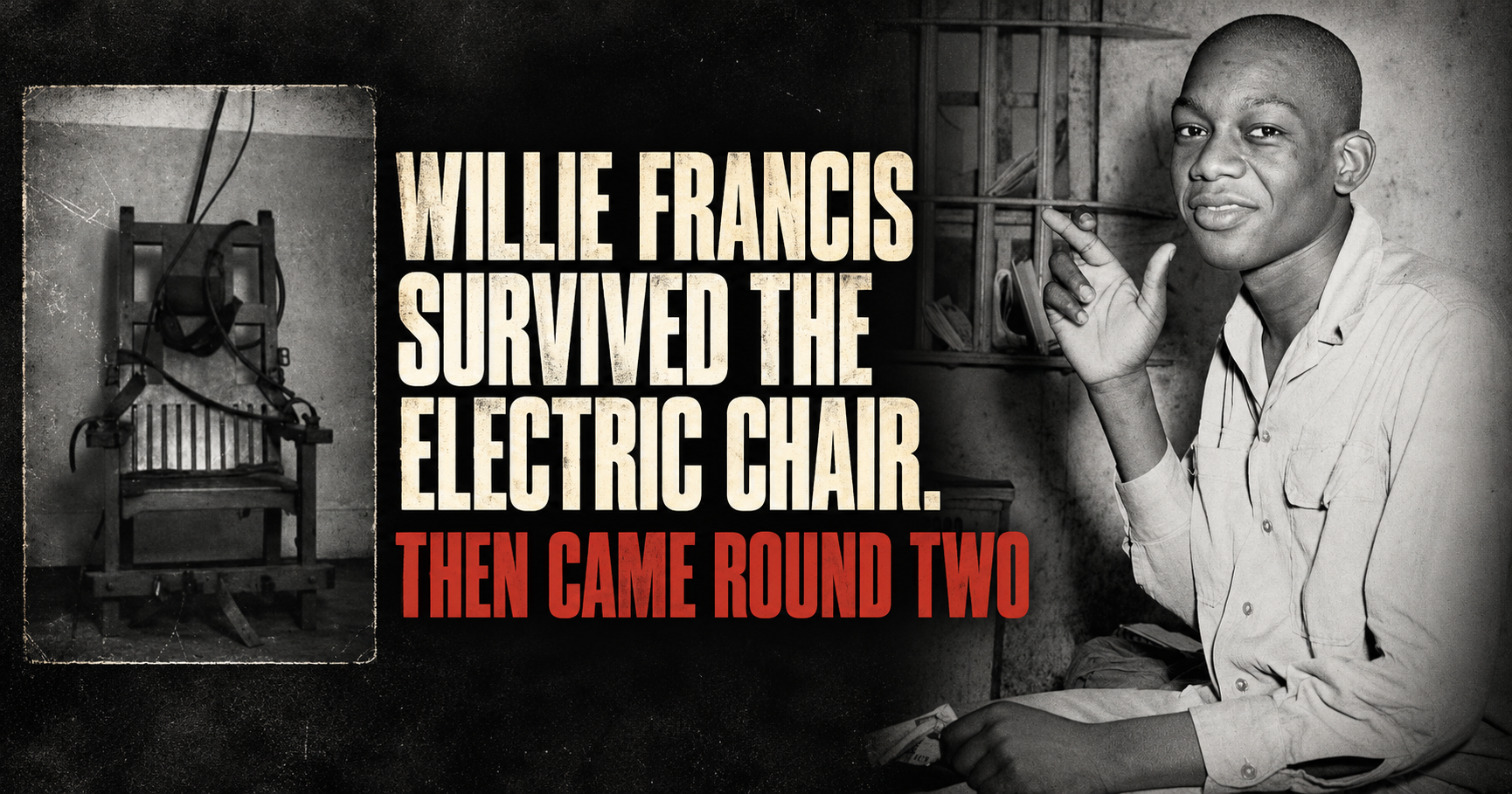
Willie Francis was supposed to die on May 3, 1946.
Louisiana officials placed him in the electric chair and attempted to carry out his death sentence. The equipment failed. He was removed from the chair alive. The state’s own court record confirms those basic facts. A later case involving Romell Broom’s execution failure shows how a failed execution attempt can raise different procedural and constitutional questions.
He was seventeen.
That is where a remarkable survival story might ordinarily end. A teenager lives through something intended to kill him. The restraints come off. Someone intervenes.
But Francis remained a condemned prisoner.
Louisiana intended to try again.
The question that followed went all the way to the United States Supreme Court: could the state return him to the chair after what it had already put him through?
What makes this case stay with me is the interval between those two attempts. Survival gave him more time, but it did not give him safety.
Who Was Willie Francis?
Willie Francis was a Black teenager convicted of murdering Andrew Thomas, a pharmacist in St. Martinville, Louisiana.

The account published by the Bill of Rights Institute describes a two-day trial before an all-white, all-male jury. His appointed lawyers offered no evidence, did not cross-examine prosecution witnesses, and did not object to the testimony against him.
Those details deserve attention before the execution story takes over.
Thomas was a murder victim. His death required a serious investigation and a fair prosecution. Francis was a young defendant whose life depended on the quality of the case against him and the defense provided to him.
Acknowledging both does not require us to pretend the historical record answers every question.
Later accounts have raised substantial concerns about Francis’s trial. However, concern about a conviction and proof of innocence are different claims. I would not describe him as conclusively exonerated.
He was convicted. The fairness of the proceedings remains an important part of understanding his story.
For readers looking for the broader legal question, our explanation of what happens when someone survives an execution attempt separates survival from release. Francis’s experience shows why that distinction matters.
Louisiana Brought the Electric Chair to Him
The chair was portable.
Louisiana stored it at the state penitentiary and transported it to parish jails when an execution was scheduled. It was known as “Gruesome Gertie.”
That detail changes the picture.
This was equipment that had to be moved, assembled, connected, and checked before officials used it to end someone’s life. The execution depended on people completing those tasks correctly.
In author Gilbert King’s account of the case, Francis was strapped into the chair inside the St. Martinville jail. King describes the attempt failing while Francis remained conscious and distressed.
I do not need to invent the thoughts running through his head to find that frightening.
The documented situation is enough: a teenager had been prepared for execution, the attempt had failed, and the people responsible still held him in custody.
He had survived the procedure. He had not escaped the sentence.
What Went Wrong During the First Attempt?
The court record identifies a defect in the execution equipment.
There was also a dispute about whether electricity had passed through Francis’s body. Louisiana maintained that no current reached him. Francis’s side maintained that it had.
That disagreement matters because “the chair did not work” can conceal two very different possibilities.
One is a procedure that never delivered electricity.
The other is a procedure that delivered electricity but failed to kill the person restrained in the chair.
A careful account should preserve the dispute instead of treating every dramatic description as an uncontested finding.
Historical accounts also report that the men responsible for the first attempt had been drinking. King includes that allegation in his account, and the Bill of Rights Institute describes witnesses later telling Francis’s lawyer about intoxication.
That is important historical reporting. It should not be confused with a factual finding adopted by every justice who considered the case.
The State Initially Planned to Try Again Within Days
Francis did not have to wait long to learn that survival had changed little about Louisiana’s intentions.
The governor initially granted a reprieve until May 9, 1946, just six days after the failed attempt. Petitions and further delays followed.
A reprieve is a delay. It does not necessarily cancel a sentence.
That distinction must have been brutally practical in this case. Francis was alive, but another execution date could still determine what happened next.
I find it difficult to read the calendar without stopping.
May 3: the attempt fails.
May 9: the state initially intends to carry out the sentence again.
The dates explain the urgency of the legal fight better than an exaggerated description ever could.

His Father Found a Lawyer Who Knew the Victim
Francis’s father approached Bertrand DeBlanc for help.
DeBlanc was a local lawyer who had returned from military service during World War II. He also knew Andrew Thomas, the murdered pharmacist. King’s account describes Thomas as one of DeBlanc’s best friends.
That connection makes DeBlanc’s decision especially significant.
He did not need to dismiss the victim’s life to question what the government could do to the defendant. He could care about Thomas and still insist that Francis had rights.
It is a distinction that often disappears in arguments about notorious criminal cases.
A lawyer challenging a punishment is not necessarily excusing the crime. The challenge may concern the limits on government power, the reliability of the process, or the treatment of a prisoner.
DeBlanc pursued the fight despite that personal connection to the victim.
The survival story became a legal struggle because someone acted on Francis’s behalf.
The Supreme Court Allowed a Second Attempt
The case reached the Supreme Court as Louisiana ex rel. Francis v. Resweber.
On January 13, 1947, the Court ruled against Francis by a vote of 5–4. Four justices joined Justice Stanley Reed’s opinion, while Justice Felix Frankfurter supplied the fifth vote through a separate concurrence.
Reed’s opinion treated the failed attempt as an accidental equipment failure rather than deliberate cruelty. It rejected the constitutional arguments against carrying out the sentence afterward.
That reasoning deserves precision.
The ruling did not establish that officials could deliberately torment a prisoner through repeated execution attempts. Its treatment of the failure as an accident was central.
For Francis, however, the practical result was that the Constitution did not stop Louisiana from proceeding.
Our account of the questions surrounding Christa Pike’s execution attempt concerns a different case and procedure. Francis’s ruling should not be used as a shortcut that erases those differences.
Four Justices Wanted More Than an Assumption
Justice Harold Burton’s dissent, joined by three other justices, challenged the result.
The dissent called for further proceedings to determine what had actually happened during the first attempt, including whether electricity had reached Francis. It also questioned the cruelty of returning him to the chair after an earlier application of current.
Burton described the danger as “death by installments.”
Those three words capture the disagreement.
Was Louisiana merely completing a sentence interrupted by an accident?
Or would another attempt add an unconstitutional ordeal to what Francis had already endured?
The justices did not agree.
The dissent also did not simply demand that Francis walk free. It sought factual examination and a constitutionally permissible resolution.
That is why the case is more complicated than the familiar internet claim that surviving an execution means the government must release you.
Surviving the Chair Did Not Overturn His Conviction
The execution challenge and the murder conviction were distinct issues.
The Supreme Court expressly noted that the case before it did not provide a basis for ruling on alleged constitutional violations during Francis’s trial.
That procedural boundary is easy to miss.

A court can decide a narrow question without settling every troubling aspect of a person’s case. A ruling allowing the sentence to proceed does not mean the justices independently investigated every disputed piece of trial evidence. That limitation helps clarify how courts address separate death-row questions, which separates different kinds of review instead of treating them as one continuous appeal.
For readers, it is worth asking what a decision actually addressed before treating it as a complete answer.
Francis’s Supreme Court case addressed the proposed execution after the failed attempt. It did not become a full retrial of Thomas’s murder.


Willie Francis Was Executed on May 9, 1947
The second attempt took place just over a year after the first.
On May 9, 1947, Louisiana executed Francis. He was eighteen. Historical accounts describe DeBlanc continuing his efforts to save him until the end.
The outcome is important to state plainly.
Francis did not receive freedom because he survived. He did not disappear into an unknown future. The legal fight delayed the sentence, but it did not prevent Louisiana from carrying it out.
The first attempt is what made him nationally memorable.
The second is what happened to him.
I think both belong in any honest telling. Ending the story at the moment of survival would leave readers with the wrong understanding of his life.
Could a Teenager Face the Same Sentence Today?
One major part of the legal landscape has changed.
In Roper v. Simmons, decided in 2005, the Supreme Court held that the Constitution prohibits the death penalty for crimes committed before the offender’s eighteenth birthday.
The age at the time of the crime is the crucial point.
Someone turning eighteen while imprisoned does not make a crime committed as a juvenile eligible for capital punishment under that rule.
Francis’s case therefore belongs to a period when American courts allowed punishments for juvenile offenders that would later be prohibited.
That does not change what happened to him. It helps readers understand why his age cannot be treated as an incidental detail.
Why His Story Still Appears in Execution Debates
Francis’s case sits at the intersection of two questions.
What limits apply when an execution goes wrong?
And what does the public need to know about the procedure carried out in its name?
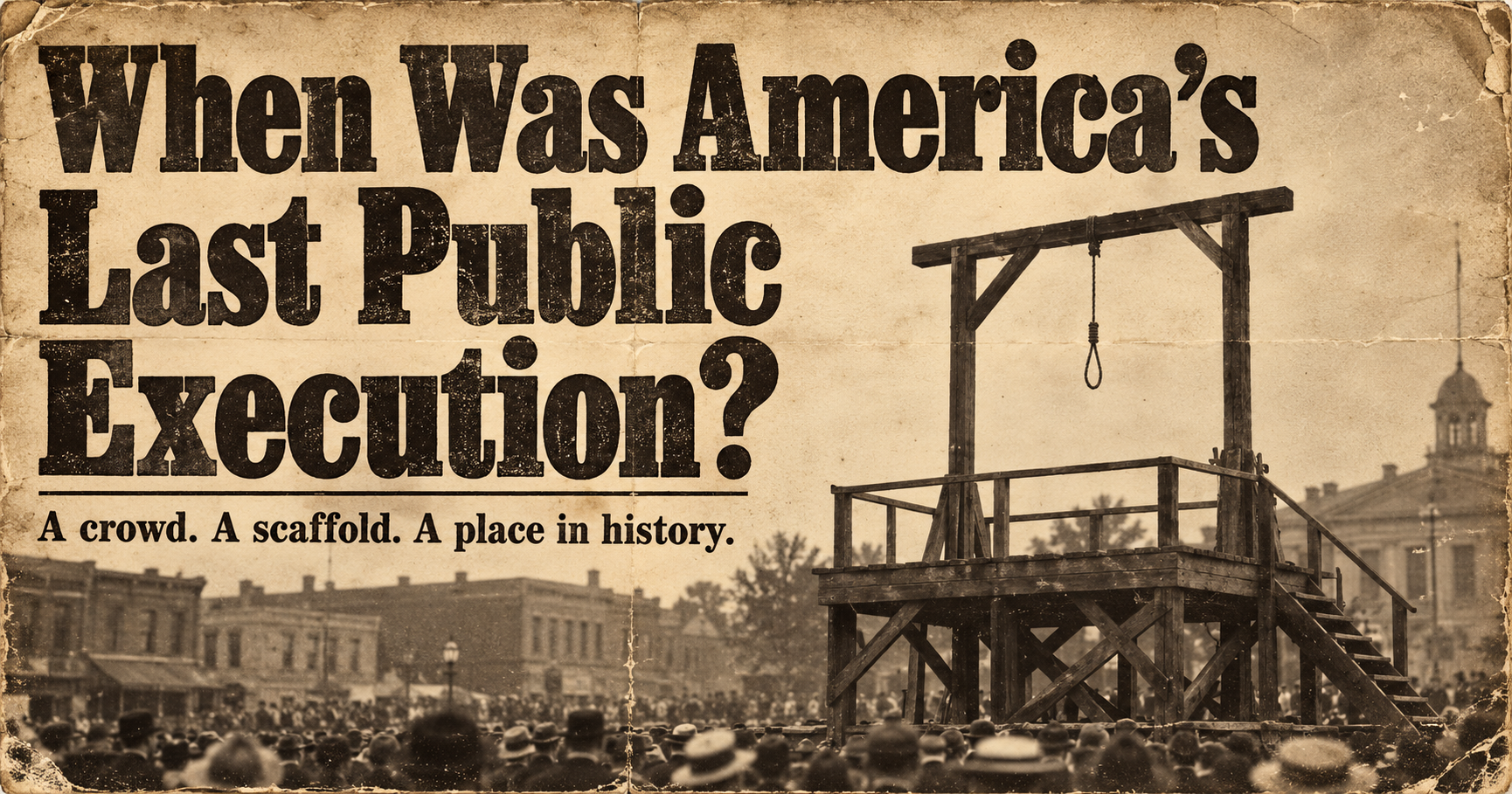
Our history of America’s last public executions and the crowds that witnessed them examines access to punishment. Francis’s story shows why access to reliable evidence matters as well.
There is also a connection to the debate over livestreaming the Fort Hood shooter’s execution. These cases should not be treated as interchangeable, but both make the distinction between witnessing an event and understanding it important.
In Francis’s case, even the question of whether electricity reached him was disputed.
An audience does not automatically resolve uncertainty. A trustworthy record requires investigation, documentation, and careful attention to what the evidence supports.
Questions About Willie Francis
Was Willie Francis’s survival a real event?
Yes. Louisiana’s court record confirms that the May 3, 1946, execution attempt failed and that he was removed from the electric chair alive.
Did he die and come back to life?
The documented story is that the attempt failed to kill him. It should not be described as a medically established death followed by resurrection.
Did surviving mean his sentence was finished?
No. Louisiana continued seeking to carry out the sentence, and his lawyers challenged another attempt.
Was he executed twice?
That phrase appears in retellings, but “two execution attempts” is more precise. The first failed. The second killed him.
Did the Supreme Court unanimously approve another attempt?
No. The decision was 5–4, with sharply different views about the failure and the proposed punishment.
Was Francis conclusively proven innocent?
This article does not establish that. Historical accounts raise serious concerns about his trial, but those concerns should not be presented as a formal exoneration.
The Year After He Survived
There is a temptation to make this a story about an astonishing escape from death.
It was an escape from one attempt.
What followed was another year in custody, a lawyer’s fight, and a divided court decision. The ending did not provide the relief that the survival seemed to promise.
When I read about Francis, that is the part I keep returning to: the state had failed to kill him, yet he still had to fight for the chance to remain alive.
The equipment failure bought time.
It did not buy freedom.
By Miles Rowan for Stories in the Static, examining criminal cases through overlooked evidence, unresolved questions, and the lives behind the headlines.