

In Mary McAvoy’s account, the disturbance began at the servants’ entrance.
A door would slam around two in the morning. Then came the sound of someone returning to the house.
McAvoy, a former caretaker at Rockcliffe Mansion in Hannibal, Missouri, believed she knew who it was: John J. Cruikshank Jr., the lumber baron who had built the mansion and died in 1924.
The unsettling part was how ordinary she made it sound.
Someone coming home. Someone going to bed. A familiar routine continuing long after the person responsible was gone.
Rockcliffe has a reputation as a haunted mansion, but its best-known stories are quieter than the setting might suggest. They concern sounds, smells and small disturbances that some people interpreted as signs of the original owner.
Others spent time in the same house and reported nothing supernatural at all.
Is Rockcliffe Mansion really haunted?
Rockcliffe has published ghost stories associated with former caretakers and residents. Those accounts establish its haunted reputation, but they do not establish that spirits inhabit the house.
The distinction does not make the stories uninteresting. It gives us somewhere useful to begin: with the people who told them.
The building itself supplies a powerful setting.
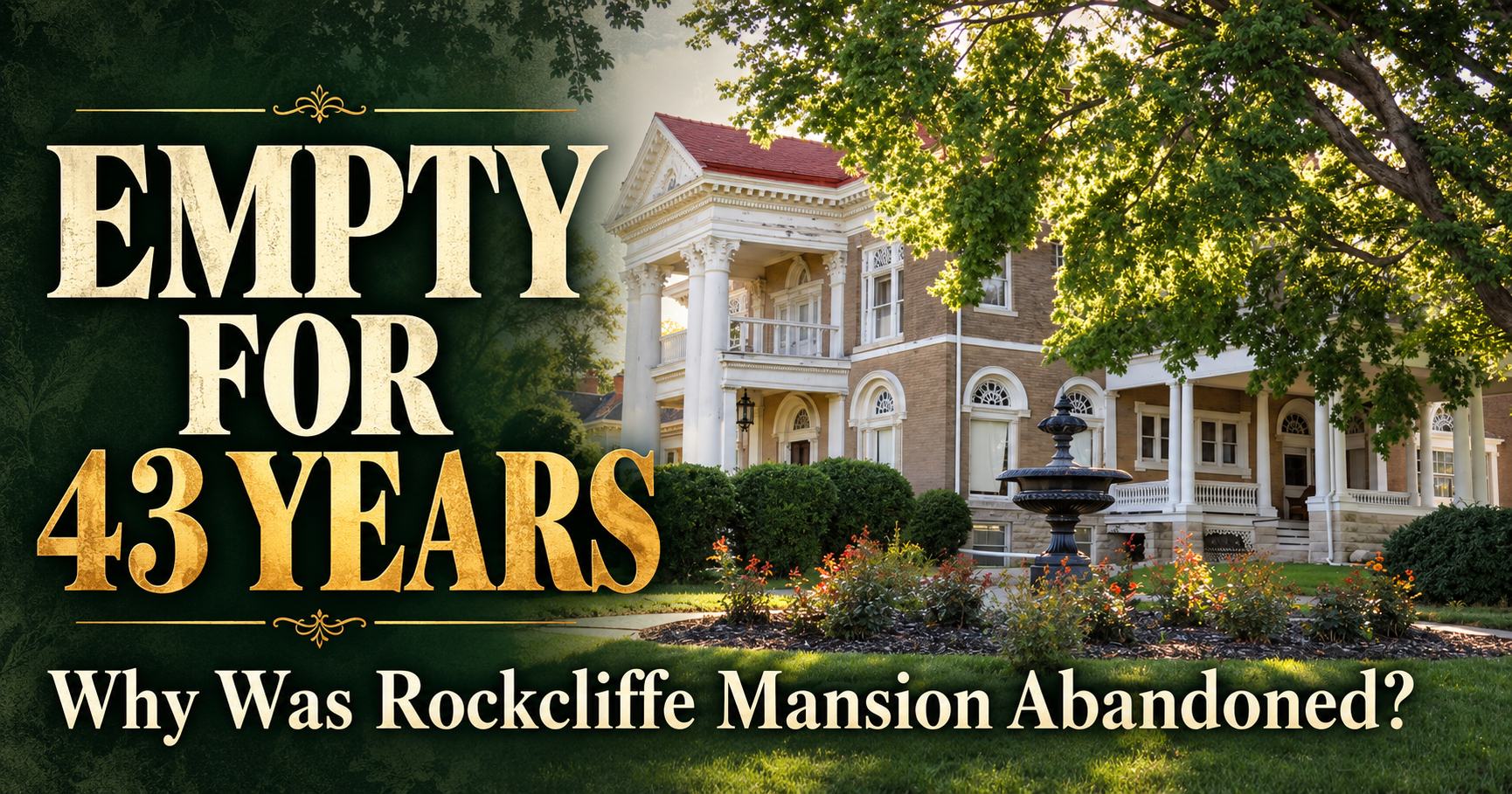
Rockcliffe stands above Hannibal on a bluff overlooking the Mississippi. After Cruikshank’s death, his family left the mansion, beginning the long period covered in the story of Rockcliffe’s 43 years of abandonment.
A grand house without its household leaves plenty of room for stories.
But the accounts that deserve the closest attention come from people who spent substantial time inside, rather than someone looking up at dark windows from the street.
Who was Mary McAvoy?
Mary McAvoy managed the mansion with her husband, Jerry, and worked as a tour guide.
In a separate interview about her work, she described moving to Hannibal after retirement. The couple considered opening a bed and breakfast before applying for a position managing Rockcliffe.
They moved into the house shortly afterward.
Her account of what it meant to welcome people into Rockcliffe is affectionate and practical. She wanted visitors to feel connected to the family and the home, and she recalled organizing special activities for children.
That background matters.
The woman associated with some of Rockcliffe’s most repeated ghost stories also knew it as a workplace and a home. Her relationship with the building extended well beyond visiting for a night of ghost hunting.


The visitor who supposedly returned at two in the morning
In a 2016 article, writer Deena West Budd recounted McAvoy’s belief that Cruikshank returned through the servants’ entrance at approximately 2 a.m.
The account included a slamming door and the smell of cigars.
There was also the bed.
McAvoy reportedly said she repeatedly found an indentation resembling the shape of a person in Cruikshank’s bedding, requiring her to straighten it again.
The published account of McAvoy’s nighttime experiences connects these disturbances to her interpretation that the former owner remained in the house.
I can see why the bed detail stayed with people.
An apparition belongs to the familiar language of a ghost story. An impression in bedding is something you can picture noticing while doing an ordinary job. The unease comes from the possibility that someone has used a room you thought was empty.
The account leaves that possibility unresolved.
The cigar smoke story appeared in another report
A December 2012 feature in Moberly Area Community College’s newspaper also recorded McAvoy describing unexplained cigar smoke.
Writer Nathan Smith reported that, during a tour, she described a smell coming from a bedroom that could be strong enough to make someone step into the hall. It would disappear after several minutes.
The same report included Juan Ruiz saying that he had not personally experienced anything unusual.
That pairing is worth keeping together.
The 2012 report of the bedroom’s unexplained cigar smell shows that the story was circulating before many newer online retellings. It also shows that people associated with the house did not all report the same experiences.
Another publication repeating a person’s story is not another person independently witnessing the event.
That is an easy distinction to lose as a local account spreads.

Why did some people describe the haunting as protective?
Some Rockcliffe stories portray the supposed presence as attached to the home rather than hostile toward its occupants.
Budd’s account records McAvoy describing a feeling of protection.
Travel writer Todd Atteberry also interviewed former resident Ken Marks, coauthor with Lisa Marks of Haunted Hannibal. Marks expressed confidence that the mansion was haunted, but described the activity as relatively subtle.
In the interview about Rockcliffe’s quieter haunted reputation, the suggested disturbances included lights behaving unexpectedly. Marks associated the supposed spirits with protecting the house.
That is a distinctive part of Rockcliffe’s folklore.
The owner who would not leave is often imagined as a threat in a haunted-house story. Here, some tellers cast him as someone still watching over the place he built.

It is an interpretation of reported experiences, not an established explanation for them. A more consequential example of a supernatural interpretation shaping real-world decisions appears in Anneliese Michel’s possession case.
What did the owners say about seeing ghosts?
Accounts from different people do not line up neatly.
In Atteberry’s published interview, Warren Bittner said that neither he nor his partner had seen anything ghostly since becoming the mansion’s custodians in April 2010. He also said he did not dismiss what others claimed to have experienced.
That statement belongs to the period when it was made. It should not be presented as a newly obtained account of everything that has happened since.
Still, it complicates the familiar claim that everyone who stays in a supposedly haunted house encounters something.
They do not all tell that story.
A person can care deeply about Rockcliffe, recognize its folklore and have no personal ghost sighting to report.
How did abandonment shape Rockcliffe’s reputation?
Rockcliffe spent decades outside regular family use before its 1967 rescue.
That history gave generations of Hannibal residents an imposing old house around which stories could gather.
Its surviving furnishings and elaborate interiors strengthened the sense of a household interrupted. These were rooms built for people whose possessions could outlast them.
The documented events behind Rockcliffe’s departure from family home to near-demolition explain how the mansion acquired such a powerful setting for local folklore.
They do not prove a haunting.
They do help explain why a sound on a staircase, a bedroom smell or a disturbed bed could become associated with one particular man.
Once a place has a well-known story, later visitors arrive with something specific to listen for.
What would actually prove the ghost stories?
The available accounts do not settle what caused the reported disturbances.
A smell needs an identifiable source. A sound needs a location and circumstances. A disturbed bed needs more information about who had access to the room.
Without those details, assigning one explanation with certainty goes beyond what the accounts establish.
I would not dismiss McAvoy’s experiences simply because I cannot explain them from a distance. I also would not turn her interpretation into a fact.
What we have is a set of attributed recollections, including disagreement among people familiar with the property.
That uncertainty is part of the story. It should survive the retelling.


Can you stay overnight at Rockcliffe Mansion?
Yes. Rockcliffe operates as a historic house museum and boutique bed and breakfast.
Selected historic rooms are available for overnight stays, while guided tours introduce visitors to the building and the Cruikshank family.
Anyone interested in visiting can check Rockcliffe’s official accommodations and tour information for current arrangements.
The house has more to offer than the prospect of an unexplained noise. Its woodwork, fireplaces, furnishings and stained glass are reasons to go inside in their own right.
A booking is an opportunity to spend time in a historic home. A paranormal encounter is not something anyone can promise.
Questions about Rockcliffe Mansion’s ghost stories
Who supposedly haunts Rockcliffe Mansion?
The best-known accounts identify builder John J. Cruikshank Jr. as the supposed presence. That identification comes from the people interpreting the reported experiences.
What strange activity has been reported?
Published accounts describe nighttime disturbances, unexplained cigar smoke, an impression in a bed and unusual behavior involving lights. These remain reported experiences rather than verified supernatural events.
Did the caretakers feel threatened?
Not all accounts describe fear. McAvoy was reported as feeling protected, while Marks associated the supposed presence with care for the house.
Is Rockcliffe still abandoned?
No. It was rescued in 1967 and now operates as a museum and bed and breakfast.
Are the Rockcliffe ghost stories real?
They are real, published accounts attributed to identifiable people. Whether the experiences had a supernatural cause remains unproven.
By Miles Rowan for Stories in the Static.