

Five days before Timothy McVeigh was supposed to die, the attorney general postponed his execution.
The problem was inside the government’s own files. Thousands of pages of FBI documents had not reached his defense before trial.
By then, McVeigh had already chosen to stop pursuing further appeals. The execution date was set. The federal government was preparing to carry out its first execution since 1963.
Then the paperwork forced everyone to wait.
Timothy McVeigh was executed relatively quickly largely because, after losing earlier challenges, he chose not to continue appealing a rejected post-conviction motion. He received his formal death sentence on August 14, 1997, and was executed on June 11, 2001, less than four years later.
That short answer leaves out the most unsettling part of the timeline: even after McVeigh stopped fighting, the government discovered a reason to delay killing him.
How Long Was Timothy McVeigh on Death Row?
McVeigh spent approximately three years and ten months under a formal death sentence.
The Oklahoma City bombing happened on April 19, 1995. His execution came a little more than six years afterward.
Those numbers describe different stretches of time.
Between the bombing and the death sentence came the investigation, trial, guilty verdict, and sentencing proceedings. His years under a death sentence began after those events.

That distinction matters whenever someone says a prisoner was executed “only a few years after the crime.” It is also part of understanding why some death sentences remain unresolved for decades.
McVeigh’s case moved comparatively fast. It still passed through years of proceedings before an execution date became possible.
The Dates That Explain the Difference
On April 19, 1995, a truck bomb exploded outside the Alfred P. Murrah Federal Building.
On June 2, 1997, a federal jury convicted McVeigh.
On June 13, 1997, the jury recommended a death sentence.
On August 14, 1997, the judge formally imposed that sentence.
In December 2000, McVeigh ended his pursuit of further appeals.
His execution was scheduled for May 16, 2001, then postponed until June 11, 2001.
The jury’s recommendation and the judge’s formal sentence were separate events. Using either date gives a period of roughly four years, but keeping them straight helps explain how the case actually unfolded.
The Bombing Was Followed by a Trial, Not an Immediate Execution
At 9:02 a.m. on April 19, 1995, the bomb detonated outside the Murrah building.
It killed 168 people, including 19 children.
The scale can make that number difficult to absorb. These were people going to work, visiting offices, and beginning an ordinary morning. Children were among those inside.
McVeigh was already in custody when investigators identified him as a bombing suspect. An Oklahoma state trooper had stopped his car because it lacked a license plate and arrested him on a weapons charge.
His capture was fast. Building the federal case took much longer.
Investigators connected the rental truck, physical evidence, witnesses, and other participants. The trial and subsequent legal challenges followed.
I think this is where the familiar version of the story can become misleading. Remembering the bombing and the execution as two enormous news events makes the years between them seem almost empty.
They were not.


McVeigh Appealed Before He Stopped Appealing
Saying McVeigh “gave up his appeals” can sound as though he accepted the verdict and immediately asked for an execution date.
He had already challenged his conviction and sentence.
The Tenth Circuit upheld them in September 1998. The Supreme Court declined to hear his direct appeal in March 1999.
He then pursued a separate post-conviction challenge in 2000. After the district court rejected it, he chose not to appeal that decision.
The government’s account of the appeals he had already pursued makes this distinction clear: earlier review had occurred, and his decision stopped a further challenge from moving forward.
That mattered because continuing litigation can keep a capital case active for years.
It does not mean a prisoner has unlimited appeals, or that every new filing would succeed. It means the decision to stop pursuing available review can remove a major obstacle between a death sentence and an execution.
Did McVeigh Get to Choose When He Died?
His decision helped move the case toward execution, but it did not give him control of the entire process.
A prisoner cannot simply name a morning and require the government to carry out a death sentence.
Courts, prison officials, and other authorities still have responsibilities. A scheduled execution can also be postponed when a new issue arises.
McVeigh’s case demonstrated that distinction unusually clearly.
He had stopped pursuing further appeals. The government had selected May 16.
Then the government changed the date.

There is a separate, disturbing question about people who actively seek execution. Our account of James Robertson’s decision to kill his cellmate in pursuit of a death sentence examines a very different route to that outcome.
McVeigh’s timing should be understood through his own case, including the review that had already happened.

The FBI Documents That Interrupted the Countdown
While preparing investigative records for long-term storage, FBI employees found material that appeared not to have been disclosed to the defense.
By May 2001, the problem involved thousands of pages.
That discovery landed at the worst possible point in the calendar: immediately before an execution.
On May 11, Attorney General John Ashcroft announced a postponement. McVeigh’s attorneys would have additional time to examine the material and take whatever legal action they considered appropriate.
The government maintained that the documents did not undermine his guilt. Still, the decision to move the execution to June 11 acknowledged that the defense needed an opportunity to review them.
That is the detail I find hardest to dismiss.
An execution date creates a deadline beyond which a defendant can no longer challenge what happened. Finding undisclosed records just before that deadline is a serious failure, regardless of how strong the existing case appears.
Did the Missing Documents Prove a Cover-Up?
The later inspector general’s investigation did not find that the FBI had intentionally withheld the discoverable documents.
It identified widespread failures involving document handling, compliance with procedures, and management. It also criticized delays in alerting prosecutors and FBI headquarters after the problem emerged.
That finding matters.
The failure was real. The execution was delayed because of it. But the existence of undisclosed material did not establish the deliberate conspiracy some people suspected.
The investigation into how the records were mishandled described institutional problems serious enough to require changes.
There is something disturbing about that explanation without adding anything to it. A system preparing to carry out an irreversible punishment had failed to deliver records it had agreed to provide.
Why Didn’t the Document Problem Stop the Execution Permanently?
McVeigh’s attorneys sought another stay.
They argued that the government’s failure to produce the documents justified further proceedings, including examination of an alleged fraud on the court.
The district court rejected the request. On June 7, the Tenth Circuit upheld that decision.
The appeals court’s explanation for refusing another delay addressed whether McVeigh had shown sufficient grounds for the relief he sought. The judges concluded that he had not.
An admitted failure to disclose records did not automatically erase the conviction or require the court to stop the execution.
Those are separate questions: did the government mishandle its obligations, and did the legal showing justify reopening the case or granting additional time?
The first problem existed. The courts did not grant the further relief his attorneys requested.
Was McVeigh’s Execution Shown on Television?
It was transmitted through a restricted closed-circuit system for approved survivors and victims’ relatives in Oklahoma City.
It was not a television broadcast available to the general public.
The Justice Department authorized the arrangement because the number of affected people exceeded the space available for witnesses at the prison. Its announced rules also prohibited recording the execution.
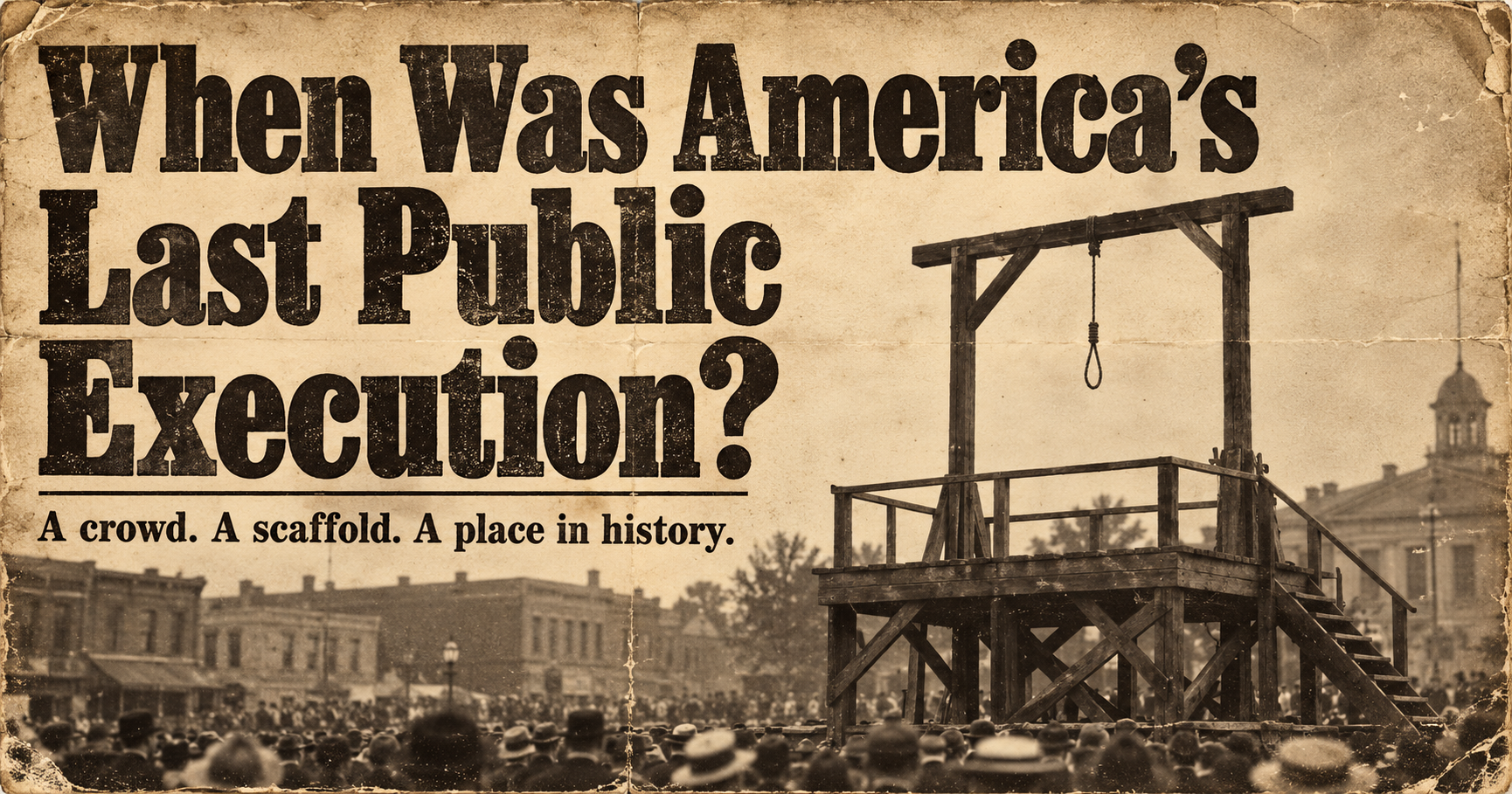
That distinction becomes important when discussing what counts as a public execution in America. A restricted transmission to designated witnesses is different from allowing anyone to watch.
McVeigh was executed by lethal injection at the federal penitentiary in Terre Haute, Indiana, on June 11, 2001.
The federal government had not carried out an execution since 1963. His death ended that gap.



Questions About McVeigh’s Execution Timeline
Was Timothy McVeigh executed four years after the bombing?
No. The bombing happened in April 1995, and he was executed in June 2001, a little more than six years later. The roughly four-year period refers to the time between his 1997 death sentence and his execution.
Did Timothy McVeigh waive every appeal from the beginning?
No. His conviction and sentence underwent direct review, and he pursued a post-conviction challenge. He later chose not to appeal the rejection of that challenge.
Was his execution delayed?
Yes. The original date was May 16, 2001. After the disclosure problem involving FBI records emerged, Attorney General John Ashcroft postponed it until June 11.
Did the FBI documents overturn his conviction?
No. His attorneys sought further relief, but the courts did not overturn the conviction or grant the additional stay they requested.
Why didn’t his case take decades?
His decision to stop pursuing further review was an important reason. Earlier challenges had failed, and the federal government proceeded with execution arrangements. That combination gave his case a shorter path than cases involving continuing litigation, new sentencing proceedings, or other prolonged barriers.
Does ending appeals guarantee a quick execution?
No. McVeigh’s own case shows why. Even after his decision, an unexpected disclosure problem caused the government to postpone the date. A prisoner’s willingness to be executed does not eliminate the government’s obligations.
About the Author
The Stories in the Static team explores unsettling history, criminal cases, and the details that change how a familiar story is understood. Find more carefully researched accounts at Stories in the Static.